The Talent Shortage Crippling South Africa Is in the Trades, Not in Tech



South Africa's conversation about the future of work fixates on AI, coding and digital careers. Government gazetted a draft National AI Policy in Aprilwith talent development among its central pillars, and global tech companies have pledged to train millions of South Africans in AI skills. Yet the skills crisis hurting businesses is playing out in the trades.
The share of companies struggling to recruit artisans more than doubled in a year, from 10% in 2024 to 22% in 2025, with electricians, millwrights, fitters and instrumentation technicians hardest to fill. The average South African artisan is now in their mid-fifties, and the country lags far behind the National Development Plan's target of 30 000 qualified artisans a year by 2030.
The training system is not closing the gap. Even at its peak, the national throughput rate for the National Certificate (Vocational) at TVET colleges hit just 14% in 2024. Over five years, more than 2.6 million students entered the system; the vast majority dropped out or fell years behind.
"Every year the experienced hands get closer to retirement, and there aren't enough young people coming through to replace them. Whether it's a manufacturing plant that can't find instrumentation technicians, a mine short of fitters, or a contractor that can't crew an energy project, the story is the same. This is the skills conversation South Africa should be having, and it barely features," says Dr Andrew Dickson, Engineering Executive at CBi-electric: low voltage.
Many young South Africans are aiming in the wrong direction. The World Economic Forum's Future of Jobs Report 2025 shows the fastest-declining roles are mostly desk-based, among them data entry clerks, bank tellers, administrative assistants and, for the first time, graphic designers, thanks to generative AI. Demand is growing for roles requiring manual and diagnostic skills: electrotechnology engineers, mechanics, industrial equipment technicians and solar installation engineers.
"We've ended up in this strange situation where the office jobs young people believe are safe are the very ones AI is coming for, while the technical trades they've been steered away from are the ones that will be last to be impacted. An algorithm is going to be hard-pressed to commission a production line, fault-find a substation, or calibrate process control equipment on a factory floor," Dr Dickson explains.
The government's Integrated Resource Plan 2025, a R2.2 trillion roadmap, will grow renewable capacity from 17 GW to more than 45 GW by 2030, and the Cabinet-approved South African Renewable Energy Masterplan (SAREM) sets dedicated skills targets. Every wind farm, solar installation and battery facility in the pipeline needs technicians, fitters, electricians and engineers. Employers are also moving toward skills-first recruitment, documented by the OECD, where what a candidate can do matters more than the certificate on the wall, an approach that suits vocational pathways.
Dr Dickson believes industry must support the government and industry at large to grow the pool of artisans. “This will support current requirements as well as provide the skills required to re-industrialise the country -a very necessary requirement to help stabilise and grow the economy. This can be achieved by running apprenticeships and learnerships, partnering with a TVET college on workplace exposure, opening your plant for site visits, seconding engineers to guest lecture, or donating the equipment students train on. Young people cannot learn a trade from theory alone, and every company that employs artisans has something practical to offer.”
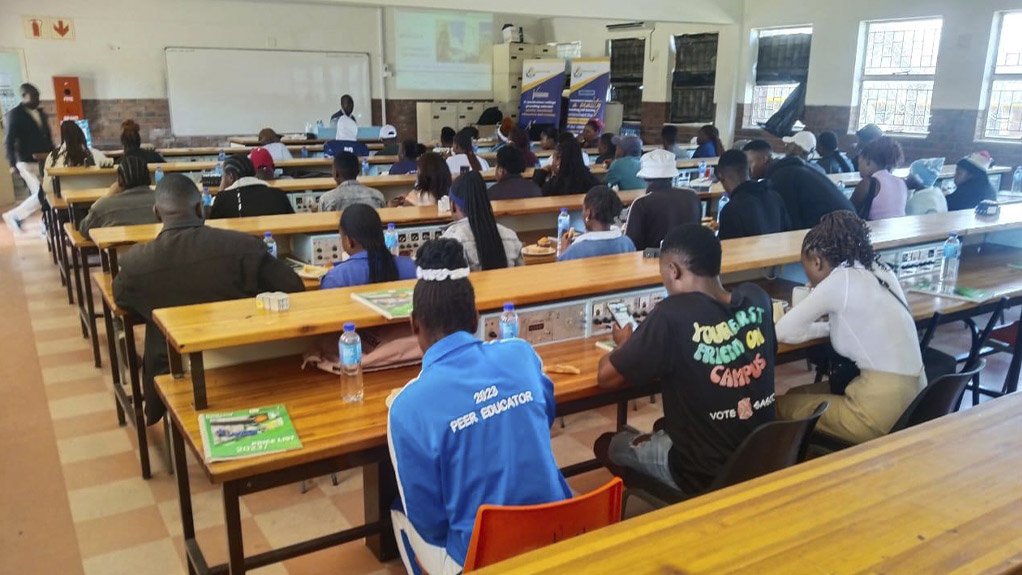
He shares that CBi-electric: low-voltage partners with TVET colleges around the country to give engineering students hands-on training using real-world products. “We also run training sessions at universities, and sponsor products and practical training at technical training centres so that young people learn on the same equipment they will one day encounter on site.”
"When we talk about empowering young South Africans, part of that is being honest about where the opportunities really are. A technical trade is a career with a future across almost every sector, and the country desperately needs people to choose it," Dr Dickson concludes.
Article Enquiry
Email Article
Save Article
Feedback
To advertise email advertising@creamermedia.co.za or click here

Projects



Latest News


Showroom

AirNox (Pty) Ltd is a level 1 BBBEE manufacturer of complete AdBlue® solutions for operators of SCR diesel engines and AUS40 across South Africa...
VISIT SHOWROOM
Iritron delivers advanced automation, control, and optimisation solutions to the Mining, Minerals & Metals, Consumer Package Goods and...
VISIT SHOWROOM


Announcements
What's On
Subscribe to improve your user experience...
Option 1 (equivalent of R125 a month):
Receive a weekly copy of Creamer Media's Engineering News & Mining Weekly magazine
(print copy for those in South Africa and e-magazine for those outside of South Africa)
Receive daily email newsletters
Access to full search results
Access archive of magazine back copies
Access to Projects in Progress
Access to ONE Research Report of your choice in PDF format
Option 2 (equivalent of R375 a month):
All benefits from Option 1
PLUS
Access to Creamer Media's Research Channel Africa for ALL Research Reports, in PDF format, on various industrial and mining sectors
including Electricity; Water; Energy Transition; Hydrogen; Roads, Rail and Ports; Coal; Gold; Platinum; Battery Metals; etc.
Already a subscriber?
Forgotten your password?
Receive weekly copy of Creamer Media's Engineering News & Mining Weekly magazine (print copy for those in South Africa and e-magazine for those outside of South Africa)
➕
Recieve daily email newsletters
➕
Access to full search results
➕
Access archive of magazine back copies
➕
Access to Projects in Progress
➕
Access to ONE Research Report of your choice in PDF format
RESEARCH CHANNEL AFRICA
R4500 (equivalent of R375 a month)
SUBSCRIBEAll benefits from Option 1
➕
Access to Creamer Media's Research Channel Africa for ALL Research Reports on various industrial and mining sectors, in PDF format, including on:
Electricity
➕
Water
➕
Energy Transition
➕
Hydrogen
➕
Roads, Rail and Ports
➕
Coal
➕
Gold
➕
Platinum
➕
Battery Metals
➕
etc.
Receive all benefits from Option 1 or Option 2 delivered to numerous people at your company
➕
Multiple User names and Passwords for simultaneous log-ins
➕
Intranet integration access to all in your organisation