



Fourth Industrial Revolution response initiative launched


Telecommunications giant Telkom and the universities of the Witwatersrand (Wits), Johannesburg (UJ) and Fort Hare have launched SA4IR, a national response to the Fourth Industrial Revolution.
The partnership between the company and the universities seeks to build an inclusive developmental future for South Africans by stimulating a national dialogue and developing a national agenda in response to the impact of the Fourth Industrial Revolution on the country.
SA4IR will explore the impact of the Fourth Industrial Revolution on the economy and the new digital economy, higher education and the future of work, inequality and society and the State.
The Fourth Industrial Revolution is set to dramatically change how humans interact with technology, and how humans express themselves, communicate and engage.
While the potential of transformative technologies such as artificial intelligence, Big Data, automation, cryptocurrencies and augmented/virtual/mixed realities is immense, it also brings about multilayered and multifaceted changes that reshape lives, work, business and governance.
SA4IR will assess the Fourth Industrial Revolution’s impact on human rights and transformations in human identity, while determining the impact on the economy and social orders.
“We need to train scholars to deal with the challenges of the twenty-first century, some of which we may not yet have encountered,” said Wits vice chancellor and president Professor Adam Habib.
He added that South Africa needed to work across sectors to develop the technology required for it to leapfrog across eons of poverty, unemployment and inequality “to create a world that prioritises humanity before profits and power”.
It is a moment of great promise and great threat. Disruption in the global economy, owing to new technology, presented opportunities for enhanced productivity and safety. However, there was a need to get a handle on this and understand the consequences, explained Habib.
Effectively, white collar labour will change; nations around the world are preparing for it – for example fifth-generation technology is already being introduced.
The biggest challenge with introducing technologies in South Africa, said Habib, was insufficient skill sets at school level, technical level and postgraduate level. Inclusive discussions between universities, government and other stakeholders were necessary.
UJ vice chancellor and principal Professor Tshilidzi Marwala commented that those who mastered the ways and means of the Fourth Industrial Revolution would thrive. “Those who fail to master this revolution shall be thrown into the dustbin of backwardness. UJ intends to lead this revolution for the benefit of society.”
With previous industrial revolutions, skills were developed amid the revolution. However, with the Fourth Industrial Revolution, preparation is taking place, as well as early incorporation of technologies such as cloud computing, blockchain and three-dimensional printing, which gives South Africa the opportunity to be ready and perhaps be ahead of many other countries in terms of harnessing technology.
Fort Hare interim deputy academic vice chancellor Professor John Hendricks, who spoke at the SA4IR launch on behalf of Fort Hare vice chancellor and principal, Sakhela Buhlungu, noted that, based on the Fourth Industrial Revolution’s core design principles, namely interoperability, information transparency, technical assistance and decentralised decisions, the human sphere would have a highly intercorrelated and technology-dependent environment.
“Apart from its anticipated benefits, we further need to be cognisant of the things that may go wrong, such as job losses, the negative impact on human rights and, perhaps, even loss of life.
“Thus, as public institutions, we need to train the next generation of highly skilled experts and leaders to assist us in harnessing the potential that this revolution is going to deliver,” added Hendricks.
Telkom CEO Sipho Maseko said the Fourth Industrial Revolution was transforming the world economy and the dialogue around its implementation was imperative to ensure South Africa’s future economic participation.
“When we consider the Fourth Industrial Revolution, it is important that we are also cognisant that our decision is narrowing the current digital divide.”
Article Enquiry
Email Article
Save Article
Feedback
To advertise email advertising@creamermedia.co.za or click here
Research Reports

Projects


Latest Multimedia

Latest News
Showroom
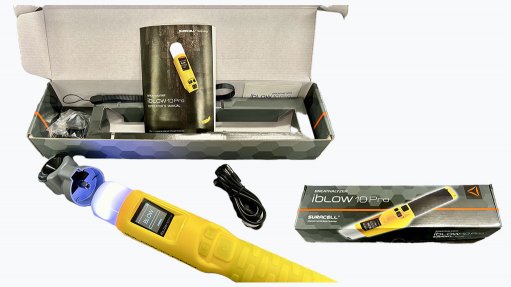
Supplier & Distributor of the Widest Range of Accurate & Easy-to-Use Alcohol Breathalysers
VISIT SHOWROOM
Developed to exceed the latest EN 15964 standards for police breathalysers proving that it will remain accurate and reliable for many years to come.
VISIT SHOWROOM

Announcements
What's On
Subscribe to improve your user experience...
Option 1 (equivalent of R125 a month):
Receive a weekly copy of Creamer Media's Engineering News & Mining Weekly magazine
(print copy for those in South Africa and e-magazine for those outside of South Africa)
Receive daily email newsletters
Access to full search results
Access archive of magazine back copies
Access to Projects in Progress
Access to ONE Research Report of your choice in PDF format
Option 2 (equivalent of R375 a month):
All benefits from Option 1
PLUS
Access to Creamer Media's Research Channel Africa for ALL Research Reports, in PDF format, on various industrial and mining sectors
including Electricity; Water; Energy Transition; Hydrogen; Roads, Rail and Ports; Coal; Gold; Platinum; Battery Metals; etc.
Already a subscriber?
Forgotten your password?
Receive weekly copy of Creamer Media's Engineering News & Mining Weekly magazine (print copy for those in South Africa and e-magazine for those outside of South Africa)
➕
Recieve daily email newsletters
➕
Access to full search results
➕
Access archive of magazine back copies
➕
Access to Projects in Progress
➕
Access to ONE Research Report of your choice in PDF format
RESEARCH CHANNEL AFRICA
R4500 (equivalent of R375 a month)
SUBSCRIBEAll benefits from Option 1
➕
Access to Creamer Media's Research Channel Africa for ALL Research Reports on various industrial and mining sectors, in PDF format, including on:
Electricity
➕
Water
➕
Energy Transition
➕
Hydrogen
➕
Roads, Rail and Ports
➕
Coal
➕
Gold
➕
Platinum
➕
Battery Metals
➕
etc.
Receive all benefits from Option 1 or Option 2 delivered to numerous people at your company
➕
Multiple User names and Passwords for simultaneous log-ins
➕
Intranet integration access to all in your organisation

