



South32 set to hit ground running after 98% BHP ‘yes’ vote

Flashback to 24 November 2014 video: South32 top brass tell Mining Weekly Online’s Martin Creamer of the new liquid aluminium deal with a black-controlled consortium. Photographs: Duane Daws. Video and Video Editing: Nicholas Boyd.
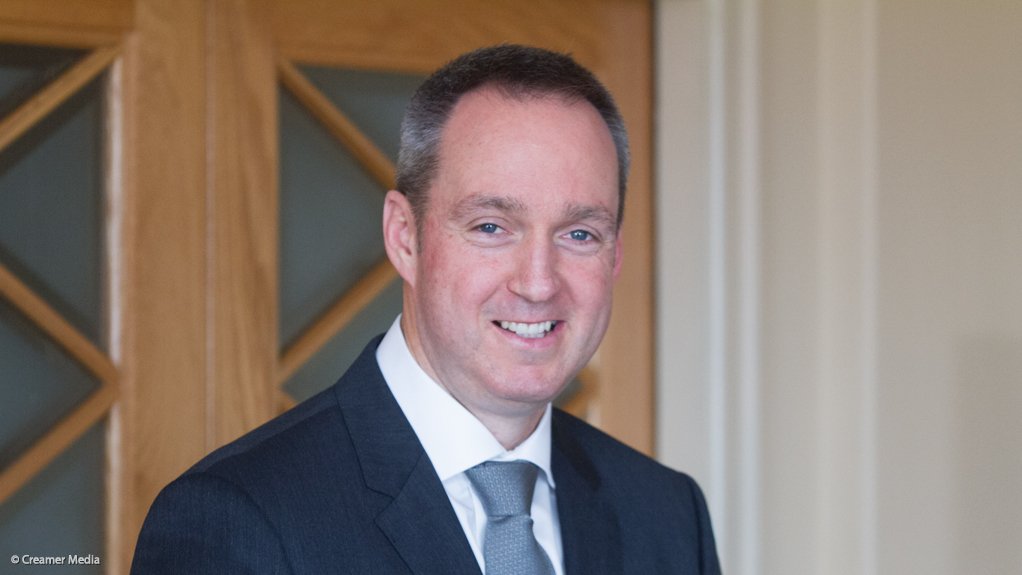
Graham Kerr
Photo by Duane Daws


The demerging South32 mining company, which is set to hit the ground running after receiving an overwhelming 98.05% ‘yes’ vote from BHP Billiton shareholders last week, is at an advanced stage of planning a global shared services centre in South Africa, which will create 200 new quality jobs.
The centre, which will mimic BHP Billiton’s large global service focal point in Kuala Lumpur, is now destined to be located in Johannesburg and no longer in Cape Town, as originally planned.
Simultaneous shareholder general meetings took place in Perth and London to approve the demerger of South32 from BHP Billiton, which chairperson Jac Nasser said would create two successful companies out of one.
BHP Billiton would cease trading with an entitlement to South32 shares from the end of May 15 on the Australian, London and Johannesburg stock exchanges.
South32 shares would commence trading on a deferred settlement basis on the ASX, on a normal settlement basis on the JSE and on a when-issued basis on the LSE, on May 18.
Meanwhile, the South32 South African jobs sweetener would involve the recruitment of 200skilled employees, who would be tasked with the job of delivering information technology, payroll, invoice processing and payment-run services to the proposed 12-asset, five-country, 24 000-employee South32 group.
BHP Billiton’s service centre in Kuala Lumpur provides services for the 40-asset, 50 000-employee BHP Billiton group, which is expected to benefit from $4-billion in cost reductions with the cutting free of South32.
“We’re well progressed on setting up the shared services centre,” South32 CEO-designate Graham Kerr, 44, told Creamer Media’s Mining Weekly in a global media conference call.
BHP Billiton CEO Andrew Mackenzie added that the large shared services centre that the world’s biggest mining company operated in Kuala Lumpur was functioning very well.
“We’re going to make more use of centres like it as another way of continuing to drive down our unit costs,” he said.
Also progressing was South32’s black economic- empowerment (BEE) transaction involving a R10-billion, five-year liquid metal supply contract with a black-controlled consortium.
“This is being targeted for around June/July and is basically on track,” Kerr said of the BEE deal involving the sale of the company’s Bayside value-added-product casthouse in Richards Bay, KwaZulu-Natal, to Isizinda Aluminium, a majority- owned broad-based black consortium.
Isizinda Aluminium, headed by CEO Sizwe Khumalo, a 47-year-old chemical engineer, has, in turn, concluded a slab supply agreement with the JSE-listed Hulamin, South Africa’s leading aluminium semis fabricator, which has a strategic partnership with Bingelela Capital, which owns 60% of Isizinda and Hulamin the other 40%.
With aluminium, manganese and coal forming the bulk of the South African assets in South32, Kerr said the businesses in Africa were poised to benefit as much as those in Australia as a result of being run according to a regional management model.
For the first time, South Africa would have one senior person – South32 president and COO-designate Mike Fraser – running the African division from Johannesburg, with his Australian counterpart, Ricus Grimbeek, running the Australian division of the newly formed company.
South32 would also be supplying the coal to Eskom, which provides coal-fired electricity to the spin-off company’s Hillside aluminium smelter, in KwaZulu-Natal.
By aggregating and consolidating regionally in aluminium, manganese and coal, South32 would be able to focus on productivity, safety, value, costs and the licence to operate, Kerr told Mining Weekly.
He said that there were a number of coal products in the pipeline, which would have to win their right to investment.
On whether South32 would have to bear part of the $738-million cost of demerging, Mackenzie said that both companies would be able to pursue a trajectory of increased efficiency and productivity at a faster rate than would have been the case had the two remained together.
In the last ten years, the commodities in South32 enjoyed an earnings margin – in earnings before interest, taxes, depreciation and amortisation (Ebitda) terms – of 34% through the cycle.
Average Ebitda was $3.3-billion and, in 2013, a tough year, its Ebitda was $1.8-billion.
After getting South32 up and running from May 25, Kerr said leadership would have to demonstrate capital-allocation discipline, financial performance and an ability to manage the company optimally.
Thereafter, low-risk brownfield expansion possibilities could come into play, two being in energy coal and manganese and a third involving a 20-year life-of-mine expansion, possibility at Cannington, in Australia, which has been operating at Ebitda of up to $1-billion for the last 15years without demanding significant investment.
The ability to make a difference, move the needle and be more entrepreneurial, was something that the new company would build into its DNA.
There was be a lot of upside potential, said Kerr, who was instrumental in the building of the Ekati diamond mine, in Canada, and who laid the foundation for BHP Billiton’s entry into potash mining in Saskatchewan.
He is promising more directness from South32 than would have been possible within BHP Billiton, which retains its 9% shareholder base in South Africa, where it is exploring for oil and gas off South Africa’s West Coast.
The Hotazel mine, in South Africa, and Gemco mine, in Australia, plus smelters at Temco, in the Australia mines, and Metalloys, in South Africa, form South32’s manganese portfolio.
With these assets, South32 stands to be one of the largest low-cost producers of manganese ore and a top global producer of manganese alloy.
In aluminium, it takes in the Worsley alumina refinery, in Australia, and the Hillside and Mozal smelters, in Southern Africa.
Also in the company are Cerro Matoso Nickel, of Colombia, and Illawarra Metallurgical Coal, of Australia, which operates three underground mines that produce nine-million tons of coking coal a year, close to major port infrastructure for easy access to global markets.
South32 inherits mines that are South Africa’s third-largest exporters of energy coal, with export sales of 13.3-million tons in the 2014 financial year and potential for growth.
The Worsley refinery in Australia has a capacity of 5.2-million tons of alumina a year and the Southern African aluminium smelters have a combined capacity of 1.3-million tons a year.
Cerro Matoso, in Colombia, produces more than 40 000 t of contained nickel a year at a 49% return.
In the last ten years, South32’s portfolio has generated about half of its Ebitda in Australia and a third in Southern Africa.
South32, which also owns lead and zinc operations, will leave BHP Billiton to focus on iron-ore, oil, copper, coal and potash.
South32 is targeting a return of 40% of underlying earnings to shareholders in the form of dividends, with Deutsche Bank estimating that South32 will be the third-largest mining company on the ASX.
Nasser began last week’s presentation to shareholders in Perth and London by acknowledging the Whadjuk people of the Nyoongar nation, who were the traditional custodians of Australia.
He also extended respect to the other Aboriginal people attending in Perth.
Although the demerger proposal did not require a shareholder vote, the BHP Billiton board decided voluntarily to put it to shareholders, who were 70% ‘for’ in proxy votes.
After being criticised by London shareholders, Australian Shareholders Association member Len Roy defended BHP Billiton, which he said had communicated its South32 proposal comprehensively in an information memorandum of 1355pages, a shareholder circular of 192pages, a news release summary of ten pages and a roadshow presentation of 85 slides.
Nasser assured Roy that the proposal’s $738-million budgeted cost, made up of $339- million in stamp duty and tax, South32 setup and separation costs of $254-million and execution costs of $145-million, would be diligently managed.
Nasser said that South32 was being demerged to simplify BHP Billiton, which had already completed targeted simplification divestments valued at more than $6.5-billion.
He believed the demerger of South32 was another meaningful step in the direction of the simplification of BHP Billiton into a commodities ‘manufacturer’ rather than a miner.
In terms of the demerger, BHP Billiton shareholders would keep existing shares in BHP Billiton and receive a share in South32 for every BHP Billiton share held.
Article Enquiry
Email Article
Save Article
Feedback
To advertise email advertising@creamermedia.co.za or click here
Research Reports

Projects
Latest Multimedia
Latest News
Showroom
Supplier & Distributor of the Widest Range of Accurate & Easy-to-Use Alcohol Breathalysers
VISIT SHOWROOM
Developed to exceed the latest EN 15964 standards for police breathalysers proving that it will remain accurate and reliable for many years to come.
VISIT SHOWROOM
Announcements
What's On
Subscribe to improve your user experience...
Option 1 (equivalent of R125 a month):
Receive a weekly copy of Creamer Media's Engineering News & Mining Weekly magazine
(print copy for those in South Africa and e-magazine for those outside of South Africa)
Receive daily email newsletters
Access to full search results
Access archive of magazine back copies
Access to Projects in Progress
Access to ONE Research Report of your choice in PDF format
Option 2 (equivalent of R375 a month):
All benefits from Option 1
PLUS
Access to Creamer Media's Research Channel Africa for ALL Research Reports, in PDF format, on various industrial and mining sectors
including Electricity; Water; Energy Transition; Hydrogen; Roads, Rail and Ports; Coal; Gold; Platinum; Battery Metals; etc.
Already a subscriber?
Forgotten your password?
Receive weekly copy of Creamer Media's Engineering News & Mining Weekly magazine (print copy for those in South Africa and e-magazine for those outside of South Africa)
➕
Recieve daily email newsletters
➕
Access to full search results
➕
Access archive of magazine back copies
➕
Access to Projects in Progress
➕
Access to ONE Research Report of your choice in PDF format
RESEARCH CHANNEL AFRICA
R4500 (equivalent of R375 a month)
SUBSCRIBEAll benefits from Option 1
➕
Access to Creamer Media's Research Channel Africa for ALL Research Reports on various industrial and mining sectors, in PDF format, including on:
Electricity
➕
Water
➕
Energy Transition
➕
Hydrogen
➕
Roads, Rail and Ports
➕
Coal
➕
Gold
➕
Platinum
➕
Battery Metals
➕
etc.
Receive all benefits from Option 1 or Option 2 delivered to numerous people at your company
➕
Multiple User names and Passwords for simultaneous log-ins
➕
Intranet integration access to all in your organisation

