



SAPICS: How HR can help supply chain manage its critical lack of skills


This article has been supplied.
The most significant threat facing supply chain management is a lack of skills, but effective HR management has a major role to play in helping the industry develop its own experts.
“Increasingly, companies are realising the extent to which supply chains integrate industries and sectors,” says supply chain professionals’ association SAPICS www.sapics.org President Cobus Rossouw, commenting on the transition in the role of supply chain professionals from functional professionals – think production and inventory control – to integration specialists.
“And for this reason there’s a rush on supply chain professionals right now, with companies across a variety of industry sectors scrambling to hire people with supply chain expertise.”
As such experts are hard to come by, Rossouw says it makes sense for companies to start developing the supply chain management skills of their existing employees rather than to focus exclusively on spending a lot of time and resources on hiring external experts.
A phased approach
“Knowledge exchange is a key ingredient to the process of developing the skills of your internal supply chain professionals,” says Rossouw, referring to the importance of the opportunities for development offered by conferences such as SAPICS’s own in June 2014*.
“For those who are not ready to take the plunge into gaining a formal supply chain management qualification, we recommend work experience training, where organisations take the time to assess their employees’ skills levels and train them to turn their passion for the industry into contributions that make business more integrated and profitable,” he says.
Integrating HR with SCM
According to Rossouw, integrating human resources management with supply chain management is critical to ensuring that the desired skills are identified and plans made to develop them. “Developing one’s people according to industry best practice is imperative in achieving strategic business goals due to the fact that the successful management of both businesses and supply chains rest on the performance of people,” he adds.
However, this requires businesses to realise that managing the people in a supply chain is as important as managing overall strategy. “Line managers need to realise the fact that HR managers can help employees understand the business strategy as applicable to their role.”
“Where technology and systems are increasingly the same, it’s becoming more apparent that companies with good HR practices are the ones that outperform others. That’s because they regard their people – and by extension HR - as critical to their business function.”
Innovative learning opportunities boost supply chain skills
Rossouw says HR professionals are becoming increasingly innovative in the learning and development programmes that they’re introducing in their organisations. In fact, it’s for this reason that SAPICS is holding the Supply Chain Management Education Excellence Awards in May this year (SCM|EEA – www.scmeea.org.za . The SCM|EEA aims to recognise companies and individuals who contribute to alleviating the global skills crisis in the profession.
However, if a formal approach to learning is preferred, SAPICS offers a variety of short courses, skills programmes, workshops and other learning opportunities in the science of supply chain management.
For another opportunity to get to grips with some of the key industry concepts, please visit the 36th Annual SAPICS Conference &Exhibition. From 1 to 3 June 2014 delegates will, for three days, become part of a global network of supply chain professionals who are committed to knowledge sharing. For more information please visit www.sapics.org.za
Article Enquiry
Email Article
Save Article
Feedback
To advertise email advertising@creamermedia.co.za or click here
Research Reports

Projects


Latest Multimedia




Showroom
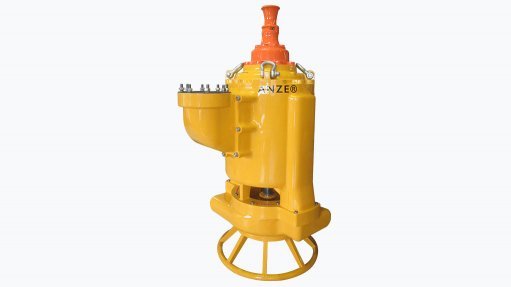
Goodwin Submersible Pumps Africa is sole distributors for Goodwin electrically driven, submersible, abrasion resistance slurry pumps.
VISIT SHOWROOM
Stewarts & Lloyds is a leading steel, tube, and engineering product supplier in South Africa.
VISIT SHOWROOM


Announcements
What's On
Subscribe to improve your user experience...
Option 1 (equivalent of R125 a month):
Receive a weekly copy of Creamer Media's Engineering News & Mining Weekly magazine
(print copy for those in South Africa and e-magazine for those outside of South Africa)
Receive daily email newsletters
Access to full search results
Access archive of magazine back copies
Access to Projects in Progress
Access to ONE Research Report of your choice in PDF format
Option 2 (equivalent of R375 a month):
All benefits from Option 1
PLUS
Access to Creamer Media's Research Channel Africa for ALL Research Reports, in PDF format, on various industrial and mining sectors
including Electricity; Water; Energy Transition; Hydrogen; Roads, Rail and Ports; Coal; Gold; Platinum; Battery Metals; etc.
Already a subscriber?
Forgotten your password?
Receive weekly copy of Creamer Media's Engineering News & Mining Weekly magazine (print copy for those in South Africa and e-magazine for those outside of South Africa)
➕
Recieve daily email newsletters
➕
Access to full search results
➕
Access archive of magazine back copies
➕
Access to Projects in Progress
➕
Access to ONE Research Report of your choice in PDF format
RESEARCH CHANNEL AFRICA
R4500 (equivalent of R375 a month)
SUBSCRIBEAll benefits from Option 1
➕
Access to Creamer Media's Research Channel Africa for ALL Research Reports on various industrial and mining sectors, in PDF format, including on:
Electricity
➕
Water
➕
Energy Transition
➕
Hydrogen
➕
Roads, Rail and Ports
➕
Coal
➕
Gold
➕
Platinum
➕
Battery Metals
➕
etc.
Receive all benefits from Option 1 or Option 2 delivered to numerous people at your company
➕
Multiple User names and Passwords for simultaneous log-ins
➕
Intranet integration access to all in your organisation

