



Cross-continent collaboration needed to drive connectivity

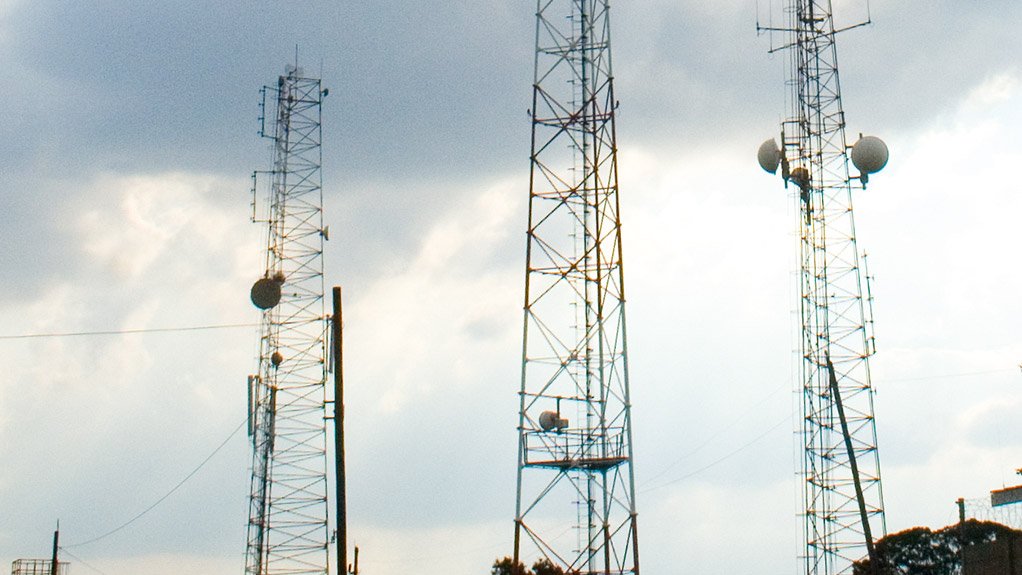
CONNECTIVITY Reducing the distance between people and their access to the fast fibre optic backbones will require countries and pan-national operators to collaborate and expand the amount of fibre in Africa
Photo by Duane Daws



About 65% of Africa’s population live within 50 km of the growing number of fibre nodes on the continent, and bridging this gap can be addressed through point-to-point wireless fidelity (Wi-Fi) and microwave radio connectivity, says Internet Solutions New Business Development: Innovation lead Roger Hislop.
“However, 50 km is still a significant distance in telecommunications terms. Only 21% of Africa’s people live within 10 km of a fibre node, which is an easy wireless hop using off-the-shelf equipment, such as point-to-point and point-to-multipoint long-range Wi-Fi and carrier-grade microwave radio links.”
Reducing the distance between people and their access to the fast, fibre-based telecommunications backbones spreading across the continent will require all countries and the various pan-national operators to collaborate and expand the amount of fibre in Africa beyond only urban hubs to provide connectivity between villages, towns, cities and other countries.
“More than 36 000 km of new fibre was laid during the 12 months to mid-2012 in Africa. Zambia has 4 000 km already, which it wants to triple within three years.”
Successful commercial models for fibre backbones are driven by the need for carrier aggregation, where the significant capital expenditure can be split by several operators taking advantage of the massive capacities provided by even one fibre strand. Currently, most fibre networks in Africa are single-operator.
In the ten years since 1995, the 50 000 km of fibre held by fixed-line operators grew to 140 000 km, while a further 450 000 km of fibre was built by mobile operators mainly to connect their base stations. The practical benefits of carrier aggregation on Africa’s built links, as well as the ability to accelerate roll-out to underserviced areas, are leading to larger countries increasingly looking to regulate fibre networks, especially as governments adopt infrastructure open access policies.
Using multiple technologies to create local networks, such as local multipoint distribution service radio networks, coupled with fibre providing fast backhaul connectivity, overcomes the problems of dependence on currently dominant cellular connectivity for data networking. Cellular requires huge capital expenditure with high-technology engineering to expand further, but is still only a best-effort, highly contended service, he explains.
“Effective telecommunications builds an economy. However, very promising radio technologies encounter problems of either insufficient regulation of radio spectrum or cumbersome overregulation of radio spectrum in Africa,” explains Hislop.
There is significant potential to use lower frequencies in unused television bands, called television white spaces, for low-cost, medium- range connectivity.
Traditionally, radio connectivity required that equipment be built to work on specific frequencies. Bands are often allocated to a single entity exclusively across the whole country, despite much capacity being unused.
Article Enquiry
Email Article
Save Article
Feedback
To advertise email advertising@creamermedia.co.za or click here
Research Reports

Projects


Latest Multimedia


Latest News


Showroom

Sweet-Orr, established in 1871, is a global leader in superior protective workwear, known for quality, innovation, and performance.
VISIT SHOWROOM
ESAB South Arica, the leading supplier of high-end welding and cutting products to the Southern African industrial market is based in...
VISIT SHOWROOM


Announcements
What's On
Subscribe to improve your user experience...
Option 1 (equivalent of R125 a month):
Receive a weekly copy of Creamer Media's Engineering News & Mining Weekly magazine
(print copy for those in South Africa and e-magazine for those outside of South Africa)
Receive daily email newsletters
Access to full search results
Access archive of magazine back copies
Access to Projects in Progress
Access to ONE Research Report of your choice in PDF format
Option 2 (equivalent of R375 a month):
All benefits from Option 1
PLUS
Access to Creamer Media's Research Channel Africa for ALL Research Reports, in PDF format, on various industrial and mining sectors
including Electricity; Water; Energy Transition; Hydrogen; Roads, Rail and Ports; Coal; Gold; Platinum; Battery Metals; etc.
Already a subscriber?
Forgotten your password?
Receive weekly copy of Creamer Media's Engineering News & Mining Weekly magazine (print copy for those in South Africa and e-magazine for those outside of South Africa)
➕
Recieve daily email newsletters
➕
Access to full search results
➕
Access archive of magazine back copies
➕
Access to Projects in Progress
➕
Access to ONE Research Report of your choice in PDF format
RESEARCH CHANNEL AFRICA
R4500 (equivalent of R375 a month)
SUBSCRIBEAll benefits from Option 1
➕
Access to Creamer Media's Research Channel Africa for ALL Research Reports on various industrial and mining sectors, in PDF format, including on:
Electricity
➕
Water
➕
Energy Transition
➕
Hydrogen
➕
Roads, Rail and Ports
➕
Coal
➕
Gold
➕
Platinum
➕
Battery Metals
➕
etc.
Receive all benefits from Option 1 or Option 2 delivered to numerous people at your company
➕
Multiple User names and Passwords for simultaneous log-ins
➕
Intranet integration access to all in your organisation

