



Public and private sectors agree on way forward for economic integration in SADC.


This article has been supplied.
As two days of discussion on Public Private Partnerships in the Southern African Development Community closed in Sandton yesterday, over 120 representatives from both state enterprises and business left with concrete ideas on how to collaborate on a number of identified projects in the region.
Six priority projects were presented at this first ever Public-Private Dialogue, hosted by the SADC PPP (3P) Network in partnership the NEPAD Business Foundation (NBF). The forum aimed to facilitate structured communication between public and private actors in PPPs, thereby strengthening the efficacy of the PPP approach to achieving infrastructure development in the SADC region. SADC 3P and the Public Private Dialogue process are currently being supported by the German Development Cooperation.
Kogan Pillay, Head of the SADC 3P Network, says that the focus of this event was not about ‘talking shop’, but rather identifying projects and developing concrete ways of getting them to market.
The status of projects in pan-African rail, ICT, water, ports and education were presented to the predominantly private sector audience for suggestions and recommendations on how they can successfully pass the feasibility stage and progress to successful bankable projects. According to the SADC Regional Infrastructure Masterplan, approximately USD 500billion capital is required for current projects, with USD100billion required from the private sector. “Projects that have been identified are PPP ready” states Pillay, “we need to use them as tools for regional integration by establishing a project pipeline. We want to attract early stage investors and create a space between public and private sectors that will be successful.”
Forum partners, the NBF, are therefore an integral part in the conversation about regional economic development. With their newly established Africa Infrastructure Desk (Afri-ID), the NBF brings to the table the private sector commitment to the SADC developmental agenda.
“We have to look at the developmental aspirations and objectives of the continent and as a result, each project needs to have some element of capacity building,” says Lynette Chen, CEO of the NBF. “Members of the Afri-ID Steering Committee have been selected from leading private sector companies operating in Africa that are either users of infrastructure - such as mining, oil and gas, agricultural and retail chains - or infrastructure developers and development finance institutions with a latent appetite for cross border infrastructure projects.”
To this end, and to foster continued collaboration between the various parties, a Memorandum of Understanding was signed by both the SADC 3P network and the NBF at the PPD.
KPMG was contracted by SADC 3P to assess which projects in the region could be effectively leveraged “Each project has its own unique nature and characteristics. What is required is a consolidated approach – especially between member states,” comments Debuys Scott, Head of Global Infrastructure and Project Group and Partner at KPMG South Africa. “In order to get the pipeline started, let’s change the perception of the investment climate on the region. Where we go from here will depend on how successful we are in getting these identified projects to market.”
A large part of being successful - and the reason for the PPD – was to get insight into improving the terms of reference in order to make them more attractive to potential investors. What emerged as a big concern for South African business when considering investing in the projects presented was the potential for preferential consideration to companies that are already operating in the SADC region. Whilst governments may not be able to guarantee this at this stage, the suggestion was tabled for negotiations.
There is also a need for clearer, more transparent terms of reference from the governments and agencies seeking investment and collaboration. Political will and cross-border legal matters are also inhibiting factors that need to be addressed in order for the private sector to get involved the creation of PPPs.
Next steps include creating working groups around the projects presented, and ensuring that they get implemented. Reiterates Pillay, “Africa does not need to be poor – the means to transform it is in our hands; it’s here within our reach. We want to end up with an integrated trading region that is free from poverty.”
Article Enquiry
Email Article
Save Article
Feedback
To advertise email advertising@creamermedia.co.za or click here
Research Reports

Projects


Latest Multimedia

Latest News
Showroom
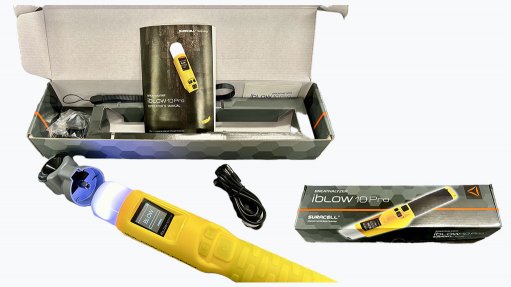
Supplier & Distributor of the Widest Range of Accurate & Easy-to-Use Alcohol Breathalysers
VISIT SHOWROOM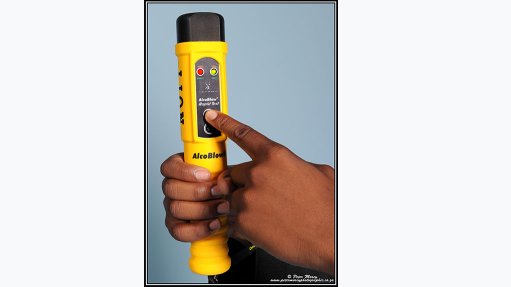
Developed to exceed the latest EN 15964 standards for police breathalysers proving that it will remain accurate and reliable for many years to come.
VISIT SHOWROOM

Announcements
What's On
Subscribe to improve your user experience...
Option 1 (equivalent of R125 a month):
Receive a weekly copy of Creamer Media's Engineering News & Mining Weekly magazine
(print copy for those in South Africa and e-magazine for those outside of South Africa)
Receive daily email newsletters
Access to full search results
Access archive of magazine back copies
Access to Projects in Progress
Access to ONE Research Report of your choice in PDF format
Option 2 (equivalent of R375 a month):
All benefits from Option 1
PLUS
Access to Creamer Media's Research Channel Africa for ALL Research Reports, in PDF format, on various industrial and mining sectors
including Electricity; Water; Energy Transition; Hydrogen; Roads, Rail and Ports; Coal; Gold; Platinum; Battery Metals; etc.
Already a subscriber?
Forgotten your password?
Receive weekly copy of Creamer Media's Engineering News & Mining Weekly magazine (print copy for those in South Africa and e-magazine for those outside of South Africa)
➕
Recieve daily email newsletters
➕
Access to full search results
➕
Access archive of magazine back copies
➕
Access to Projects in Progress
➕
Access to ONE Research Report of your choice in PDF format
RESEARCH CHANNEL AFRICA
R4500 (equivalent of R375 a month)
SUBSCRIBEAll benefits from Option 1
➕
Access to Creamer Media's Research Channel Africa for ALL Research Reports on various industrial and mining sectors, in PDF format, including on:
Electricity
➕
Water
➕
Energy Transition
➕
Hydrogen
➕
Roads, Rail and Ports
➕
Coal
➕
Gold
➕
Platinum
➕
Battery Metals
➕
etc.
Receive all benefits from Option 1 or Option 2 delivered to numerous people at your company
➕
Multiple User names and Passwords for simultaneous log-ins
➕
Intranet integration access to all in your organisation

