



PetroSA mulls partnership plan for funding of gas import terminal

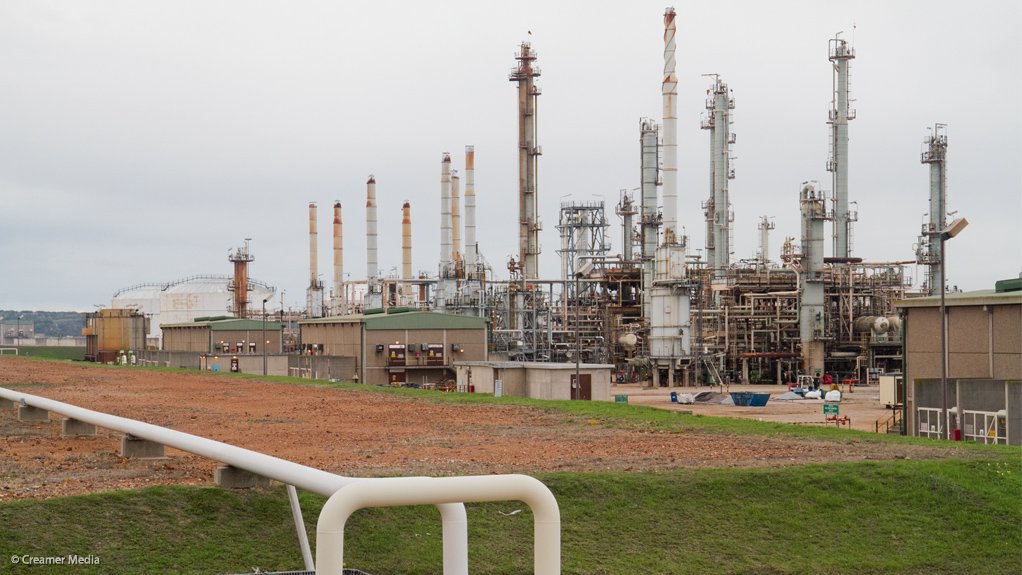
GAS SHORTMossel Bay refinery operating well below nameplate capacity, owing to gas shortages
Photo by Duane Daws


South Africa’s national oil company, PetroSA, will consider developing its proposed liquefied natural gas (LNG) import facility near Mossel Bay, in the Western Cape, on a build, operate, own and transfer (Boot) basis, but stresses that it is weighing various project financing options.
The State-owned group expects to make an investment decision on a $375-million to $510-million facility during the fourth quarter of 2014, having already appointed WorleyParsons to conduct a feasibility study and complete the front-end engineering design (Feed) for the project.
LNG project manager Carlo Matthysen stresses that the funding plan has not been finalised. But he confirms that a Boot option is being considered, partly to secure funding for the project and partly to enable PetroSA to partner with a company that has experience in building and operating such terminals internationally.
VP for operations Dr Thabo Kgogo says it is also engaging with the National Treasury and the Department of Energy on possible funding solutions for the project, which is being pursued primarily to improve security of gas supply to the group’s gas-to-liquids (GTL) refinery, previously known as Mossgas.
The current version of the scheme also includes the supply to Eskom, which is keen to convert its Gourikwa open-cycle gas turbine peaking power plant, in Mossel Bay, from diesel to gas and transform the facility into a midmerit electricity plant.
The GTL refinery is currently operating at less than 50% of its 42 000 bl/d nameplate capacity, owing to feedstock constraints. These will be partly eased later this year once gas begins to flow from the FO field, which is being developed as part of PetroSA’s Ikhwezi offshore development.
However, production from the FO field is more expensive and technically more challenging than the group’s previous offshore operations and will also only secure feedstock for the GTL refinery until 2020.
For this reason, PetroSA is aiming to begin integrating LNG imports from 2018 onwards, owing to an expectation that it will take about three years to develop the LNG offloading infrastructure.
Besides the feasibility study and Feed work, the Council for Scientific and Industrial Research is overseeing an environmental-impact assessment for the LNG offloading facility, with the first round of public consulta-tions having generated more than 600 written comments and objections from stakeholders.
The terminal’s location and configur-ation has not been finalised, but PetroSA and Eskom’s combined yearly gas requirement has been calculated at 1.2-million tons.
The feasibility study is premised on a floating LNG facility, comprising a breakwater, a berth structure and a permanently moored floating, storage and regasification unit, or FSRU. Still being finalised, however, is whether to include a single or a double berth facility and whether to site the infrastructure in Voorbaai or Vleesbaai – a decision which should be made in the coming few months.
Energy consultant Galway, of the US, has been appointed the commercial adviser for the sourcing of LNG and an international tender is likely to be issued in August to solicit suppliers.
Matthysen believes the terminal is likely to be introduced at a time when a number of new suppliers from the US, Australia and Angola begin coming on stream, which could improve the commercial viability of the facility.
But Kgogo stresses that the integration of LNG is not designed to foreclose on indigenous gas development. Instead, he argues that it will close the infrastructure and market-development gaps from which for future indigenous gas suppliers, both conventional and unconventional, could benefit in the longer term.
Under ideal maritime conditions, the facility would have a nameplate capacity of 4.6-million tons a year, but PetroSA is operating on the assumption of a 96% availability rate.
PetroSA is, in the meantime, also studying various options for transitioning the GTL refinery from the production of transport fuels to higher-value petrochemicals as its gas feedstock costs continue to rise.
Kgogo says, while the GTL refinery remains part of a vertically integrated operation, which includes offshore gas production, the rising cost structure of this production and the possibility of buying gas globally means that the group would like to produce products with a higher margin than is the case for liquid fuels.
Acting planning and operations manager Mark Hobbs says the opening up of the FO offshore field from October will guarantee the refinery much-needed gas supply, but that any return to full production would be predicated on the LNG initiative.
To deal with these anticipated cost increases, the State-owned group is assessing diversifica-tion of its production to include higher volumes of speciality chemicals to increase its future operating margins.
However, such a shift is partly linked to the development of a new 300 000 bl/d crude refinery at Coega, in the Eastern Cape, which would free the GTL refinery in Mossel Bay from its national fuel security-of-supply obligations.
The initiative, dubbed Project Mthombo, could involve an investment of between $9-billion and $11-billion.
A full feasibility study into the project is about to begin and will be conducted jointly with PetroSA, Chinese petroleum and petrochemicals group Sinopec and the Indus-trial Development Corporation.
The study is expected to be completed by the end of 2014.
Article Enquiry
Email Article
Save Article
Feedback
To advertise email advertising@creamermedia.co.za or click here
Research Reports

Projects
Latest Multimedia
Latest News
Showroom
Sweet-Orr, established in 1871, is a global leader in superior protective workwear, known for quality, innovation, and performance.
VISIT SHOWROOM
From batteries for boats and jet skis, to batteries for cars and quad bikes, SABAT Batteries has positioned itself as the lifestyle battery of...
VISIT SHOWROOM
Press Office
Announcements
What's On
Subscribe to improve your user experience...
Option 1 (equivalent of R125 a month):
Receive a weekly copy of Creamer Media's Engineering News & Mining Weekly magazine
(print copy for those in South Africa and e-magazine for those outside of South Africa)
Receive daily email newsletters
Access to full search results
Access archive of magazine back copies
Access to Projects in Progress
Access to ONE Research Report of your choice in PDF format
Option 2 (equivalent of R375 a month):
All benefits from Option 1
PLUS
Access to Creamer Media's Research Channel Africa for ALL Research Reports, in PDF format, on various industrial and mining sectors
including Electricity; Water; Energy Transition; Hydrogen; Roads, Rail and Ports; Coal; Gold; Platinum; Battery Metals; etc.
Already a subscriber?
Forgotten your password?
Receive weekly copy of Creamer Media's Engineering News & Mining Weekly magazine (print copy for those in South Africa and e-magazine for those outside of South Africa)
➕
Recieve daily email newsletters
➕
Access to full search results
➕
Access archive of magazine back copies
➕
Access to Projects in Progress
➕
Access to ONE Research Report of your choice in PDF format
RESEARCH CHANNEL AFRICA
R4500 (equivalent of R375 a month)
SUBSCRIBEAll benefits from Option 1
➕
Access to Creamer Media's Research Channel Africa for ALL Research Reports on various industrial and mining sectors, in PDF format, including on:
Electricity
➕
Water
➕
Energy Transition
➕
Hydrogen
➕
Roads, Rail and Ports
➕
Coal
➕
Gold
➕
Platinum
➕
Battery Metals
➕
etc.
Receive all benefits from Option 1 or Option 2 delivered to numerous people at your company
➕
Multiple User names and Passwords for simultaneous log-ins
➕
Intranet integration access to all in your organisation

