



Mpumalanga coal mines noncompliant with water-use licence conditions – enviro rights group

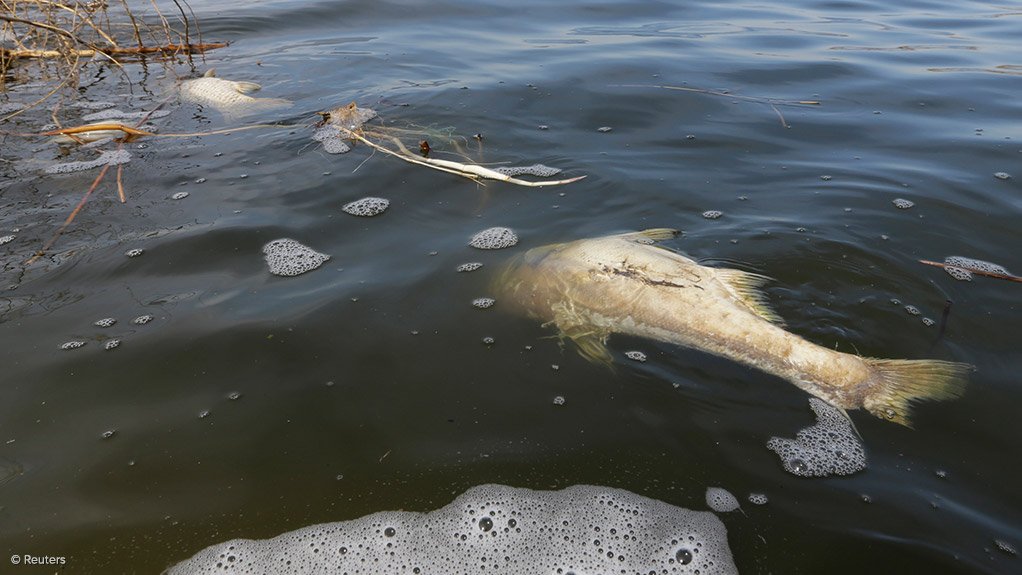
DIRE CONSEQUENCES Although coal mines use just more than 7% of a river's water, on average, they could contaminate more than 70% of the water, if unregulated
Photo by Reuters


Nonprofit organisation (NPO) the Centre for Environmental Rights (CER) says coal mines in Mpumalanga are “significantly” noncompliant with their water use licence conditions.
In a report – the fourth instalment in the CER’s Full Disclosure series – released last week, the NPO details gross violations and water pollution by eight operators, as well as failures by the Department of Water and Sanitation (DWS).
The CER said the “broken” national department was unable to fulfil its statutory mandate of water resource protection, despite the DWS having declared the upper Olifants catchment, for example, as one of the country’s most stressed catchment areas in terms of both water quantity and quality.
About 42% of the land in the Olifants catchment area had been formally classified as endangered, said CER corporate accountability head Leanne Govindsamy.
University of the Witwatersrand research associate Dr Victor Munnik emphasised that the main coalfields in Mpumalanga were near the Olifants, Vaal and Lesotho rivers and, therefore, the impact on water resources by unregulated coal mining operations was immense.
“The Olifants river, in particular, has been subjected to more than 120 years of coal mining, and most of that under bad regulation and bad control.
“Coal mines use just more than 7% of a particular river’s water, but, on average, contaminate more than 70% of the water if unregulated.”
Munnik added that, in a country where all water had been allocated, the misuse of water could not be allowed.
He said that misusing water could lead to shortages of potable water, which would result in new industries and emerging farmers suffering, as there would be no water to allocate to them.
“Additionally, we have started to experience the effects of an intensifying climate change. We are a water-scarce country with a shaky water regulation system. As we are increasingly affected by climate change, and talking about a low-carbon economy, we will face massive backlogs in cleaning up our water, in cleaning up the impacts of the coal mines on the soil resources, on the potential for agriculture and, ultimately, food security.
“The repercussions of not regulating water well are immense.”
Six of the eight companies assessed in the CER’s report collectively use around eight-million cubic metres of water a year; however, the NPO said the more pressing issue was the acid mine drainage from coal mines polluting surface water and groundwater.
Broken State
Govindsamy said miners often ascribed their water use licence noncompliance issues to gross negligence on the part of environmental auditors and government’s failure to effectively monitor compliance.
She said the DWS often allowed mining operations to go ahead with construction, despite not yet having a water use licence. However, this ultimately resulted in challenges where infrastructure was already in place and the water use licence required a different design for efficient drainage, for example.
The CER stated that the DWS had not pursued convictions against companies for such noncompliance in recent years and had not been enforcing administrative penalties for misusing water or contaminating ground or surface water.
CER executive director Melissa Fourie noted that miners were often willing to pay for their water extraction, as well as pay the tariffs around discharge of contaminated water, but received no invoices from the DWS.
“As a country, we have underinvested in policy implementation around water use regulations. It is almost a deliberately designed system that makes it impossible to enforce.”
Govindsamy noted that the CER had tried to schedule a meeting with the DWS to discuss the findings, but had not received feedback.
“For the coal mining operations assessed, the DWS appeared to have been unable to process and issue licences with appropriate licence conditions within a reasonable time, to monitor compliance or respond to and question flagrant misrepresentations made by external auditors, and to respond to violations which are patently apparent from routine submissions made by licence holders themselves,” said Govindsamy.
Moral Deficiency
Munnik commented that the mining industry suffered from a moral deficiency. “Miners often claim to be effective at self-regulation, but they sometimes choose cheap options for construction and processing, which are more destructive to water sources.
“Meanwhile, auditors are often perceived as reliable, but they also tend to take the easier option,” he noted, referring to auditors making mistakes in their reports or deliberately misreporting information in return for bribes.
Govindsamy stated that independent environmental audits were supposed to be a safety net for regulators and ensure that violations and risks that may have been missed in regular compliance monitoring by inspectors were picked up.
“Instead, they have become the only compliance monitoring that takes place, creating a massive loophole for violations never to be reported or acted upon.”
Article Enquiry
Email Article
Save Article
Feedback
To advertise email advertising@creamermedia.co.za or click here
Research Reports

Projects
Latest Multimedia
Latest News
Showroom
Sweet-Orr, established in 1871, is a global leader in superior protective workwear, known for quality, innovation, and performance.
VISIT SHOWROOM
From batteries for boats and jet skis, to batteries for cars and quad bikes, SABAT Batteries has positioned itself as the lifestyle battery of...
VISIT SHOWROOM
Press Office
Announcements
What's On
Subscribe to improve your user experience...
Option 1 (equivalent of R125 a month):
Receive a weekly copy of Creamer Media's Engineering News & Mining Weekly magazine
(print copy for those in South Africa and e-magazine for those outside of South Africa)
Receive daily email newsletters
Access to full search results
Access archive of magazine back copies
Access to Projects in Progress
Access to ONE Research Report of your choice in PDF format
Option 2 (equivalent of R375 a month):
All benefits from Option 1
PLUS
Access to Creamer Media's Research Channel Africa for ALL Research Reports, in PDF format, on various industrial and mining sectors
including Electricity; Water; Energy Transition; Hydrogen; Roads, Rail and Ports; Coal; Gold; Platinum; Battery Metals; etc.
Already a subscriber?
Forgotten your password?
Receive weekly copy of Creamer Media's Engineering News & Mining Weekly magazine (print copy for those in South Africa and e-magazine for those outside of South Africa)
➕
Recieve daily email newsletters
➕
Access to full search results
➕
Access archive of magazine back copies
➕
Access to Projects in Progress
➕
Access to ONE Research Report of your choice in PDF format
RESEARCH CHANNEL AFRICA
R4500 (equivalent of R375 a month)
SUBSCRIBEAll benefits from Option 1
➕
Access to Creamer Media's Research Channel Africa for ALL Research Reports on various industrial and mining sectors, in PDF format, including on:
Electricity
➕
Water
➕
Energy Transition
➕
Hydrogen
➕
Roads, Rail and Ports
➕
Coal
➕
Gold
➕
Platinum
➕
Battery Metals
➕
etc.
Receive all benefits from Option 1 or Option 2 delivered to numerous people at your company
➕
Multiple User names and Passwords for simultaneous log-ins
➕
Intranet integration access to all in your organisation

