



India to hike mineral royalty rates to meet demands of provinces

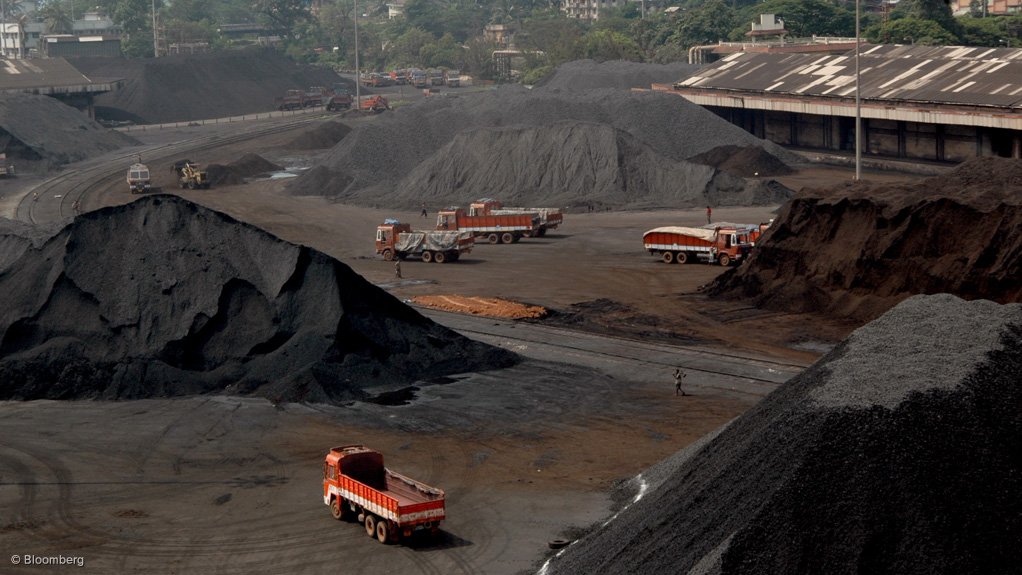


KOLKATA (miningweekly.com) – India’s Mines Ministry has revived the process of increasing royalties on minerals, except for coal and lignite, which would lead to a 41% increase in revenues for mineral-bearing provinces.
According to an official, the Mines Ministry has completed a draft on increasing the royalty rates on iron-ore, bauxite, chrome ore and manganese, which would be put before the Cabinet Committee for Economic Affairs for final approval within the next fortnight.
Once implemented, the higher royalty rates would generate additional revenue to the tune of $2.23-billion for the mineral-bearing provinces across the country. The royalties levied on extraction of minerals accrue to provinces where mining operations are undertaken, but the rates and revisions are determined by the federal government.
The last revision in royalty rates was effected in 2009 and several mineral-rich provinces like Odisha, Chhattisgarh, Jharkhand and Karnataka, have been demanding a revision in the rates as most of these provinces were strapped for cash and have been running severe budget deficits.
The official said that the structure of the revised rates was more or less in line with recommendations of the special committee appointed by the previous Indian government in 2011.
However, the new Indian government, which took charge last month, was keen to ease the financial strain on provinces and increasing royalties was one of the ways it could do so, the official added.
Although he declined to quantify the royalty hikes, as the proposal was still in the draft stage, a source indicated that royalties on iron-ore and chrome ore would be increased to 15% from 10%, bauxite to 0.6% from 0.5% and manganese to 5% from 4.2%.
However, the proposal for a mineral resource rent tax (MRRT), popularly known as a ‘windfall tax’, modelled on the Australian version, was not mentioned in the royalty revision proposal.
The government of Odisha in eastern India had demanded a levy of 50% of surplus rent on iron-ore along the lines of the 30% imposition under the MRRT in Australia, which should go exclusively to the kitty of the provincial governments.
Currently, there were 51 minerals included in the schedule of the Mining and Mineral Development Regulation Act 1957, with differing rates of royalty for each mineral.
Article Enquiry
Email Article
Save Article
Feedback
To advertise email advertising@creamermedia.co.za or click here
Research Reports

Projects
Latest Multimedia
Latest News
Showroom

Sweet-Orr, established in 1871, is a global leader in superior protective workwear, known for quality, innovation, and performance.
VISIT SHOWROOM
ESAB South Arica, the leading supplier of high-end welding and cutting products to the Southern African industrial market is based in...
VISIT SHOWROOM

Announcements
What's On
Subscribe to improve your user experience...
Option 1 (equivalent of R125 a month):
Receive a weekly copy of Creamer Media's Engineering News & Mining Weekly magazine
(print copy for those in South Africa and e-magazine for those outside of South Africa)
Receive daily email newsletters
Access to full search results
Access archive of magazine back copies
Access to Projects in Progress
Access to ONE Research Report of your choice in PDF format
Option 2 (equivalent of R375 a month):
All benefits from Option 1
PLUS
Access to Creamer Media's Research Channel Africa for ALL Research Reports, in PDF format, on various industrial and mining sectors
including Electricity; Water; Energy Transition; Hydrogen; Roads, Rail and Ports; Coal; Gold; Platinum; Battery Metals; etc.
Already a subscriber?
Forgotten your password?
Receive weekly copy of Creamer Media's Engineering News & Mining Weekly magazine (print copy for those in South Africa and e-magazine for those outside of South Africa)
➕
Recieve daily email newsletters
➕
Access to full search results
➕
Access archive of magazine back copies
➕
Access to Projects in Progress
➕
Access to ONE Research Report of your choice in PDF format
RESEARCH CHANNEL AFRICA
R4500 (equivalent of R375 a month)
SUBSCRIBEAll benefits from Option 1
➕
Access to Creamer Media's Research Channel Africa for ALL Research Reports on various industrial and mining sectors, in PDF format, including on:
Electricity
➕
Water
➕
Energy Transition
➕
Hydrogen
➕
Roads, Rail and Ports
➕
Coal
➕
Gold
➕
Platinum
➕
Battery Metals
➕
etc.
Receive all benefits from Option 1 or Option 2 delivered to numerous people at your company
➕
Multiple User names and Passwords for simultaneous log-ins
➕
Intranet integration access to all in your organisation

