



Income tax hike most efficient means of revenue raising – Davis

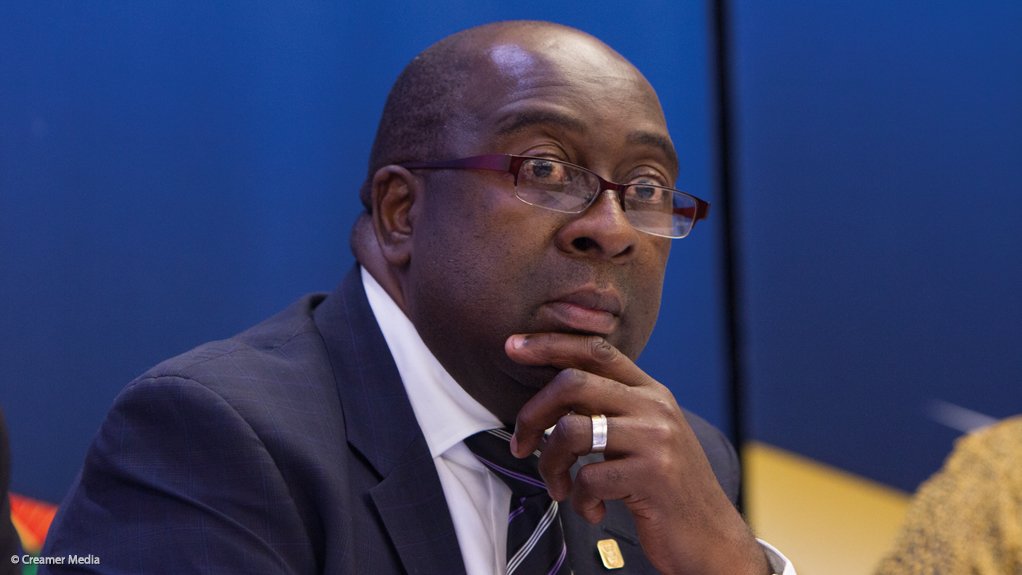



While the new tax introductions and hiked levies outlined in Finance Minister Nhlanhla Nene’s inaugural Budget speech were likely to hit consumers, it was deemed the most efficient option for government to narrow its fiscal gap without hurting South Africa’s fragile economy, Judge Dennis Davis said at a post-Budget event hosted by KPMG.
Davis, who heads the Davis Tax Committee, outlined the dangers of raising other taxes to bolster the currently insufficient revenue flows to cover national expenditure, including value-added tax (VAT), which would drag the already sluggish South African economy.
While seen as a faster way of generating revenue from a wider base, a 1% increase in VAT would, over two years, result in a 0.2% to 0.3% rise in inflation and a 0.3% to 0.4% contraction in gross domestic product (GDP) growth, which the country cannot absorb in the current economic environment.
Nene’s decision to raise the taxes for all but the lowest income earner – a likely response to heightened concerns over ratings agencies and potential downgrades – will generate revenue of around R9-billion a year.
A scrapped increase in a so-called supertax from 40% to 45% for those earning R1.2-million and above each year would only have brought in revenue of R3.5-billion a year, which Davis said highlighted the skewed income in the country and a structural reality that required government to dig deeper into society to obtain funds.
The tabled 30.5c/∙ general increase in the national fuel levy will add R6.4-billion a year to the fiscus, while additional taxes on property transfers would generate another R100-million a year.
Further tax hikes include a 50c/∙ increase in the Road Accident Fund levy, aimed at pulling the agency out of bankruptcy, a 2c/kWh increase in the electricity levy to 5.5c/kWh and the replacement of the existing tyre levy with a new levy to be administered by the South African Revenue Service.
This is in addition to a range of sin tax increases.
KPMG head of corporate tax Muhammad Saloojee said at the event that these increases would all hit consumers’ pockets.
However, it was the least damaging alternative – and the most efficient tax option – to reduce the 3.9% budget deficit in an economy that was growing at only 2%.
“I am not sure whether [South Africa] can grow by 2%; I do not think people realise how bad [the economic outlook] is,” Davis commented.
Should the expenditure ceiling not be lowered by R25-billion and government fail to raise R17-billion in additional revenue through higher taxes in 2015/16 and 2016/17, the country would end up in a “far worse position”, he warned.
KPMG associate director Lullu Krugel said that 8% lower spending by government on venues and catering, a 4% cut in travel and subsistence and a 1.4% decrease in spend on consultants were all positive aspects of this year’s Budget.
However, government still recorded R2-billion in wasteful expenditure, R20-billion in irregular expenditure and R2.2-billion in unauthorised expenditure last year and government’s human resources bill, while decreasing by 0.3% over the next four years, still accounted for 35.8% of total expenditure.
Further, she pointed to faltering State-owned entities draining funds, including national airliner South African Airways, which employs 187 workers per aircraft, compared with the 75 employees per aircraft at British Airways and Comair, and power utility Eskom’s Medupi project costing double its initial budget, with a further R2-billion in penalties accrued from suppliers.
Saloojee noted, however, that while there was no increase in the corporate tax rates or capital-gains tax, businesses did not emerge completely unscathed.
He pointed to an uptick in the tax on cross-border transactions, the removal of Section 6quat tax credits, which would impact on South African taxpayers providing locally sourced services for clients in other jurisdictions, and greater focus on base erosion and profit shifting, or BEPS, as measures to improve transfer price documents and tax return disclosures.
Further, Nene published a reduction in diesel refunds that would adversely impact on the mining, agriculture, fishing and forestry industries, as well as the electricity industry, as Eskom used a significant amount of diesel, with tax rebates cut in half and likely to be passed on to the consumer.
Carbon tax remains on the agenda, as the Bill is scheduled to be released this year and implemented in 2016.
However, Saloojee commented that it “wasn’t all bad” as some tax incentives or removals were introduced, including medical aid credits for individuals over the age of 65 and tax-free savings.
Nene also increased the Section 12l energy efficiency incentive from a deduction of 45c/kWh to 95c/kWh to incentivise green energy and counter carbon emissions.
“The budget was a ‘give and take’ on taxes . . . [and] small changes will add up,” he said, reiterating that the proposals and steps taken by the National Treasury were not all “doom and gloom”, but a smart move by government to mitigate its widening deficits.
Article Enquiry
Email Article
Save Article
Feedback
To advertise email advertising@creamermedia.co.za or click here
Research Reports

Projects
Latest Multimedia
Latest News
Showroom

Sulzer South Africa, established in 1922, partners with critical industries like power, oil & gas, water, mining, and chemicals to boost...
VISIT SHOWROOM
The Aluminium Federation of South Africa (AFSA), is the voice of the South African aluminium industry.
VISIT SHOWROOM
Announcements
What's On
Subscribe to improve your user experience...
Option 1 (equivalent of R125 a month):
Receive a weekly copy of Creamer Media's Engineering News & Mining Weekly magazine
(print copy for those in South Africa and e-magazine for those outside of South Africa)
Receive daily email newsletters
Access to full search results
Access archive of magazine back copies
Access to Projects in Progress
Access to ONE Research Report of your choice in PDF format
Option 2 (equivalent of R375 a month):
All benefits from Option 1
PLUS
Access to Creamer Media's Research Channel Africa for ALL Research Reports, in PDF format, on various industrial and mining sectors
including Electricity; Water; Energy Transition; Hydrogen; Roads, Rail and Ports; Coal; Gold; Platinum; Battery Metals; etc.
Already a subscriber?
Forgotten your password?
Receive weekly copy of Creamer Media's Engineering News & Mining Weekly magazine (print copy for those in South Africa and e-magazine for those outside of South Africa)
➕
Recieve daily email newsletters
➕
Access to full search results
➕
Access archive of magazine back copies
➕
Access to Projects in Progress
➕
Access to ONE Research Report of your choice in PDF format
RESEARCH CHANNEL AFRICA
R4500 (equivalent of R375 a month)
SUBSCRIBEAll benefits from Option 1
➕
Access to Creamer Media's Research Channel Africa for ALL Research Reports on various industrial and mining sectors, in PDF format, including on:
Electricity
➕
Water
➕
Energy Transition
➕
Hydrogen
➕
Roads, Rail and Ports
➕
Coal
➕
Gold
➕
Platinum
➕
Battery Metals
➕
etc.
Receive all benefits from Option 1 or Option 2 delivered to numerous people at your company
➕
Multiple User names and Passwords for simultaneous log-ins
➕
Intranet integration access to all in your organisation

