



Govt ready to back steel industry’s bid for tariff protection

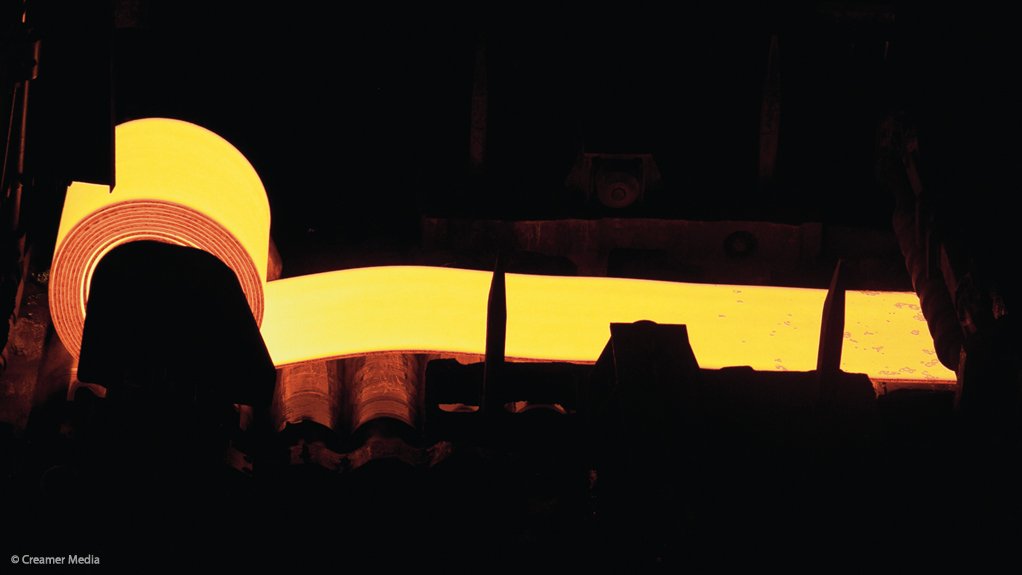



The South African government confirmed last week that it would support an application by domestic steel companies for across-the-board tariff protection of 10% – South Africa currently has no duties in place on primary steel imports.
The International Trade Administration Commission of South Africa (Itac) has already received the application and an adjudication process is under way.
Department of Trade and Industry (DTI) deputy director-general Garth Strachan told Engineering News that government was “extremely concerned” about the state of the industry, which was facing intense import competition amid weak domestic and international demand.
“We are acutely aware of the fact that there is a global glut of steel . . . which is placing South African mills, both big and small, under enormous pressure.”
International industry body worldsteel warned earlier this year that the industry was facing a “new normal” of low growth, owing primarily to a fall in Chinese steel demand. In addition, “excessive” steel capacity created during the boom period meant that exports were surging even though capacity utilisation rates had fallen to below 75%.
The fallout in South Africa had been seen most starkly in the fact that the country’s second-largest steel producer Evraz Highveld Steel and Vanadium had entered business rescue earlier in the year. The country’s largest steel producer ArcelorMittal South Africa (AMSA), meanwhile, had repeatedly warned of “difficult trading conditions”, which it said were exacerbated by rising costs and cheap steel imports from China.
However, AMSA stressed that it had not yet made any “definitive decisions” regarding plant closures, with CEO Paul O’Flaherty having confirmed only that it was in talks with government to find “lasting solutions to the challenges faced by the industry”.
Strachan stressed that, while the immediate priority was to ensure protection for the domestic industry, government would also be seeking “trade-offs”, which would improve pricing conditions in the longer term for domestic steel consumers.
Government and AMSA had been at loggerheads for a number of years over the steel group’s pricing policies, with Strachan arguing that the group’s approach had resulted in domestic consumers paying prices that were in the “highest quartile” globally.
O’Flaherty began making overtures to government, which is seeking a so-called “developmental steel price”, in 2014, in a bid to resolve the stand-off and, in May, Economic Development Minister Ebrahim Patel announced the appointment of an independent panel of steel-industry experts to offer advice on the pricing model. It is understood that the panel was expected to make its proposals during the course of this month.
Strachan indicated that there had been an easing in hostilities, stressing that the “objective situation” had changed materially and that it was, therefore, willing to support an increase in protection, as well as an “expedited” Itac adjudication process. Such support was important, as Trade and Industry Minister Dr Rob Davies would need to approve its report and submission ahead of implementation.
However, anaemic domestic demand remained another key area of concern for the sector, with O’Flaherty having already appealed for steel to be “designated” by government as an input that should be procured locally for public infrastructure programmes.
Scaw CEO Markus Hannemann told Engineering News that weak demand from the mining and construction sectors, combined with the slowdown in China and a surge in imports, had translated into “extremely depressed” prices.
The “commodity bloodbath” also meant the mining companies were cutting back on investments and spending, while promised government infrastructure projects had failed to materialise.
“We need to see government spending money on infrastructure,” Hannemann argued, add- ing that private investors were likely to remain reticent in light of current economic uncertainties.
But Scaw, which produced steel from scrap, had the added problems of scrap supply and prices, which had remained resilient.
Strachan said the DTI was working to ensure that existing measures to prevent the “unfettered” export of scrap metal were tightened, but also hinted to possible additional measures in future.
Article Enquiry
Email Article
Save Article
Feedback
To advertise email advertising@creamermedia.co.za or click here
Research Reports

Projects
Latest Multimedia

Latest News
Showroom

Supplier & Distributor of the Widest Range of Accurate & Easy-to-Use Alcohol Breathalysers
VISIT SHOWROOM
Developed to exceed the latest EN 15964 standards for police breathalysers proving that it will remain accurate and reliable for many years to come.
VISIT SHOWROOM

Announcements
What's On
Subscribe to improve your user experience...
Option 1 (equivalent of R125 a month):
Receive a weekly copy of Creamer Media's Engineering News & Mining Weekly magazine
(print copy for those in South Africa and e-magazine for those outside of South Africa)
Receive daily email newsletters
Access to full search results
Access archive of magazine back copies
Access to Projects in Progress
Access to ONE Research Report of your choice in PDF format
Option 2 (equivalent of R375 a month):
All benefits from Option 1
PLUS
Access to Creamer Media's Research Channel Africa for ALL Research Reports, in PDF format, on various industrial and mining sectors
including Electricity; Water; Energy Transition; Hydrogen; Roads, Rail and Ports; Coal; Gold; Platinum; Battery Metals; etc.
Already a subscriber?
Forgotten your password?
Receive weekly copy of Creamer Media's Engineering News & Mining Weekly magazine (print copy for those in South Africa and e-magazine for those outside of South Africa)
➕
Recieve daily email newsletters
➕
Access to full search results
➕
Access archive of magazine back copies
➕
Access to Projects in Progress
➕
Access to ONE Research Report of your choice in PDF format
RESEARCH CHANNEL AFRICA
R4500 (equivalent of R375 a month)
SUBSCRIBEAll benefits from Option 1
➕
Access to Creamer Media's Research Channel Africa for ALL Research Reports on various industrial and mining sectors, in PDF format, including on:
Electricity
➕
Water
➕
Energy Transition
➕
Hydrogen
➕
Roads, Rail and Ports
➕
Coal
➕
Gold
➕
Platinum
➕
Battery Metals
➕
etc.
Receive all benefits from Option 1 or Option 2 delivered to numerous people at your company
➕
Multiple User names and Passwords for simultaneous log-ins
➕
Intranet integration access to all in your organisation

