



Gordhan positions NDP at heart of plan to improve SA’s growth performance

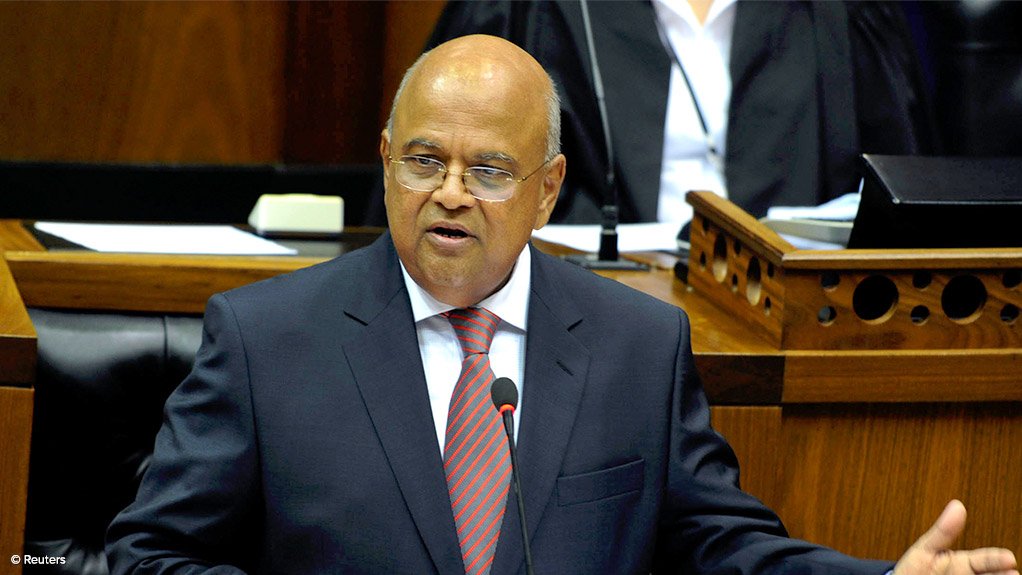


Finance Minister Pravin Gordhan reaffirmed government’s commitment to the 20-year National Development Plan (NDP) in his 2014 Budget, while appealing for social partners to work together to “radically change” the economy by embracing structural reforms to accelerate growth.
Speaking a day after it was confirmed that the South African economy had expanded by only 1.9% in 2013 - yet another strike-afflicted year - Gordhan forecast that the gross domestic product (GDP) would expand by only 2.7% in 2014.
The forecast was more or less in line with the International Monetary Fund’s 2.8% projection for the year, but higher than a number of private-sector forecasts, with economists particularly concerned about the supply-side constraints posed by labour-market unrest and the country’s electricity and transport bottlenecks.
Nevertheless, the National Treasury’s new forecast was also well off the NDP’s 5.4% yearly growth aspiration to 2030 and represented a downward revision from the 3% outlined in the October mini-Budget – the growth outlook was maintained at 3.2% and 3.5% for 2015 and 2016 respectively.
The 2013 GDP performance represented the third year of decline, with growth falling from 3.6% in 2011 and 2.5% in 2012 to the 1.9% level. The Budget Review, which accompanied the Budget speech, described the pace of growth as “moderate” and acknowledged that the economy was performing below potential.
“We have to work together to radically change our economy,” Gordhan told lawmakers, while stressing the need for NDP “action and implementation”.
But he also said the new economic order could not just be a “pact amongst elites, a coalition amongst stakeholders with vested interests. Nor can it be built on populist slogans or unrealistic promises”.
“Our history tells us that progress has to be built on a vision and strategy shared by leaders and the people – a vision founded on realism and evidence,” the Minister stressed.
The Budget Review also highlighted the need for a social compact to reduce poverty and inequality and raise employment and investment as a “critical” NDP action. “Building on formal social accords and consultation related to the mining sector, social cohesion, industrial development and youth employment, government will continue to develop active partnerships with business, labour and civil society.”
However, the address was presented at a time of another protracted strike in the platinum sector and persistent unhappiness among some sections of the labour movement with the NDP and its proposed economic remedies. The National Union of Metalworkers had been particularly vocal in its opposition to the plan.
“The labour relations environment needs more stability,” Gordhan said, while underlining partnership as a central theme of the NDP.
But he also pointed to recent academic research that had shown that South Africa was less strike afflicted than a number of other emerging markets and far less than the “prevailing narrative” would suggest. South African Reserve Bank governor Gill Marcus, who attended a Budget briefing alongside the Minister, highlighted that 2013 settlements had been on average 7.9%, which was “above what we would have liked”, but well below the initial demands.
NEW SPIRIT
Nevertheless, Gordhan said a “new spirit” and “bold leadership” were required from all stakeholders to forge, in the coming two years, a social compact that put the country and the economy ahead of immediate vested interests. Progress would hinge on the willingness of participants to compromise, failing which the environment could descend into “conflictual arrangements”.
To raise growth levels to those outlined in the plan, government planned to accelerate public infrastructure investment, improve transport and spatial planning for cities, provide support for special economic zones and manufacturing incentives, offer a tax incentive to encourage youth employment, expand the public works programmes, focus on accountability and quality in education, phase in the National Health Insurance, invest in renewable energy, professionalise the public service and overhaul procurement.
“We know what must be changed to meet the expectations of all South Africans. Service delivery must be enhanced and supported by the necessary infrastructure. Public servants must be accountable and effective. Government is committed to tackling these issues in a transparent manner with a view to building a more rapid and inclusive growth path.”
GROWTH PLAN
The immediate actions outlined in the R1.25-trillion Budget to promote growth included:
• R10.3-billion in manufacturing development incentives over the coming three years, in addition to tax relief offered through incentive programmes.
• R15.2-billion for an economic competitiveness and support programme to help firms upgrade machinery and increase productivity.
• R3.6-billion to promote special economic zones.
• R620-million for Sentech to support the digital broadcast migration programme.
• R7-billion for conditional grants to provinces to support about 435 000 subsistence and 54 500 smallholder farmers and to improve extension services.
• And R1.6-billion for the comprehensive agriculture support programme grant.
The focus on manufacturing support was geared towards improving the competitiveness of a sector that had the potential to take advantage both of a recovery in developed markets and the weaker rand.
Besides mining, an increase in exports from industry is viewed as critical to dealing with South Africa’s elevated current account deficit, which widened to 6.8% in the third quarter of 2013, as the trade deficit grew. The current account deficit is projected to narrow from 6.1% in 2013 to 5.5% in 2016 as export growth improves.
“The deterioration in the terms of trade, largely driven by commodity price movements, has been a significant factor in widening the current account deficit. Given projected commodity price trends over the medium term, South Africa is unlikely to benefit from large terms of trade gains, which supported the sustainability of the current account in the past,” the Budget Review cautioned.
However, participants in the productive sectors of the economy were also concerned about the effect steeply rising power and other administrative costs were having on their competitiveness.
Gordhan acknowledged that fiscal and monetary choices should be directed towards keeping inflation low and maintaining the recent gains in competitiveness. He added that, over the medium term, business support programmes and special economic zones would be supported to boost industrialisation and improve local competitiveness.
Marcus added that the weaker rand should offer an important stimulus to exporters, as well as opportunities for import substitution, adding that the flexible currency was playing its role as a “shock absorber”. However, she acknowledged that the weakening of the rand also posed inflationary risks. “But the key challenge is for South African business to find a way to take advantage of their enhanced competitiveness”.
AFRICAN PROMISE
Also emphasised, was the economy’s proximity to the sub-Saharan Africa market, which was poised to grow by 6.1% in 2014. Gordhan noted that South African business had already emerged as the second-largest developing-country investor and that investment into Africa had reached R36-billion a year.
“In 2013, 29% of our exports were destined for Africa,” he noted.
Gordhan also announced further steps to simplify trade and investment with Africa, reporting that the ‘HoldCo regime’ for African and offshore operations would be extended to unlisted companies, while the limits for listed companies would be increased to R2-billion.
“This regime creates a simplified tax and foreign exchange framework for companies that trade with Africa.”
Article Enquiry
Email Article
Save Article
Feedback
To advertise email advertising@creamermedia.co.za or click here
Research Reports

Projects
Latest Multimedia
Latest News
Showroom
Established on 1 March, 2000, by Barries Barnard, Advanced Fire Suppression Technologies (AFST) and the Advanced Group stands as Sub-Saharan...
VISIT SHOWROOM
Virtual Gas Network supplies compressed natural gas via a virtual gas distribution network.
VISIT SHOWROOM

Announcements
What's On
Subscribe to improve your user experience...
Option 1 (equivalent of R125 a month):
Receive a weekly copy of Creamer Media's Engineering News & Mining Weekly magazine
(print copy for those in South Africa and e-magazine for those outside of South Africa)
Receive daily email newsletters
Access to full search results
Access archive of magazine back copies
Access to Projects in Progress
Access to ONE Research Report of your choice in PDF format
Option 2 (equivalent of R375 a month):
All benefits from Option 1
PLUS
Access to Creamer Media's Research Channel Africa for ALL Research Reports, in PDF format, on various industrial and mining sectors
including Electricity; Water; Energy Transition; Hydrogen; Roads, Rail and Ports; Coal; Gold; Platinum; Battery Metals; etc.
Already a subscriber?
Forgotten your password?
Receive weekly copy of Creamer Media's Engineering News & Mining Weekly magazine (print copy for those in South Africa and e-magazine for those outside of South Africa)
➕
Recieve daily email newsletters
➕
Access to full search results
➕
Access archive of magazine back copies
➕
Access to Projects in Progress
➕
Access to ONE Research Report of your choice in PDF format
RESEARCH CHANNEL AFRICA
R4500 (equivalent of R375 a month)
SUBSCRIBEAll benefits from Option 1
➕
Access to Creamer Media's Research Channel Africa for ALL Research Reports on various industrial and mining sectors, in PDF format, including on:
Electricity
➕
Water
➕
Energy Transition
➕
Hydrogen
➕
Roads, Rail and Ports
➕
Coal
➕
Gold
➕
Platinum
➕
Battery Metals
➕
etc.
Receive all benefits from Option 1 or Option 2 delivered to numerous people at your company
➕
Multiple User names and Passwords for simultaneous log-ins
➕
Intranet integration access to all in your organisation

