



Gold miners urged to up their game to meet 2030 emissions target

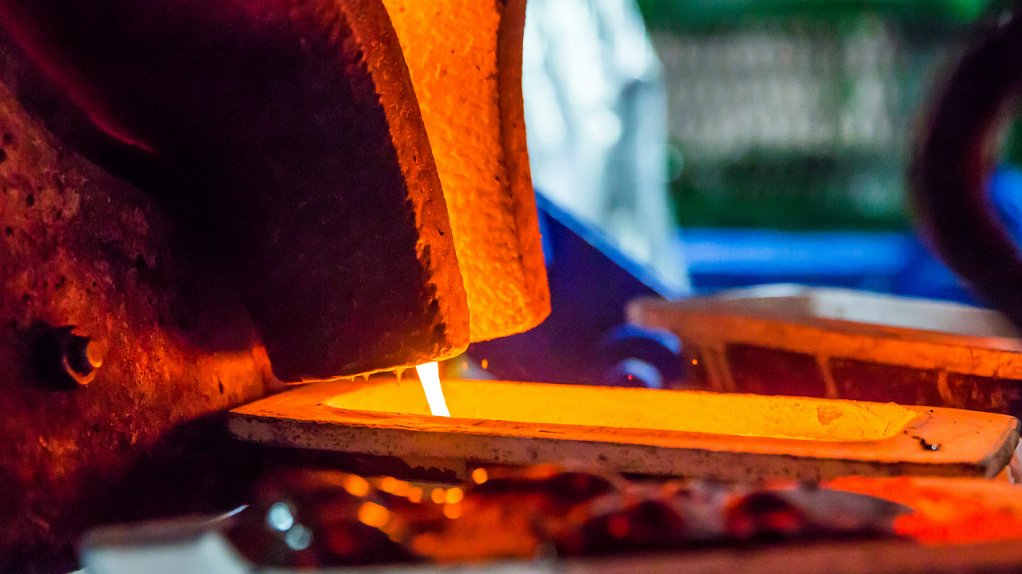


While the global gold industry is broadly on track to align with a 2 °C climate target by the end of the current decade, more action is required if the industry is to meet, and surpass, the 1.5 °C mark.
This is according to a new report from Wood Mackenzie, which plots the forecast progress of gold miners out to 2030 against the reduction in emissions required to align with the 2 °C and 1.5 °C targets of the Paris Agreement.
It is expected that the cleaner energy projects that have been implemented and planned will result in savings of more than three-million tonnes a year of carbon dioxide- (CO2-) equivalent, which is 5.5% of the gold industry’s total 2019 emissions.
Wood Mackenzie points out that although the gold industry’s emissions in 2019 totalling about 55-million tonnes of CO2-equivalent of Scope 1 and Scope 2 emissions are small in comparison with other areas within the energy sector, the industry must not become complacent.
“The gold industry cannot afford to rest on their laurels. The focus on the ‘E’ in ESG has never been greater and with COP 26 taking place later this year, we expect the spotlight on sustainability to intensify,” says Wood Mackenzie head of gold research Rory Townsend.
He warns that miners that are not striving to reduce their environmental footprints are likely to lose favour among investors and struggle to secure project financing.
“Proof that this is not a box-ticking exercise is evidenced by several miners executing sustainability-linked credit facilities, such as those agreed by Newmont in March and Polymetal increasing theirs in May.”
The location of gold assets in operation is expected to be an important determining factor in reducing emissions, with several carbon-intensive mines due to go off line before 2030. However, in the past 12 months, mine-life extensions are materialising alongside the elevated gold price at companies such as Equinox, Alamos and Yamana. Ultimately, if mine-life extensions continue, Wood Mackenzie says the industry may need to see even more aggressive action to reduce emissions to align with carbon reduction targets.
“It is apparent that some mines have a lot more ground to cover than others. Those that are beholden to carbon-intensive grids could struggle, unless the process to approve on-site renewable alternatives accelerates markedly,” adds Townsend.
Article Enquiry
Email Article
Save Article
Feedback
To advertise email advertising@creamermedia.co.za or click here
Research Reports

Projects

Latest Multimedia
Latest News
Showroom

Sweet-Orr, established in 1871, is a global leader in superior protective workwear, known for quality, innovation, and performance.
VISIT SHOWROOM
ESAB South Arica, the leading supplier of high-end welding and cutting products to the Southern African industrial market is based in...
VISIT SHOWROOM

Announcements
What's On
Subscribe to improve your user experience...
Option 1 (equivalent of R125 a month):
Receive a weekly copy of Creamer Media's Engineering News & Mining Weekly magazine
(print copy for those in South Africa and e-magazine for those outside of South Africa)
Receive daily email newsletters
Access to full search results
Access archive of magazine back copies
Access to Projects in Progress
Access to ONE Research Report of your choice in PDF format
Option 2 (equivalent of R375 a month):
All benefits from Option 1
PLUS
Access to Creamer Media's Research Channel Africa for ALL Research Reports, in PDF format, on various industrial and mining sectors
including Electricity; Water; Energy Transition; Hydrogen; Roads, Rail and Ports; Coal; Gold; Platinum; Battery Metals; etc.
Already a subscriber?
Forgotten your password?
Receive weekly copy of Creamer Media's Engineering News & Mining Weekly magazine (print copy for those in South Africa and e-magazine for those outside of South Africa)
➕
Recieve daily email newsletters
➕
Access to full search results
➕
Access archive of magazine back copies
➕
Access to Projects in Progress
➕
Access to ONE Research Report of your choice in PDF format
RESEARCH CHANNEL AFRICA
R4500 (equivalent of R375 a month)
SUBSCRIBEAll benefits from Option 1
➕
Access to Creamer Media's Research Channel Africa for ALL Research Reports on various industrial and mining sectors, in PDF format, including on:
Electricity
➕
Water
➕
Energy Transition
➕
Hydrogen
➕
Roads, Rail and Ports
➕
Coal
➕
Gold
➕
Platinum
➕
Battery Metals
➕
etc.
Receive all benefits from Option 1 or Option 2 delivered to numerous people at your company
➕
Multiple User names and Passwords for simultaneous log-ins
➕
Intranet integration access to all in your organisation

