



Gazettal of Metals and Engineering Industries Main Agreement Mettles Along


Written by Sherisa Rajah, partner at Fasken
Intense negotiation followed the expiry of the 2014 MEIBC Main Agreement on 30 June 2017, which comprised over 20 formal, informal and bilateral meetings, commencing on 7 June 2017 and ending when all the trade unions signed the Settlement Agreement on 23 August 2017.
The Settlement Agreement was concluded between the 21-employer Associations federated to SEIFSA and the industry’s five trade unions which are registered with the bargaining council and party to the Main Agreement. Other than wage increases, there are no other material concessions arising out of the recently concluded agreement. To this end, wage increases on actual rates of pay, across the board (i.e. from grade A to H) have been agreed at 7% effective from 1 July 2017, 6. 75% effective from 1 July 2018, and 6.5% effective from 1 July 2019.
A key and important component of the deal is the commitment by all the signatories to prepare and submit to the Department of Labour a comprehensive and consolidated bargaining council collective Main Agreement for gazettal and extension to all non-party employers and employees falling within the scope of application of the Main Agreement.
This document is in the process of being finalised between the parties and once ready will be submitted to the Management Comm it tee of the Bargaining Council for the necessary processing in terms of the Councils Constitution and Section 32 of the Labour Relations Act,66 of 1995, as amended.
Following the Labour Court’s decision in NEASA and others v Minister of Labour and Others, the extension and renewal of the 2011 and 2014 MEIBC Consolidated Main Agreements were set aside for failure to provide objecting parties wit h a fair opportunity to make representations prior to t he decision to extend the Main Agreement to them. For this reason, non-parties to the MEIBC have not been bound by the Main Agreement and have not been obliged to provide workers with the mini mum terms and conditions prescribed for the industry.
Extension remains a contentious issue with the National Employers' Association of South Africa (NEASA) alluding to potential litigation to challenge the lawfulness of the extension primarily on procedural grounds as with the 2011 and 2014 Main Agreements. Operations Director for the Steel and Engineering Industries Federal of Southern Africa (SIEFSA), Lucio Trentini, has advised that the parties are committed to following a fair and transparent process to ensure that any gazetting and extension will pass judicial scrutiny.
It is expected that the draft Consolidated Main Agreement will be tabled for consider at ion by the Bargaining Councils Management Committee in the new-year. Part of this process willen tail the issuing of a certificate of membership by the Department of Labour, confirming the levels of membership of the respective parties - including the non-party employer associations who are registered with the bargaining council but have elected not to end orsethe agreement. This is an important element in meeting the various legal threshold set-out in Section 32 of the Labour Relations Act.
Although this process has been riddled with technical issues and procedural hurdles, from a substance perspective, an extension of the Main Agreement is a welcome measure to align the industry.
When considering the size of the industry and its players, as well as the potential for disparity particularly in wages, fairness
dictates that all workers who fall within the technical schedules set out in the Main agreement should be afforded the same benefits and protections regardless of who they are employed by.
By the same token though, fairness to employers must also be observed. While the provision so f the Main Agreement will apply to all employers falling within the scope of applications of the Main Agreement within the metals and engineering industries, any extension of the Main Agreement must ensure that party and in particular non-party employers who may not have been complying with the provisions of the 2011 or 2014 Main Agreement have effective and efficient access to exemption processes which take into account their difficulties and that their pleas for relief are granted through the issuing of the necessary licenses of exemptions in order to minimise the unnecessary loss of much needed jobs.
Article Enquiry
Email Article
Save Article
Feedback
To advertise email advertising@creamermedia.co.za or click here
Research Reports

Projects
Latest Multimedia
Latest News
Showroom
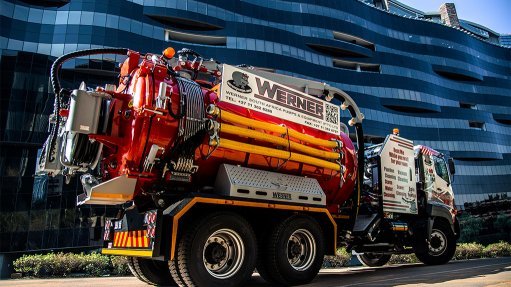
For over 30 years, Werner South Africa Pumps & Equipment (PTY) LTD has been designing, manufacturing, supplying and maintaining specialist...
VISIT SHOWROOM
For over 15 years, Lilak Aluminium, a trusted leader in architectural extrusion supply, has delivered excellence to businesses like yours.
VISIT SHOWROOM

Announcements
What's On
Subscribe to improve your user experience...
Option 1 (equivalent of R125 a month):
Receive a weekly copy of Creamer Media's Engineering News & Mining Weekly magazine
(print copy for those in South Africa and e-magazine for those outside of South Africa)
Receive daily email newsletters
Access to full search results
Access archive of magazine back copies
Access to Projects in Progress
Access to ONE Research Report of your choice in PDF format
Option 2 (equivalent of R375 a month):
All benefits from Option 1
PLUS
Access to Creamer Media's Research Channel Africa for ALL Research Reports, in PDF format, on various industrial and mining sectors
including Electricity; Water; Energy Transition; Hydrogen; Roads, Rail and Ports; Coal; Gold; Platinum; Battery Metals; etc.
Already a subscriber?
Forgotten your password?
Receive weekly copy of Creamer Media's Engineering News & Mining Weekly magazine (print copy for those in South Africa and e-magazine for those outside of South Africa)
➕
Recieve daily email newsletters
➕
Access to full search results
➕
Access archive of magazine back copies
➕
Access to Projects in Progress
➕
Access to ONE Research Report of your choice in PDF format
RESEARCH CHANNEL AFRICA
R4500 (equivalent of R375 a month)
SUBSCRIBEAll benefits from Option 1
➕
Access to Creamer Media's Research Channel Africa for ALL Research Reports on various industrial and mining sectors, in PDF format, including on:
Electricity
➕
Water
➕
Energy Transition
➕
Hydrogen
➕
Roads, Rail and Ports
➕
Coal
➕
Gold
➕
Platinum
➕
Battery Metals
➕
etc.
Receive all benefits from Option 1 or Option 2 delivered to numerous people at your company
➕
Multiple User names and Passwords for simultaneous log-ins
➕
Intranet integration access to all in your organisation

