



Emerging technology and data can reduce the impact of a pandemic


The Covid-19 pandemic has focused worldwide attention on how technology, particularly the Internet of Things (IoT), and data gathering can enable the identification of unusual trends before they become a problem and generate more accurate modelling.
There is currently a lack of real-time data on the number of coronavirus-infected people, the rate at which the virus is spreading and how it is being transmitted in the environment, which limits the amount of vital response planning and where to focus resources during the Covid-19 crisis.
“There is currently an inability to remotely monitor and service key equipment and machinery, especially if [these are] part of critical infrastructure, and there is an overburdened medical system and [an urgent] need to monitor patients remotely to balance care with the availability of beds,” says Eseye Africa regional director Jeremy Potgieter.
Emerging IoT technology has the power to “connect the dots” between the devices used in everyday life, industry, healthcare and in cities, with the potential to assist in the mitigation of the impact of global pandemics.
He cites examples such as smart city cameras that detect the number of patients with high temperatures and devices such as a ‘smart ring’ that can identify Covid-19 symptoms in a wearer, as well as the ability to identify hot spots where resources or measures need to be focused.
Data from remote devices all across the world can be managed and interpreted quickly and be made accessible to scientists through cloud computing.
Fully IoT-connected devices enable fewer on-site visits by engineers to critical infrastructure and an improved understanding to solve technical issues remotely, boosting uptime and safeguarding employees from making risky site visits.
However, Potgieter says much of the world’s infrastructure remains unconnected or provides little in the way of remote diagnostics and status updates, resulting in an inability to fix issues remotely.
Despite this, the Covid-19 crisis is forcing businesses to innovate at an “incredible” rate, he comments.
“From coworking apps allowing us to work remotely and online shopping orders to help us stay at home to robots treating critically ill patients and deep-cleaning the streets, the world and people are having to adapt fast in multiple ways – both big and small,” he said, noting that retailers and other non-essential businesses are now also having to rethink their business models in order to generate revenue.
While artificial intelligence, IoT and other technologies are making it easier and faster to identify patterns, adapt to challenges and reduce social contact, gathering data on a global scale from people, healthcare devices and the wider world is essential to limiting the potentially devastating impact of this and future pandemics.
As healthcare services’ limited resources are stretched beyond capacity during a pandemic, IoT can help with remote patient monitoring, thereby freeing up beds and reducing the risk of spreading the virus, while ensuring that, should the patient’s condition deteriorate, he or she can quickly be identified and brought in to hospital.
Those with connected devices operating during the Covid-19 outbreak should make their data available to researchers, while governments need to look at ways in which existing data sources can be leveraged in the future to create a centralised monitoring dashboard that will inform their decisions.
“The more data we gather on what happens when a pandemic occurs, the better we can become at modelling the outcome.”
Article Enquiry
Email Article
Save Article
Feedback
To advertise email advertising@creamermedia.co.za or click here
Research Reports

Projects

Latest Multimedia

Latest News


Showroom
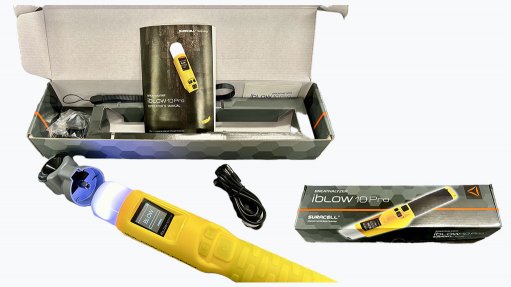
Supplier & Distributor of the Widest Range of Accurate & Easy-to-Use Alcohol Breathalysers
VISIT SHOWROOM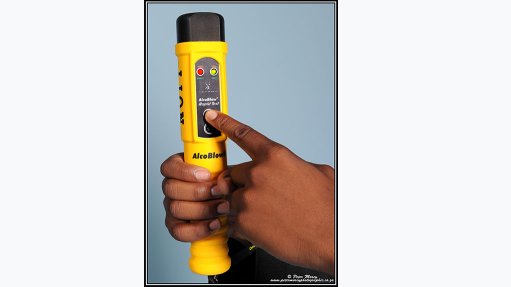
Developed to exceed the latest EN 15964 standards for police breathalysers proving that it will remain accurate and reliable for many years to come.
VISIT SHOWROOM

Announcements
What's On
Subscribe to improve your user experience...
Option 1 (equivalent of R125 a month):
Receive a weekly copy of Creamer Media's Engineering News & Mining Weekly magazine
(print copy for those in South Africa and e-magazine for those outside of South Africa)
Receive daily email newsletters
Access to full search results
Access archive of magazine back copies
Access to Projects in Progress
Access to ONE Research Report of your choice in PDF format
Option 2 (equivalent of R375 a month):
All benefits from Option 1
PLUS
Access to Creamer Media's Research Channel Africa for ALL Research Reports, in PDF format, on various industrial and mining sectors
including Electricity; Water; Energy Transition; Hydrogen; Roads, Rail and Ports; Coal; Gold; Platinum; Battery Metals; etc.
Already a subscriber?
Forgotten your password?
Receive weekly copy of Creamer Media's Engineering News & Mining Weekly magazine (print copy for those in South Africa and e-magazine for those outside of South Africa)
➕
Recieve daily email newsletters
➕
Access to full search results
➕
Access archive of magazine back copies
➕
Access to Projects in Progress
➕
Access to ONE Research Report of your choice in PDF format
RESEARCH CHANNEL AFRICA
R4500 (equivalent of R375 a month)
SUBSCRIBEAll benefits from Option 1
➕
Access to Creamer Media's Research Channel Africa for ALL Research Reports on various industrial and mining sectors, in PDF format, including on:
Electricity
➕
Water
➕
Energy Transition
➕
Hydrogen
➕
Roads, Rail and Ports
➕
Coal
➕
Gold
➕
Platinum
➕
Battery Metals
➕
etc.
Receive all benefits from Option 1 or Option 2 delivered to numerous people at your company
➕
Multiple User names and Passwords for simultaneous log-ins
➕
Intranet integration access to all in your organisation

