Critical minerals, critical question: What should Africa ask for?



Gaylor Montmasson-Clair Is a director and co-founder of Southern Transitions, a Global South just transition ‘think-and-do-tank’.




By: Gaylor Montmasson-Clair - director and co-founder of Southern Transitions, a Global South just transition ‘think-and-do-tank’.
The world’s green future runs through the African ground. African countries collectively hold a large share of the earth’s minerals. Yet, Africans have historically seen others profit from their resources. A new scramble is under way, with exponential increases in demand forecast by 2050. The central question for African governments is no longer whether such resources are valuable. It is whether African countries can capture that value for themselves. What’s the ask?
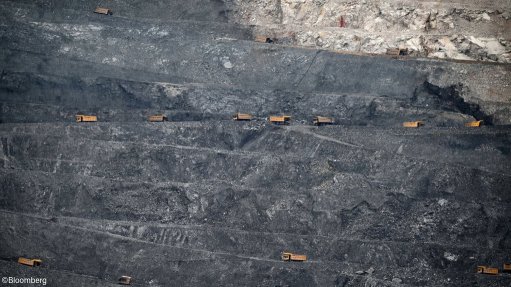
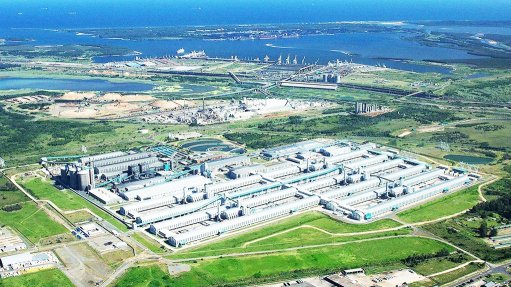
African countries aiming to leverage their mineral endowment to drive structural transformation and catch-up strategies need to answer this fundamental question. Historically, few – if any – have cracked it. Tales of foreign extractivism, corruption, unequal exchange, exclusion and conflicts are common. Managing the human, ecological and socio-economic impacts of mining is an ongoing challenge. Only a few African countries, like South Africa or Morocco, have made notable inroads in developing industrial capabilities on the back of mining activities and upgrading their position in global value chains.
Time is of the essence. Fuelled by demand for green, industrial and digital technologies (and defence applications), a new window of opportunity has opened – for now. The International Energy Agency forecasts the yearly mineral demand from green technologies to rise radically by 2050: up to four times for cobalt; five times for graphite; 13 times for lithium; 29 times for manganese and 66 times for platinum group metals (PGMs).
What does this mean for Africa? Well, it depends. A significant heterogeneity marks the continent. While many African countries have existing production capacity and noteworthy mineral deposits, only a handful are globally significant players. South Africa is a leading producer of multiple critical minerals (PGMs, chromium, manganese). The Democratic Republic of the Congo (cobalt), Morocco (phosphate rock), Guinea (bauxite) and Gabon (manganese) are each well positioned in the supply of one single commodity, respectively. Most other African nations, however, are marginal producers with extremely limited influence on global markets dominated by China, Australia and a handful of other producers.
Beyond varying positions in mineral value chains, African countries also face contrasting domestic conditions – different levels of political and economic stability, infrastructure access and labour market profiles. Critically, many are highly dependent on mineral exports: Eritrea, Sierra Leone and Guinea rank among the most dependent countries globally, with over three-quarters of their exports composed of minerals.
The global economy is deeply competitive, with leading world powers – led by the US, the European Union and China – actively moving to secure a “competitive edge” and closing the space for new entrants through inward-looking, protectionist, and sometimes neo-colonial policies and behaviours. Africa, while not in the race, is collateral damage here. Ultimately, the global value chains into which these minerals are fed are already dominated by a limited number of foreign State and private actors – from the US, Europe, Japan, South Korea and, increasingly, China – which control beneficiation, manufacturing and research and development. Most of the continent’s mineral resources are externally controlled and geared towards low-value-added exports. Increasing circularity in high-consumption economies is further entrenching this control, as seen in the case of PGMs.
Yet, the comparative advantage of several African economies in critical minerals is undeniable, especially in a supply-constrained environment. The window of opportunity should not – cannot – be missed.
This demands an “activist and transformative state” supported by a strategic, developmental partnership with the private sector, to shape and direct economic development and social progress. Industrial policy must carefully drive investment in selected activities, protect infant industries and build domestic capabilities, while also enforcing trade and investment conditionalities, and negotiating partnerships domestically and internationally.
This also requires a move beyond traditional, linear pathways – from mining to beneficiation – to comprehensive, synergetic strategies that build a variety of production and service linkages upstream, downstream and laterally. In plain terms: less focus on capital- and energy-intensive smelting and refining alone, more emphasis on the job-rich manufacturing and service opportunities that surround them.
African countries must align their “ask” to bilateral and multilateral partners and the private sector, with their specific local conditions. Cooperation between Global South countries to pool leverage and avoid a race to the bottom is paramount; so too is a renewed, genuine partnership with the Global North – on Africa’s terms.
Ultimately, the right “ask” demands the right actors at the table. This means identifying the investors, customers and partners who are incentivised to align with Africa’s development priorities – at the local, but also regional levels – and then clarifying, with precision, what Africa needs from them and what they might credibly agree to.
The African Union’s Green Mineral Strategy, adopted in 2025, provides some direction. But context-specific, evidence-based research is still needed, alongside bold experimentation and implementation, to understand what is possible, where incentives can genuinely be aligned, and what partnerships can realistically deliver.
It is time for Africa to collectively do its homework. No country is in a position of power to successfully go it alone. But Africa, together with the rest of the Global South, has the potential to drive the regime change in mineral governance that the moment uniquely demands.
Article Enquiry
Email Article
Save Article
Feedback
To advertise email advertising@creamermedia.co.za or click here

Projects
Latest Multimedia

Latest News
Showroom

Established on 1 March, 2000, by Barries Barnard, Advanced Fire Suppression Technologies (AFST) and the Advanced Group stands as Sub-Saharan...
VISIT SHOWROOM
Occupational health services, mobile clinics, wellness campaigns, aviation.
VISIT SHOWROOM
Press Office
Announcements
What's On
Subscribe to improve your user experience...
Option 1 (equivalent of R125 a month):
Receive a weekly copy of Creamer Media's Engineering News & Mining Weekly magazine
(print copy for those in South Africa and e-magazine for those outside of South Africa)
Receive daily email newsletters
Access to full search results
Access archive of magazine back copies
Access to Projects in Progress
Access to ONE Research Report of your choice in PDF format
Option 2 (equivalent of R375 a month):
All benefits from Option 1
PLUS
Access to Creamer Media's Research Channel Africa for ALL Research Reports, in PDF format, on various industrial and mining sectors
including Electricity; Water; Energy Transition; Hydrogen; Roads, Rail and Ports; Coal; Gold; Platinum; Battery Metals; etc.
Already a subscriber?
Forgotten your password?
Receive weekly copy of Creamer Media's Engineering News & Mining Weekly magazine (print copy for those in South Africa and e-magazine for those outside of South Africa)
➕
Recieve daily email newsletters
➕
Access to full search results
➕
Access archive of magazine back copies
➕
Access to Projects in Progress
➕
Access to ONE Research Report of your choice in PDF format
RESEARCH CHANNEL AFRICA
R4500 (equivalent of R375 a month)
SUBSCRIBEAll benefits from Option 1
➕
Access to Creamer Media's Research Channel Africa for ALL Research Reports on various industrial and mining sectors, in PDF format, including on:
Electricity
➕
Water
➕
Energy Transition
➕
Hydrogen
➕
Roads, Rail and Ports
➕
Coal
➕
Gold
➕
Platinum
➕
Battery Metals
➕
etc.
Receive all benefits from Option 1 or Option 2 delivered to numerous people at your company
➕
Multiple User names and Passwords for simultaneous log-ins
➕
Intranet integration access to all in your organisation