



Chieftain Metals reports strong project feasibility optimisation

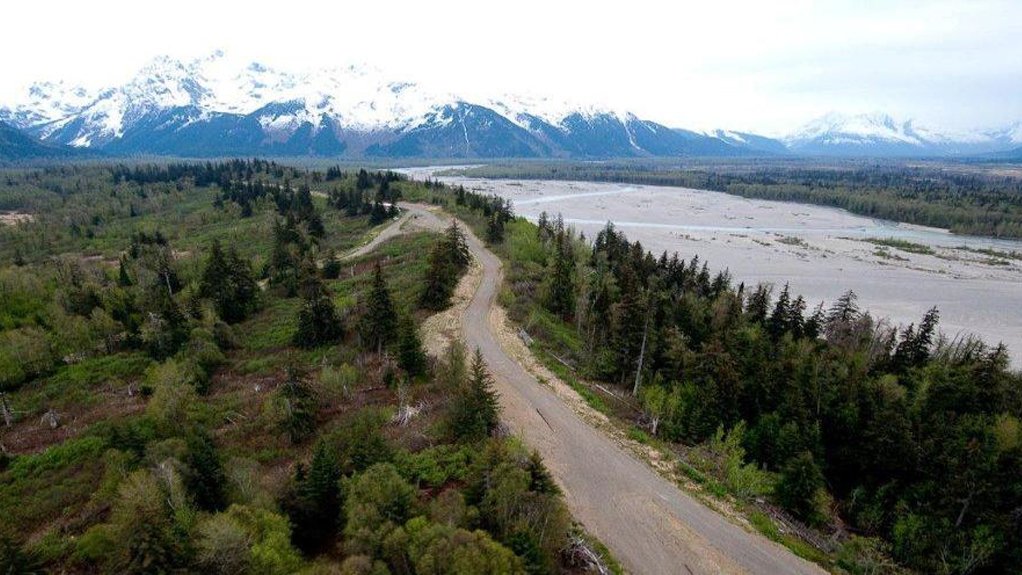



TORONTO (miningweekly.com) – The proponent of the Tulsequah Chief polymetallic project, in British Columbia, Chieftain Metals, late on Monday published the results of an optimised feasibility study, aimed at improving the financeability of the project in the current difficult market.
The 2014 feasibility update, prepared by a team led by consulting engineering firm JDS Energy & Mining, reflected a project with lower capital costs resulting in enhanced projected investment returns, despite lower yearly output.
Chieftain noted that the latest operating profile would preserve all the project’s growth potential and was expected to allow Chieftain to flow funds for project expansion out of cash flow.
Critically, the study lowered the expected capital cost to C$198-million, down from a 2013 feasibility optimisation estimate of C$450-million.
The latest optimisation study was based on a 1 100 t/d underground mining operation, with an expected 11-year mine life, a significantly smaller project when compared with previous plans of providing mill throughput of between 2 000 t/d and 2 500 t/d over a 9.5-year mine lifetime.
The project was now expected to produce 46.9-million pounds of zinc a year, at a C1 cash cost net of gold, silver, copper and lead by-product credits of negative C$0.25/lb. The study used a base-case price deck for metals and foreign exchange based on spot prices at October 15.
A key change in plan was to opt to ship concentrates by conventional barging for five months of the year to transport concentrate and supplies. The company added that this logistical solution eliminated the road proposed in the 2012 feasibility study, saving C$125-million in capital expenditures (capex).
Operating costs were estimated to average higher at $186/t of ore processed, including concentrate shipment, compared with the 2013 feasibility study’s estimate of $126/t.
Nevertheless, the latest study yielded a pre-tax net present value (NPV), at an 8% discount, of C$212-million, an internal rate of return (IRR) of 25.2%, an after-tax NPV of C$146-million and an IRR of 21.9%. The previous study estimated the after-tax NPV at $144-million, when using an 8% discount rate, with an IRR of 14.7%.
The latest feasibility treatment was based on compliant reserves of 4.4-million tonnes, of which 684 000 t, or 15%, were in the proven category, which comprised the higher-grade portion of the 6.4-million tonnes reported in the 2012 feasibility study.
“We are pleased to deliver a feasibility optimisation demonstrating strong economics for Tulsequah. The NPV of C$212-million represents a pre-tax NPV of about $12.65 a share prefinancing, based on the current outstanding shares and average annual [earnings before interest, taxes, depreciation and amortisation] at full production of C$69-million, or $4.09 a share, prefinancing, based on the current outstanding shares.
“The lower tonnage design enables a much lower capex than first envisioned in 2012, without a significant decrease in operating cash flow [owing] to the high-grade focus of the new mine plan. Given the market’s current preference for smaller capital projects, this feasibility update is expected to allow Chieftain to finalise project financing and plan construction start-up,” president and CEO Victor Wyprysky said.
PERMITTING
The Tulsequah Chief project was deemed ‘substantially started’ by the British Columbia Environment Minister in June 2012.
However, after a judicial review, it was decided that the Minister had to consult with the Taku River Tlingit First Nation on the ‘substantially started’ decision and render a new decision after the end of the consultation period on November 2.
Other than that, the company had all necessary permits to start construction on site including a Mines Act permit from the provincial Ministry of Energy and Mines that permitted it to start on-site construction. Chieftain said it would apply for a Mines Act permit amendment once further engineering was completed on the tailings dam, surface plant facility and underground mine.
This project design would make improvements to the effluent treatment plant and tackle design deficiencies.
The mine plan would address the environmental legacy and provide a long-term solution to the acid drainage at the project site. The old workings, mined by Cominco in the 1950s, would be filled with the depyritised tailings and cement to prevent the water from coming into contact with the sulphides and turning acidic.
The closure plan provided for site monitoring for ten years after the mine had been shuttered.
Under a condition of the third amendment of the province’s environmental assessment certificate, which contemplated barging, an environmental oversight committee would be created before the company started construction. It would consist of representatives from the provincial Ministry of Environment, the Taku River Tlingit First Nation, the US Department of Interior and Chieftain.
Chieftain explained that it would work with authorities to stay within the parameters of the current British Columbia Environmental Assessment Certificate or determine if any amendment would be required owing to the reduction of the production level or conventional barging, despite air-cushion barging being fully permitted. Chieftain was not required to obtain permits to conduct conventional barging of containerised concentrate in Alaska when using a third-party contractor that had the required permits and authorisations.
Chieftain’s TSX-listed stock on Tuesday rose 13.33% to C$0.17 apiece, having lost 32% since the start of the year.
Article Enquiry
Email Article
Save Article
Feedback
To advertise email advertising@creamermedia.co.za or click here
Research Reports

Projects

Latest Multimedia
Latest News
Showroom
We supply customers with practical affordable solutions for their testing needs. Our products include benchtop, portable, in-line process control...
VISIT SHOWROOM
Iritron delivers advanced automation, control, and optimisation solutions to the Mining, Minerals & Metals, Consumer Package Goods and...
VISIT SHOWROOM

Press Office
Announcements
What's On
Subscribe to improve your user experience...
Option 1 (equivalent of R125 a month):
Receive a weekly copy of Creamer Media's Engineering News & Mining Weekly magazine
(print copy for those in South Africa and e-magazine for those outside of South Africa)
Receive daily email newsletters
Access to full search results
Access archive of magazine back copies
Access to Projects in Progress
Access to ONE Research Report of your choice in PDF format
Option 2 (equivalent of R375 a month):
All benefits from Option 1
PLUS
Access to Creamer Media's Research Channel Africa for ALL Research Reports, in PDF format, on various industrial and mining sectors
including Electricity; Water; Energy Transition; Hydrogen; Roads, Rail and Ports; Coal; Gold; Platinum; Battery Metals; etc.
Already a subscriber?
Forgotten your password?
Receive weekly copy of Creamer Media's Engineering News & Mining Weekly magazine (print copy for those in South Africa and e-magazine for those outside of South Africa)
➕
Recieve daily email newsletters
➕
Access to full search results
➕
Access archive of magazine back copies
➕
Access to Projects in Progress
➕
Access to ONE Research Report of your choice in PDF format
RESEARCH CHANNEL AFRICA
R4500 (equivalent of R375 a month)
SUBSCRIBEAll benefits from Option 1
➕
Access to Creamer Media's Research Channel Africa for ALL Research Reports on various industrial and mining sectors, in PDF format, including on:
Electricity
➕
Water
➕
Energy Transition
➕
Hydrogen
➕
Roads, Rail and Ports
➕
Coal
➕
Gold
➕
Platinum
➕
Battery Metals
➕
etc.
Receive all benefits from Option 1 or Option 2 delivered to numerous people at your company
➕
Multiple User names and Passwords for simultaneous log-ins
➕
Intranet integration access to all in your organisation

