



BHP Billiton’s South32 poised to benefit South Africa

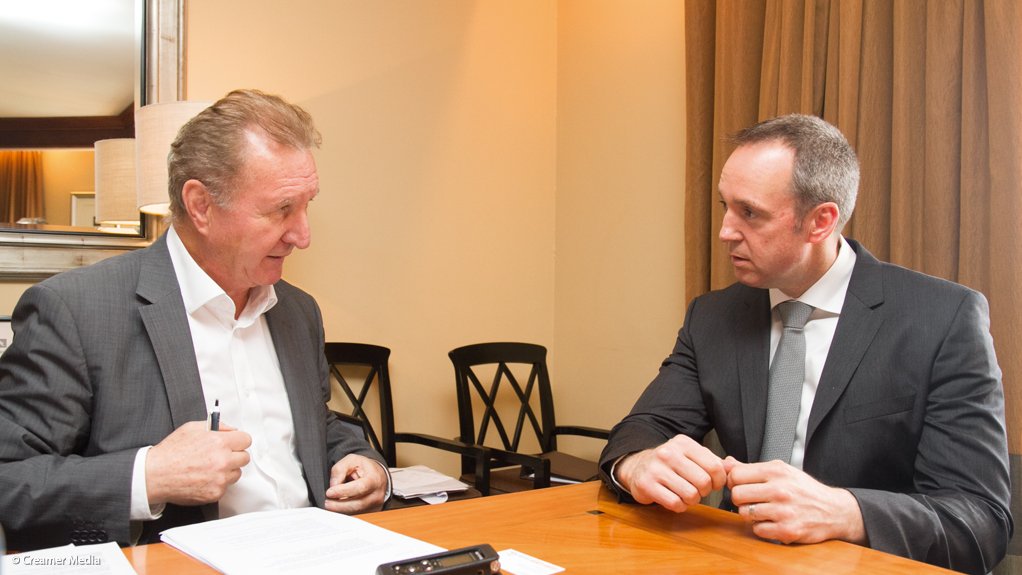
Newco CEO-designate Graham Kerr (right) and Martin Creamer
Photo by Duane Daws
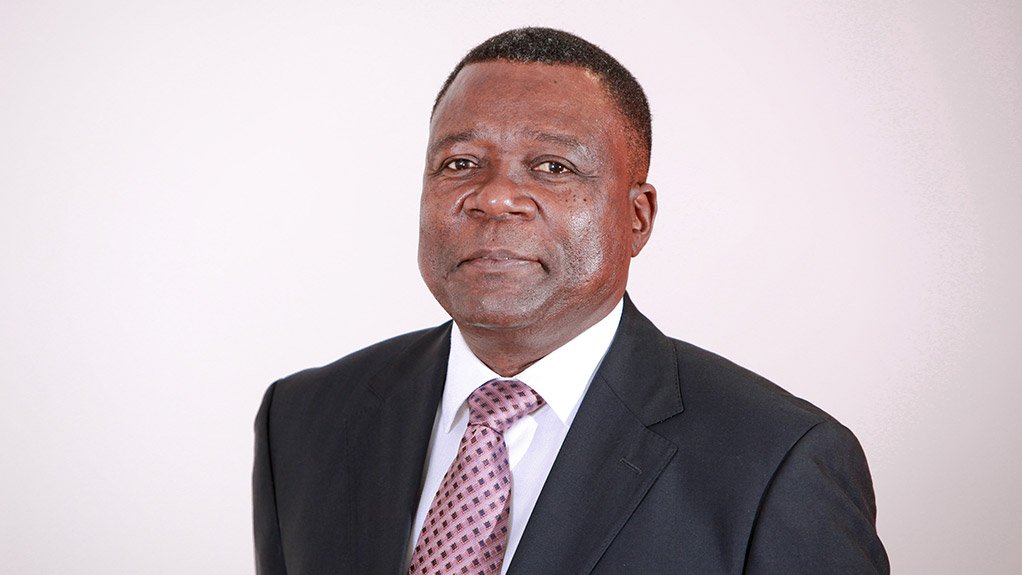
BHP Billiton SA Chairperson Xolani Mkhwanazi
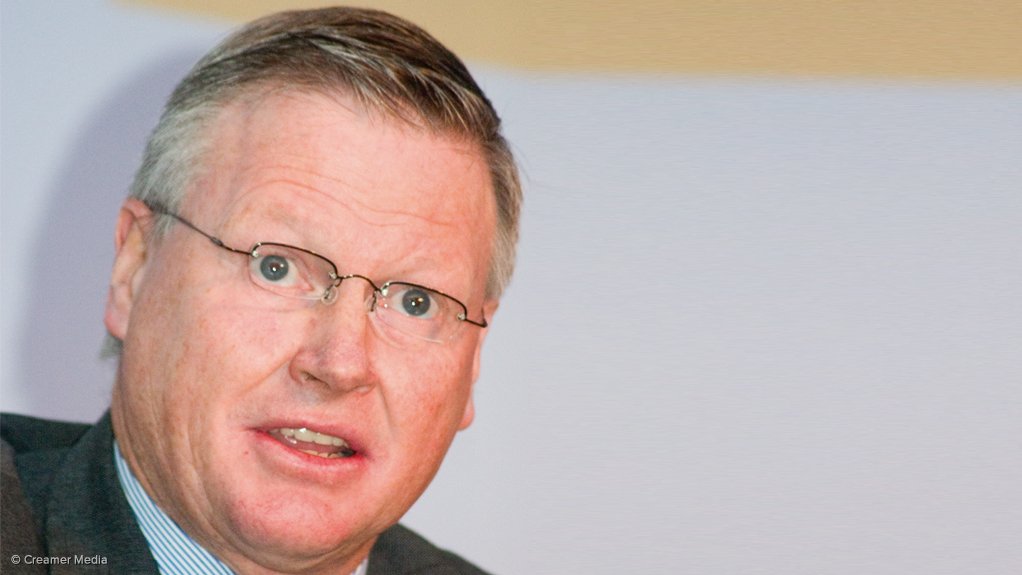
BHP Billiton director Keith Rumble
Photo by Duane Daws

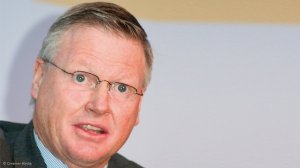


JOHANNESBURG (miningweekly.com) – The assets that BHP Billiton plans to hive off into a new standalone global diversified metals and mining company generated sales revenue last year of close to $10-billion.
In the last ten years, the commodities of the proposed new company South32 enjoyed an earnings margin – in earnings before interest, tax, depreciation and amortisation (Ebitda) terms – of 34%, through the cycle.
The average Ebitda of South32's assets was $3.3-billion and in 2013, a tough year in many of its commodities, its Ebitda was $1.8-billion.
“There are not many companies that have that. It will be a global player and a good business,” South32 CEO-designate and current BHP Billiton CFO Graham Kerr, 43, commented in a one-on-one interview with Creamer Media's Mining Weekly Online in Johannesburg.
South32 CFO-designate is current BHP Billiton investor relations head Brendan Harris.
“The ability to make a difference, move the needle and be more entrepreneurial, is something that the new company will build into its DNA and deliver on. There’s a lot of upside potential,” said Kerr, who was instrumental in the building of the Ekati diamond mine in Canada and laid the foundation for BHP Billiton to enter into potash mining in Saskatchewan.
"One thing that I'd certainly like out of the new company is more directness and a company that is not afraid to have the conversations. We will show people that we can make a difference."
Close to a third of the demerged company’s portfolio of alumina and aluminium, manganese ore and manganese alloys, thermal coal, metallurgical coal, nickel, silver, lead and zinc assets are in South Africa, which has also been chosen as the location for South32’s global shared services centre, which will mirror BHP Billiton’s large shared service base in Kuala Lumpur.
The South African centre will be staffed by 200 skilled employees who will deliver information technology, payroll, invoice processing and payment-run services to the proposed 12-asset, five-country, 24 000-employee Newco group, just as the Kuala Lumpur centre delivers services to the 40-asset, 50 000-employee BHP Billiton group.
In the mix will be the wholly owned and operated Hillside Aluminium smelter in South Africa's KwaZulu-Natal province, and the partly owned and operated Mozal aluminium smelter in Maputo, Mozambique, along with the Hotazel manganese mines, the Mamatwan opencast mine and the Wessels underground mine in South Africa’s Northern Cape province, which fall under the Samancor Manganese umbrella, in which Anglo American has a 40% share.
Samancor Manganese beneficiates 30% of the manganese ore it mines in one of the largest operating furnaces of its kind in the world at Samancor Manganese’s Metalloys smelter, in Meyerton, in Gauteng province.
The Khutala, Klipspruit, Middelburg and Wolvekrans collieries in South Africa, as well as three coal-processing plants, will be Newco’s thermal coal assets.
Kerr described the closed Bayside aluminium operation as an opportunity to explore further ways to look at downstream processing.
Liquid metal is already being moved from Hillside across to the casthouse and the next stage of downstream processing in that space is under continual study.
At least two South Africans – current BHP Billiton South Africa executive chairperson Xolani Mkhwanazi and former Impala Platinum CEO and current BHP Billiton board member Keith Rumble, who lives in South Africa – will be on the Newco board and a South African group executive will run the Southern African business from a South African base and have single-point accountability in the building of an enterprise of national importance.
The leadership here will also be afforded the entrepreneurial flexibility needed to look at a broader set of options in Africa and the intention will be for South32 to grow in South Africa through its regional South African headquarters.
“It’s hard to see that this is not a good story for South Africa,” Kerr commented to Mining Weekly Online, as he outlined that half of the assets will be in Australia, taking in the Gemco and Temco manganese businesses, Cannington, the world’s largest silver mine, Illawarra metallurgical coal and the Worsley alumina refinery.
The ASX-listed and Perth-headquartered company, which is seen as having the potential to be an ASX 20 company, will manage the world’s largest manganese business, one of the world’s most notable ferronickel operations - Cerra Matoso in Colombia - as well as the highly rated Alumar aluminium smelter in Brazil.
Most analysts are modelling higher prices for South32’s middle-stage commodities, which are expected to be used increasingly in the next stage of development in countries like China.
While prices of these commodities are currently under par, there is growing consensus that they have a bright future.
Through all of this, BHP Billiton itself will maintain its presence in South Africa as well as its secondary listing on the JSE, where 9% of its shareholding resides and where its petroleum division is currently carrying out a seismic survey on two blocks offshore of South Africa’s West Coast.
Newco will have a secondary inward listing in Johannesburg, which gives the South African investment community the expanded investment horizon that many have been seeking.
BHP Billiton itself, which at one stage had 50 assets in 16 countries, is now poised to end up with only seven gigantic assets in mainly Australia and South America, which are destined to be run like manufacturing operations rather than mines.
South32, on the other hand, will need to be agile in going about the business of being a true mining company with quality resources that need replenishing.
Having done the exploration on potash for BHP Billiton and made the acquisitions that established the land base for the giant company's potash development in Canada, Kerr is well versed with what it takes and has a record of being able to build high-performing teams that deliver strong outcomes, having worked under BHP Billiton CEO luminaries such as American Chip Goodyear, South African Marius Kloppers and now Scot Andrew Mackenzie.
He expects many hurdles to have been scaled by the time BHP Billiton reports to the market again in November, among them the obtaining of demerger tax relief from the Australian Taxation Office and demerger approval from the South African Reserve Bank and South Africa's National Treasury.
Thereafter, it will be up to shareholders to vote on the demerger on the basis of the recommendation from the BHP Billiton board.
In terms of BHP Billiton’s constitution, however, shareholder approval is technically not needed but the company will put it to the vote on the basis of its conviction that it is the right corporate governance step to take.
Mixed analyst feedback on South32 has been mainly positive but some London shareholders are in a quandary as their mandates preclude them from holding stock in companies listed outside of London.
Part of the challenge for the South32 leadership team will be to develop a purpose-fit strategy for the assets as well as purpose-fit processes, systems and operating models.
While BHP Billiton today runs along commodity lines, South32 will run mainly on Australian and South African regional lines, which will allow it more stakeholder focus.
After getting South32 up and running, leadership will have to demonstrate capital-allocation discipline, financial performance and an ability to run the company well.
Thereafter, low-risk brownfields expansion possibilities can come into play, two being in energy coal and manganese and a third involving a 20-year life-of-mine expansion possibility at Cannington, which has been operating at Ebits of up to $1-billion for the last 15 years, without demanding significant investment.
In South Africa, all regulatory approvals are in good standing, the assets are fully compliant with the 2014 Mining Charter and accommodating them in South32 is not seen as a factor that will negatively impact agreements already in place.
The opposite is more likely, as enhancement of the underlying value of the businesses will allow black economic-empowerment partnerships to benefit from South32, which is scheduled for listing in mid-2015 as a company with minimal debt and a super strong balance sheet.
Article Enquiry
Email Article
Save Article
Feedback
To advertise email advertising@creamermedia.co.za or click here
Research Reports

Projects
Latest Multimedia
Latest News
Showroom

SafeQuip is a leading distributor and manufacturer of fire safety solutions, offering a comprehensive range of products designed to meet all...
VISIT SHOWROOM
Established in 1933, EKATO is the world leader in agitation technology, supplying agitators for processes and applications such as chemicals and...
VISIT SHOWROOM
Announcements
What's On
Subscribe to improve your user experience...
Option 1 (equivalent of R125 a month):
Receive a weekly copy of Creamer Media's Engineering News & Mining Weekly magazine
(print copy for those in South Africa and e-magazine for those outside of South Africa)
Receive daily email newsletters
Access to full search results
Access archive of magazine back copies
Access to Projects in Progress
Access to ONE Research Report of your choice in PDF format
Option 2 (equivalent of R375 a month):
All benefits from Option 1
PLUS
Access to Creamer Media's Research Channel Africa for ALL Research Reports, in PDF format, on various industrial and mining sectors
including Electricity; Water; Energy Transition; Hydrogen; Roads, Rail and Ports; Coal; Gold; Platinum; Battery Metals; etc.
Already a subscriber?
Forgotten your password?
Receive weekly copy of Creamer Media's Engineering News & Mining Weekly magazine (print copy for those in South Africa and e-magazine for those outside of South Africa)
➕
Recieve daily email newsletters
➕
Access to full search results
➕
Access archive of magazine back copies
➕
Access to Projects in Progress
➕
Access to ONE Research Report of your choice in PDF format
RESEARCH CHANNEL AFRICA
R4500 (equivalent of R375 a month)
SUBSCRIBEAll benefits from Option 1
➕
Access to Creamer Media's Research Channel Africa for ALL Research Reports on various industrial and mining sectors, in PDF format, including on:
Electricity
➕
Water
➕
Energy Transition
➕
Hydrogen
➕
Roads, Rail and Ports
➕
Coal
➕
Gold
➕
Platinum
➕
Battery Metals
➕
etc.
Receive all benefits from Option 1 or Option 2 delivered to numerous people at your company
➕
Multiple User names and Passwords for simultaneous log-ins
➕
Intranet integration access to all in your organisation

