



Aurania finds evidence of colonial Spanish activity in 'Lost Cities' gold hunt

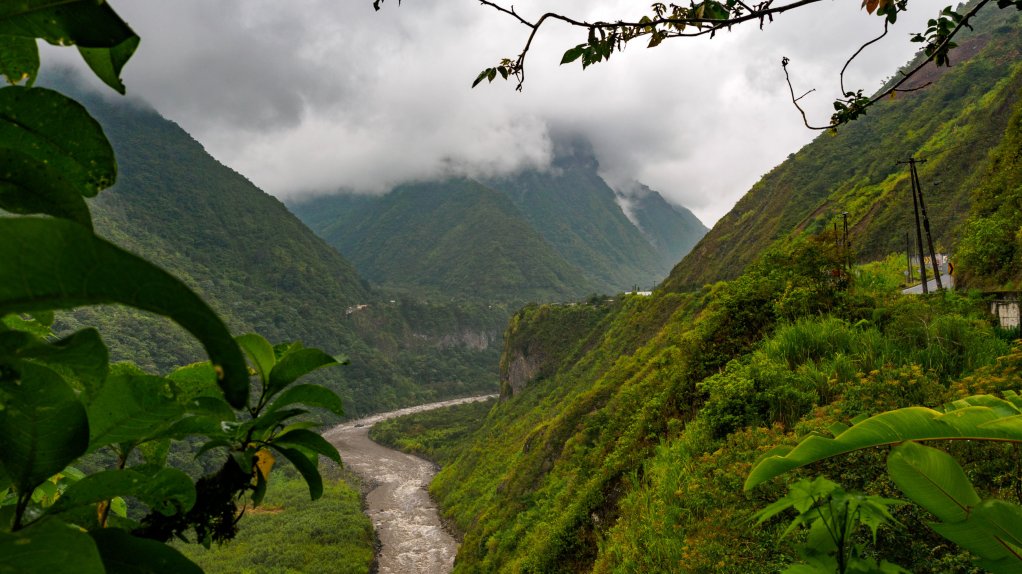


Gold and copper exploration company Aurania Resources has found the first field evidence of colonial Spanish activity at its Lost Cities project, in Ecuador, with the vestiges of an old road having been found.
Aurania's field teams discovered the road while searching for Sevilla de Oro, which was one of two gold mining centres described in historic manuscripts from Ecuador, Peru, Spain and the Vatican. These records describe the colonial Spanish operating the two gold mines between about 1565 and 1606.
Discovered by Aurania's exploration teams, the road is believed to be the one that linked Sevilla de Oro to the other gold mining centre 'Logroño de los Caballeros' as described in the historic manuscripts.
"The historical record names the treasurers of the ‘Caja Reales’ - the Royal Treasuries - in Sevilla and Logroño, so we know that the gold produced was cast into crude ingots for transport to Quito. We always presumed that these ingots would have been transported by horse or donkey along a well-travelled route from the mines. It appears that we have come across one of these trails, though it is cut by more recent landslides at both ends,” Aurania chairperson and CEO Keith Barron said on Wednesday.
Barron is best known for discovering the colossal Fruta del Norte gold deposit, which started production last week.
The remnants of the old road, which runs north-south along the axis of Aurania's concession block, have been found in thick vegetation over a distance of 2.5 km. It is an engineered road, cut into embankments and its downslope edges are lined with blocks of shale that have prevented erosion. The road is well drained, and its surface is of packed shale, which is the country rock in the area that the road transects. The road is engineered to have moderate grade where the ground rises or falls steeply and is straight in relatively flat areas.
Two rectangular blocks of dressed sandstone lie at a junction in the road. These blocks are estimated to weigh between 400 kg and 450 kg. A third rectangular block more crudely shaped in diorite (a granitic rock), but showing clear chisel marks, was found in thick vegetation some 300 m from the two well-hewn blocks.
“Our LiDAR survey should pick up the continuations of the trail and its termination at the historical mine sites. We do not anticipate the discovery of any ruined buildings, though the discovery of dressed stone along the trail is perhaps significant and suggests that the Spaniards attempted to build a stone Caja Real as they had done in other locations in Ecuador, but that the dressed stone was dropped on the road along the way,” said Barron.
As a follow-up of the initial discovery, Aurania’s field teams would continue to search north and south to try to find extensions of the road.
The company stated that its LiDAR survey would be expedited over the area with sensors that were less sensitive to weather conditions and humidity. The lower resolution of the planned LiDAR survey should be sufficient to detect extensions to the road.
Further, exploration would continue over strong indications of a mineralised system near the road. Those indications are focused on an extensive area of quartz-sericite-pyrite alteration, which is typically found over and adjacent to porphyry systems.
The Lost Cities – Cutucu project is located in the Jurassic Metallogenic Belt in the eastern foothills of the Andes mountain range of south-eastern Ecuador.
Aurania is listed on the TSX-V, in Vancouver, Canada.
Article Enquiry
Email Article
Save Article
Feedback
To advertise email advertising@creamermedia.co.za or click here
Research Reports

Projects

Latest Multimedia
Latest News
Showroom
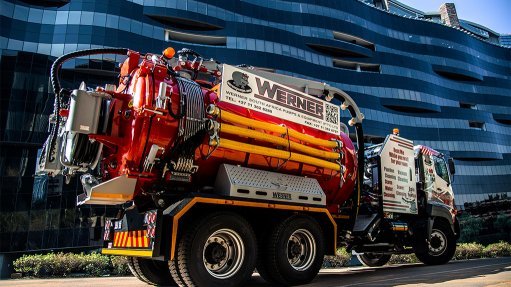
For over 30 years, Werner South Africa Pumps & Equipment (PTY) LTD has been designing, manufacturing, supplying and maintaining specialist...
VISIT SHOWROOM
For over 15 years, Lilak Aluminium, a trusted leader in architectural extrusion supply, has delivered excellence to businesses like yours.
VISIT SHOWROOM
Announcements
What's On
Subscribe to improve your user experience...
Option 1 (equivalent of R125 a month):
Receive a weekly copy of Creamer Media's Engineering News & Mining Weekly magazine
(print copy for those in South Africa and e-magazine for those outside of South Africa)
Receive daily email newsletters
Access to full search results
Access archive of magazine back copies
Access to Projects in Progress
Access to ONE Research Report of your choice in PDF format
Option 2 (equivalent of R375 a month):
All benefits from Option 1
PLUS
Access to Creamer Media's Research Channel Africa for ALL Research Reports, in PDF format, on various industrial and mining sectors
including Electricity; Water; Energy Transition; Hydrogen; Roads, Rail and Ports; Coal; Gold; Platinum; Battery Metals; etc.
Already a subscriber?
Forgotten your password?
Receive weekly copy of Creamer Media's Engineering News & Mining Weekly magazine (print copy for those in South Africa and e-magazine for those outside of South Africa)
➕
Recieve daily email newsletters
➕
Access to full search results
➕
Access archive of magazine back copies
➕
Access to Projects in Progress
➕
Access to ONE Research Report of your choice in PDF format
RESEARCH CHANNEL AFRICA
R4500 (equivalent of R375 a month)
SUBSCRIBEAll benefits from Option 1
➕
Access to Creamer Media's Research Channel Africa for ALL Research Reports on various industrial and mining sectors, in PDF format, including on:
Electricity
➕
Water
➕
Energy Transition
➕
Hydrogen
➕
Roads, Rail and Ports
➕
Coal
➕
Gold
➕
Platinum
➕
Battery Metals
➕
etc.
Receive all benefits from Option 1 or Option 2 delivered to numerous people at your company
➕
Multiple User names and Passwords for simultaneous log-ins
➕
Intranet integration access to all in your organisation

