



Anglo American Platinum leading own platinum market development


JOHANNESBURG (miningweekly.com) – Platinum mining company Anglo American Platinum (Amplats), which will not be renewing its long-standing market development contract with Johnson Matthey at year-end, is replacing general market development funding with project-focused specific funding.
Existing contracts attracting discounts and commissions would not be renewed, Amplats said in response to a Mining Weekly Online query, which arose after Johnson Matthey said on Monday that the latest Platinum Review 2013 would be its last following Amplats’ decision to undertake its own market development from next year.
Amplats said its revised commercial strategy, led by Andrew Hinkly as executive head of marketing since January 2012, included diversifying its customer portfolio and replacing general market development funding with project-focused specific funding.
That specific funding would include co-investment with value chain partners, direct investment in high-growth platinum-group metal (PGM) segments and a focus on sustainable demand.
Amplats said it would continue to fund market development, both individually and collectively, with major South African platinum producers.
That would include jewellery market development through Platinum Guild International, fuel-cell product development and commercialisation of PGM technology through the Anglo American Platinum PGM Development Fund.
For example, the company was investing in a portfolio of activities to support market development and beneficiation, including supporting local jewellery training institutions and manufacturers through a platinum metal financing scheme.
In addition to jewellery, Amplats said it was investing in new and emerging sectors of future demand to ensure economic growth and the creation of new South African jobs.
These initiatives ranged from university research projects at five universities, to commercialising new products such as fuel-cell-powered locomotives and dozers for use in mines.
A fuel-cell-powered off-grid electrification solution for rural communities had also been developed.
The company said it would be providing appropriate updates on platinum development in the same way as it did for other relevant aspects of its business.
Hinkly said during question time at the Amplats results presentation, in February, that workers retrenched from the company’s platinum mines would be considered for re-employment on the many beneficiation projects that the company had been working on for many years.
“For example, we have an exciting project in the fuel-cell area, which we would anticipate could create up to 100 jobs in the near term and potentially several thousand over the five-year period. This is a high-growth sector that we continue to invest in,” Hinkly added at the presentation attended by Mining Weekly Online.
Amplats CFO Bongani Nqwababa told Mining Weekly Online in a video interview, during his spell as acting CEO last year, that the company intended moving strongly into an intense phase of market development.
“It’s all about market development and looking at better opportunities for the metal, increasing the demand and diversifying the geographies in which it is used,” he said, adding that there had been an over-reliance on demand from Europe, which pointed to the need for the geographical diversification of demand.
Amplats has been working with a US company to develop the fuel-cell market. Hydrogen fuel cells using platinum catalysts are seen as efficient, versatile and scaleable and represent a proven technology that ensures clean, reliable and cost-effective power.
Although the markets for the minor PGMs like ruthenium and iridium are small, they tend to be financially liquid and have major lifestyle implications in laptop computers, iPads and spark plugs.
Iridium’s unique selling points are its high corrosion resistance and high melting point, which is particularly critical in crucibles, with some 200 000 t of South African platinum ore having to be extracted and processed to supply one crucible set.
The light-emitting diode (LED) industry had invested heavily in iridium crucibles, which were used for the growing of crystals for a range of high-technology applications, including sapphire for LEDs, lithium materials, acoustic wave filters in mobile phones and components in medical scanners.
This was the consequence of a rapid technology shift in which LED television sets with backlighting accounted for three-quarters of the television market.
Ruthenium plays a role in electronic chip resisters, coating, specialised alloys, speciality machine tools and the aerospace industry, and can take much of the credit for the 100-fold increase in computer storage capacity that has taken place in a single decade.
Virtually all the ruthenium is South Africa-sourced, dictated largely by the volume of platinum mined.
A new application for iridium is as a light emitter in organic LEDs known as OLEDs.
Some smartphones have OLED displays, which are crisper and quicker and which consume less electricity.
The real prize will be the television market, which will require a far larger OLED and considerably more iridium.
But the major use is still in the traditional autocatalysis market, where new upcoming vehicle emission standards in Europe and China are poised to boost demand for platinum.
Euro six emission standards will be introduced in Europe for heavy-duty vehicles and then passenger cars in 2014, when tighter emission levels will be implemented in China for diesel vehicles.
China, Thailand and Russia are at the Euro Four level while Euro Seven is already on the drawing board in Europe, providing significant market scope.
The new Euro VI standard substantially tightens the nitrogen oxide (NOx) limits for diesel vehicles, forcing the application of new catalysts on diesel cars.
While some of these catalysts will be base-metal catalysts, a large proportion will be platinum- and rhodium-based catalysts to control the NOx output, “and this is certainly going to make a big difference to platinum demand in 2014”.
Johnson Matthey’s swansong Platinum Review brings to a close a long era of ongoing supply of PGMs information to the South African media and there have been no announcements on whether this information gap will be filled for the promotion of platinum, an important national patrimony.
Article Enquiry
Email Article
Save Article
Feedback
To advertise email advertising@creamermedia.co.za or click here
Research Reports

Projects

Latest Multimedia


Latest News

Showroom
Supplier & Distributor of the Widest Range of Accurate & Easy-to-Use Alcohol Breathalysers
VISIT SHOWROOM
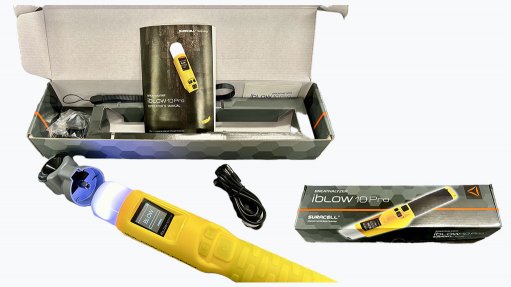
Developed to exceed the latest EN 15964 standards for police breathalysers proving that it will remain accurate and reliable for many years to come.
VISIT SHOWROOM

Announcements
What's On
Subscribe to improve your user experience...
Option 1 (equivalent of R125 a month):
Receive a weekly copy of Creamer Media's Engineering News & Mining Weekly magazine
(print copy for those in South Africa and e-magazine for those outside of South Africa)
Receive daily email newsletters
Access to full search results
Access archive of magazine back copies
Access to Projects in Progress
Access to ONE Research Report of your choice in PDF format
Option 2 (equivalent of R375 a month):
All benefits from Option 1
PLUS
Access to Creamer Media's Research Channel Africa for ALL Research Reports, in PDF format, on various industrial and mining sectors
including Electricity; Water; Energy Transition; Hydrogen; Roads, Rail and Ports; Coal; Gold; Platinum; Battery Metals; etc.
Already a subscriber?
Forgotten your password?
Receive weekly copy of Creamer Media's Engineering News & Mining Weekly magazine (print copy for those in South Africa and e-magazine for those outside of South Africa)
➕
Recieve daily email newsletters
➕
Access to full search results
➕
Access archive of magazine back copies
➕
Access to Projects in Progress
➕
Access to ONE Research Report of your choice in PDF format
RESEARCH CHANNEL AFRICA
R4500 (equivalent of R375 a month)
SUBSCRIBEAll benefits from Option 1
➕
Access to Creamer Media's Research Channel Africa for ALL Research Reports on various industrial and mining sectors, in PDF format, including on:
Electricity
➕
Water
➕
Energy Transition
➕
Hydrogen
➕
Roads, Rail and Ports
➕
Coal
➕
Gold
➕
Platinum
➕
Battery Metals
➕
etc.
Receive all benefits from Option 1 or Option 2 delivered to numerous people at your company
➕
Multiple User names and Passwords for simultaneous log-ins
➕
Intranet integration access to all in your organisation

