



AIDC Statement on 2023/4 National Budget


“This is not an austerity budget”, said Finance Minister Enoch Godongwana in his 2023 budget speech. It is a blatant lie.
We heard yet another budget that centres the interests of the wealthy few over the needs of the majority. AIDC joins our allies in the social and labour movement in rejecting this budget. Once again, the government provides tax relief for high-income earners – all those earning above R350 000 per year – forfeiting R14,9 billion in potential tax revenue. A person with a taxable income above R1,5 million gains over R20 000 per year, as a result of compensating for bracket creep. At the same time, we see cuts in real terms to social protection and the wages of teachers and healthcare workers. For instance, after accounting for food price inflation, the old age pension grant is worth R40 less today than it was last year.
In terms of the social relief of distress grant, the budget only makes provision for 8.5 million beneficiaries, effectively excluding at least 2 million people from much-needed support. Moreover, the R350 SRD is now worth just R277 in 2023, R73 less than when it was first introduced.
The most dramatic of the budget cuts is to health care – where there is a R 2 billion reduction in spending in nominal terms. Based on an inflation rate of 5,3% for the 2023/24 financial year, this amounts to close to a 6% reduction in real terms.
The truth is that the Treasury’s hunt for The Holy Grail of a ‘Primary Budget Surplus’ has produced another austerity budget - just harsher than ever. The ‘Primary Budget Surplus’ is a commitment the government has made to its creditors, not least the World Bank after signing the ‘Country Partnership Framework in June 2021.
The cut in spending to the Main Budget (leaving aside debt service costs which are rising) will be R85.4 billion in real terms compared to the 2022 budget. The 2023 budget means a sharp drop in spending.
ENERGY CRISIS
The country waited with bated breath to hear what the minister of finance will do to assist in addressing the energy crisis. The government announced that it would provide Eskom with debt relief amounting to R254 billion over the next three years – R 78 billion in 2023/24, R66 billion in 2024/25 and R40 billion in 2025/26, as well taking over up to R70 billion of Eskom’s loan portfolio directly in 2025/26.
It is important that Eskom be relieved of some of its financial burden to allow it the financial space to fix the fleet and to invest in new capacity. There are, however, a number of critical issues:
1. The debt relief comes with some unacceptable conditionalities, the unbundling of Eskom and the establishment of an independent transmission grid is a part of it. As we have warned previously: To those who believe the private sector is our saviour we refer to the many scandals engulfing big business, not least Sasol, Steinhoff and Hullets and remind readers of the disaster the concessioning of British rail was. As certain as night follows days, there will be massive retrenchments and even higher tariff increases to satisfy business’ profit maximisation drive. Privatisation of electricity should be a no-go zone, especially in a country like SA where more than 11 million people are unemployed and 55% of the population live under the poverty line.
2. Secondly, an opportunity was missed to utilize the R45 billion surplus of the Government Employees Pension Fund (GEPF) in 2021/22, which is in line with the average of a surplus of R50 billion each year. Given that the GEPF has more than R2,3 trillion in accumulated reserves, a lot more could have been done. Shifting the debt liability from the fiscus to the GEPF would free up resources needed to increase spending in key areas – not least health care;
3. Then there is a more fundamental problem. The government itself recognizes that debt relief is insufficient to ameliorate Eskom financial challenges - when it points out for example, that “National Treasury recognises that debt relief alone will not return the utility to financial sustainability” and that without the 18,7% and 12,7% tariff increases in 2023/24 and 2024/25, the debt relief is unsustainable. This highlights the untenability of Eskom’s finance model. Until adequate resources are directed to Eskom it will continue to need bail-outs and significant tariff increases. Energy poverty will persist.
PUBLIC SECTOR WAGE NEGOTIATIONS
When considering the state of Public Health and the pressure on health workers, the 2023 Budget Review is deplorable. Health is a public service function where the Department of Public Administration in December 2021 reported 39 000 vacancies. But the Finance Minister is proposing a real cut in the health wage bill by R15 billion from the spending in 2022/23 or by about 5.2% in real terms, if using the Treasury’s forecast of CPI inflation. The police can look at a nominal wage bill cut by -1.1%. The same can be said for education, a function that had 78 000 vacancies officially recognised in December 2021.
This follows the 2020 ‘wage freeze’ and below inflation increases in 2021 and 2022, where the latest 3% increase was adopted without an agreement. This will not only mean a reduction in wages; it will also mean continued unfiled vacancies. As has been the case since 2018, there is no consequence analysis of what this plan to reduce the headcount in the public sector means for school children, for youth and for millions of users of public sector services. How will the public sector unions negotiate in this budget framework? The budget item Compensation of Employees is suggested to increase by about 3% annually for the next three years in function after function.
Article Enquiry
Email Article
Save Article
Feedback
To advertise email advertising@creamermedia.co.za or click here
Research Reports

Projects
Latest Multimedia


Latest News

Showroom
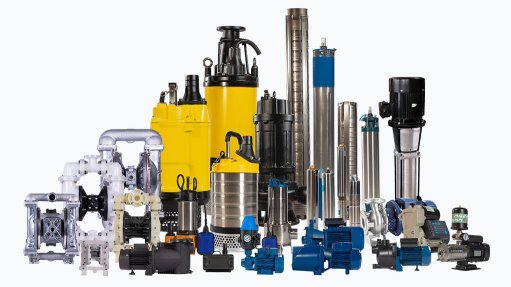
AxFlow AQS Liquid Transfer (Pty) Ltd is an Importer and Distributor of Pumps in Southern Africa
VISIT SHOWROOM
Electrifying the world in a safe, smart, and sustainable way, ABB Electrification is a global technology leader in electrical distribution and...
VISIT SHOWROOM

Press Office
Announcements
What's On
Subscribe to improve your user experience...
Option 1 (equivalent of R125 a month):
Receive a weekly copy of Creamer Media's Engineering News & Mining Weekly magazine
(print copy for those in South Africa and e-magazine for those outside of South Africa)
Receive daily email newsletters
Access to full search results
Access archive of magazine back copies
Access to Projects in Progress
Access to ONE Research Report of your choice in PDF format
Option 2 (equivalent of R375 a month):
All benefits from Option 1
PLUS
Access to Creamer Media's Research Channel Africa for ALL Research Reports, in PDF format, on various industrial and mining sectors
including Electricity; Water; Energy Transition; Hydrogen; Roads, Rail and Ports; Coal; Gold; Platinum; Battery Metals; etc.
Already a subscriber?
Forgotten your password?
Receive weekly copy of Creamer Media's Engineering News & Mining Weekly magazine (print copy for those in South Africa and e-magazine for those outside of South Africa)
➕
Recieve daily email newsletters
➕
Access to full search results
➕
Access archive of magazine back copies
➕
Access to Projects in Progress
➕
Access to ONE Research Report of your choice in PDF format
RESEARCH CHANNEL AFRICA
R4500 (equivalent of R375 a month)
SUBSCRIBEAll benefits from Option 1
➕
Access to Creamer Media's Research Channel Africa for ALL Research Reports on various industrial and mining sectors, in PDF format, including on:
Electricity
➕
Water
➕
Energy Transition
➕
Hydrogen
➕
Roads, Rail and Ports
➕
Coal
➕
Gold
➕
Platinum
➕
Battery Metals
➕
etc.
Receive all benefits from Option 1 or Option 2 delivered to numerous people at your company
➕
Multiple User names and Passwords for simultaneous log-ins
➕
Intranet integration access to all in your organisation

