GOLD 1560.55 $/ozChange: -5.10
PLATINUM 1429.20 $/ozChange: 5.70
R/$ exchange 8.34Change: 0.06
R/€ exchange 10.49Change: 0.06
 
We have detected that the browser you are using is no longer supported. As a result, some content may not display correctly.
We suggest that you upgrade to the latest version of any of the following browsers:
         
close notification
powered by
Advanced Search


Home
 
World News
 
Australasia
 
 
IRON-ORE
Strongly producing Kumba lifting 2010 iron-ore capex
 
18th February 2010
TEXT SIZE
Text Smaller Disabled Text Bigger
 

JOHANNESBURG (miningweekly.com) – Strongly producing South African iron-ore miner Kumba will be increasing its capital expenditure in 2010, to between R4,5-billion and R5-billion.

When some of its more cautious competitors were cutting back, Kumba singled itself out by determinedly keeping its foot firmly on the production and project accelerator throughout the economic meltdown period, which has paid off handsomely.

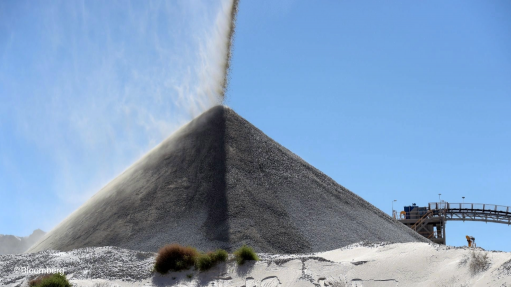
Kumba's mine production at Sishen rose 16% in 2009 - which was 6% higher than guidance - to 39,4-million tons, with exports rising 37% year-on-year to 34,2-million tons, most going to China. The jig-plant production, in the final phase of ramp-up at Sishen, increased its output by 121% year-on-year.

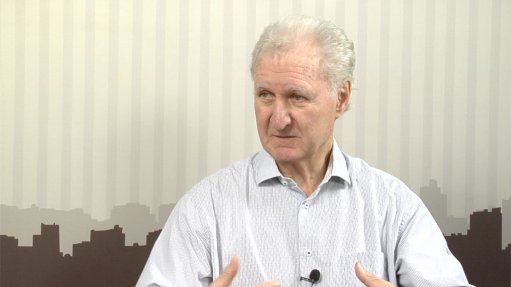
Kumba CEO Chris Griffith told Mining Weekly Online in a video interview that the company expected to increase production by 5% in 2010, but believed that an increase in domestic demand was likely to offset the majority of the increase in production, which would likely result in a smaller increase in export volume.

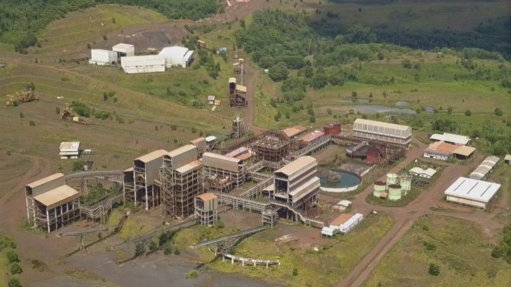
Slightly ahead of schedule to produce its first iron-ore in 2012 and move to full production in 2013 is the Kolomela mine project, now under construction.

"We'll be increasing our project spend and our stay-in-business capital, as we need to increase the amount of waste mined," Griffith told Mining Weekly Online.

On costs, he added: "In real terms we were able to decrease costs, not withstanding an 18-million ton increase in waste mined at the mines."

The company increased waste by 28% last year: "This was part of the plan and it's very necessary to secure the future of the mine. This had a big cost impact, but we were able to offset that because of the benefit of the production volume.

"Costs will be increasing. We'll have another big increase of waste mined in 2010. We're also seeing upward pressure on inflation from labour costs as well as fuel and some of the other big cost items. So, we're unlikely to see the same kind of cost performance, but we have great productivity improvement projects at the mine, We have asset optimisation and supply-chain projects that are delivering significant amounts of value," Griffith said.

Notwithstanding a 40% reduction in iron-ore prices, Kumba's total 2009 earnings reduced by a mere 4%.

The company again generated more than R12-billion in cash, allowing it to pay for capital as well as a final cash dividend of R7,40.

On logistics, Griffith reported that the rail performance increase of 24% was lower than the output from the Sishen mine, resulting in a small build up of stock.

He said that the company was talking with State-owned rail enterprise Transnet on the upgrading of the rail line to a capacity above 60-million tons.

An independent consultant had been appointed to study the technical implications of the increase in volume on the Sishen-Saldanha iron-ore line and, once that study had been completed, funding issues would be discussed, which might involve private participation on the State-owned rail.

On iron-ore pricing, he told Mining Weekly Online that there was certainly upward pressure on 2010 pricing.

"We are likely to see a fairly significant increase in price for 2010. The iron-ore market is structurally very tight and there is a large demand," he added.

The spot price for South African iron-ore, including freight, was at a 75% premium to the benchmark price, which was expected to lead to a significantly higher benchmark price settlement this year.

"Certainly, everyone who is following this market has a view and the views range from a 15% to 50% increase in the benchmark price," he said.

Anglo American group has iron-re South Africa and iron-ore Brazil as two of its seven business units. While the two businesses are managed separately, Anglo has combined the marketing of both of its iron-ore businesses.

"We have set up one marketing organisation that looks after the interests of both," he told Mining Weekly Online.

Edited by: Creamer Media Reporter

To subscribe to Mining Weekly's print magazine email subscriptions@creamermedia.co.za or buy now.

Subscribe Now Login


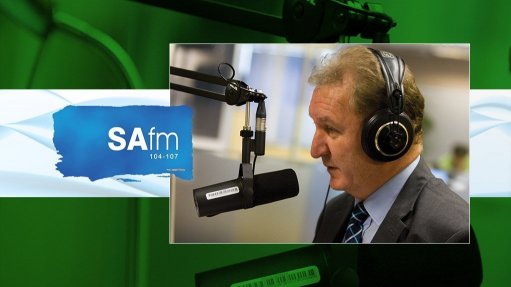
Kumba Iron Ore CEO Chris Griffith tells Mining Weekly Online’s Martin Creamer that the company’s foot-on-the accelerator approach through the global meltdown period is paying handsome dividends. Camera Work and Video Editing: Darlene Creamer.
This video is licensed under a Creative Commons License
GET SELECTED VIDEO
Embed
Selected Video Download (5.47mb)