GOLD 1560.55 $/ozChange: -5.10
PLATINUM 1429.20 $/ozChange: 5.70
R/$ exchange 8.34Change: 0.06
R/€ exchange 10.49Change: 0.06
 
We have detected that the browser you are using is no longer supported. As a result, some content may not display correctly.
We suggest that you upgrade to the latest version of any of the following browsers:
         
close notification
powered by
Advanced Search


Home
 
World News
 
Australasia
 
 
GOLD
Currency volatility may spoil Gold Fields' R8,5bn capex plan
 
6th August 2009
TEXT SIZE
Text Smaller Disabled Text Bigger
 

JOANNESBURG (miningweekly.com) - South African gold major Gold Fields, which plans to spend R8,5-billion capital in its current financial year, may have to review that expenditure if the volatile rand continues to squeeze profit margins and the company's mines fail to achieve their production targets.

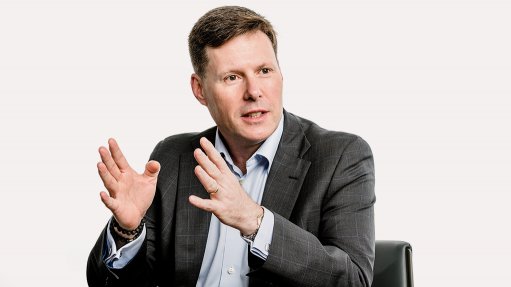
Gold Fields CEO Nick Holland said, however: "We've been in a much worse position than this before, and we got through it, and I'm sure we'll get through this as well."

Holland gave guidance that the company, which produced 3,4-million ounces of gold in the year to June 2009, would produce between 3,7-million ounces and 3,8-million ounces in its current 2010 financial year, which he described as "a year of heavy capital expenditure".

"We're going to be spending about R8,5-billion this year - that's a billion dollars," Holland said, following expenditure of R7,6-billion in the 2009 financial year.

But, he admitted being nervous about the strong rand flattening margins and said that it was imperative for Gold Fields' operations to produce optimally, because, if they failed to produce at targeted levels, the R8,5-billion capital expenditure (capex) programme would have to be reviewed.

"As a consequence of the stronger rand, our operating margin decreased from 47% to 43%. However, we continued to generate positive free cash flow on the back of increased production and good cost management," Gold Fields said in its latest quarterly report.

While the rand appeared to be stronger than what it should be and while Gold Fields was not looking to a weaker rand to save it in the short-term, the pick up in Gold Fields' capex left little headroom in the first part of the company's financial year to June 30, 2010.

But, the outlook for the second part of the financial year, was one of improvement, particularly as gold production from the South Deep project would be at a higher level.

While, on balance, there was more upside potential for a rise in the dollar price of gold than there was downside risk for a fall in the price, Holland pointed out that the notional cash expenditure (NCE) of the gold-mining industry as a whole was just under $800/oz, on top of which royalties and corporate taxes still had to be paid.

"So, at these prices, the industry is not making a truckload of money. That tells you that, if you are going to have an industry in the long term, you are going to have to have gold prices that are higher than they are today," he said.

In the current circumstances of margin squeeze, it was imperative that the company attained its short-term production targets.

"We can't afford to miss our production. If we miss our production, we're going to have to sit down and look again at the capital spend," Holland said.

Gold Fields CFO Paul Schmidt pointed out, however, that the first-quarter of the financial year was traditionally a difficult quarter, with a traditional improvement towards year-end.

"Basically, for the full financial year 2010, we tread water in terms of using the R230 000/kg gold price. The first quarter is heavy, but it gets better towards the end, and we have enough money to cover it," Schmidt said.

For the first two quarters of its 2009 financial year, Gold Fields had an NCE that exceeded the gold price, but, in the last two quarters, the NCE was brought to within the gold price, which was when the margin of profit improved.

Much of the planned R8,5-billion capital would be "front-ended", in that it would have to be spent early, and 25% of it would be spent at South Deep, Holland said.

Gold Fields, which had increased investment in its South Deep fleet, has 15 drill rigs above 95 level, the current mine; eight drill rigs below that level; and additional hoisting flexibility.

There would also be R500-million spent on increasing development at the South African operations, which formed another large part of that capital expenditure, as well as continuing to explore and develop projects around the globe.

Capital was being spent on the Athena project in Australia, which had a reserve, which could contain 1,5-million ounces of gold, and the step-up in exploration expenditure to $120-million would take in near-mine exploration expenditure that was set to increase the life of mine at Damang in Ghana, and also exploration at Cerro Corona in South America, which is ramping up to a production of 320 000 gold equivalent ounces a year.

Schmidt said that the company's net debt, which had decreased to R6,1-billion, was providing the flexibility to finance growth opportunities.

Gold Fields, Schmidt reported, had headroom of R3,1-billion in rand-denominated facilities, and $240-million in dollar-denominated facilities, with most debt now maturing only in 2011 and beyond.

Operating profit for the 2009 financial year was R11,4-billion.

Gold Fields paid an 80c a share dividend, which took the full dividend for the 2009 year to R1,10 a share.


Edited by: Creamer Media Reporter

To subscribe to Mining Weekly's print magazine email subscriptions@creamermedia.co.za or buy now.

Subscribe Now Login
 
 
Topics in this article


Gold Fields CEO Nick Holland tells Mining Weekly Online’s Martin Creamer that the gold company is ahead of the pack when it comes to dividend payments. Cameraperson: Nicholas Boyd. Video Editor: Darlene Creamer.
This video is licensed under a Creative Commons License
GET SELECTED VIDEO
Embed
Selected Video Download (9.36mb)