JOHANNESBURG (miningweekly.com) – Southern Africa’s treasure chest of scarce coking coal could rival that of Australia’s rich endowment, provided the governments of the region work constructively to reap the potential job-creation and wealth-creation rewards.
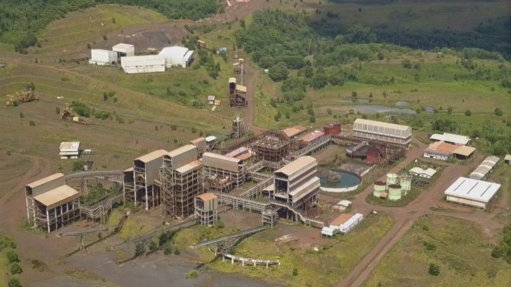
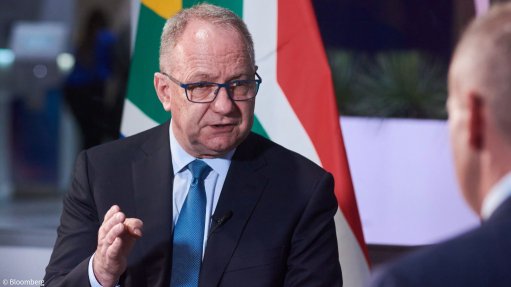
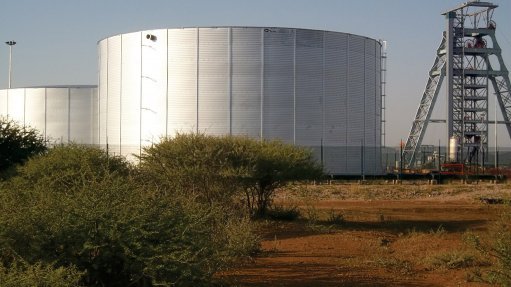
South Africa’s coking-coal stalwart, John Wallington, the CEO of the emerging Coal of Africa (CoAL), has virtually had to move mountains to gain a foothold into South Africa’s promising Limpopo coking-coal province.
With 30 years experience including a spell in Australia's coking-coal province of Queensland, Wallington has managed, against all odds, to stave off unreasonable environmental opposition and regulatory red tape at Vele, despite an unintended water-permit quirk continuing to deny full opportunity in one of South Africa’s most impoverished economic areas.
It is envisaged that Southern Africa – taking in the deposits in Mozambique, South Africa and Zimbabwe – has the potential to export more than 50-million tons of coking coal a year, which at current prices of from $250/t to $300/t would generate proceeds at the levels of $12-billion to $15-billion a year.
Wallington was speaking to Mining Weekly Online in a video interview following CoAL’s latest presentation of annual results, which had the London-based Evolution Securities reiterating a “buy” recommendation for the company’s regulation-battered shares.
CoAL itself displayed a company turning point in reporting a 75% increase in thermal coal production, a 154% rise in saleable tons, a 166% revenue rise and a 40% improvement in gross profit.
Financial director Wayne Koonin reported a halving of pre-tax loss from some $24-million to $12-million accompanied by growth in the underlying size of the business, a 10% rand strengthening against the US dollar and an impairment loss of $97-million.
Year-on-year, the company maintained a positive cash position of $22.7-million and has a Deutsche Bank facility that is still to be fully drawn down.
Debt and equity opportunities are being considered to recapitalise the company and finance the various operations.
Development has been allowed to resume at Vele, the regulatory process is pushing ahead at the Makhado coking coal project and the Matola export allocation at the Maputo port in Mozambique has been trebled.
Soutpansberg assets, which are in the process of being acquired from diversified major Rio Tinto, also have significant growth potential.
AUSTRALIA’S DOMINANCE
Australia is currently supplying two-thirds of the coking-coal market at a rate of some 170-million tons a year.
However, if Southern Africa adds together Mozambique, which is already being touted as the next Queensland, South Africa’s Limpopo along with CoAL’s Vele, Makhado and Soutpansberg assets, plus Zimbabwe’s coking coal potential, the combined contribution could total 50-million tons and more.
“If you add the three together, you are looking at something very significant,” Wallington says.
Even at this early stage, CoAL alone has the potential to produce some ten-million tons a year exportation position in the next ten years.
“But as we develop and explore further, perhaps that ten-million tons can be doubled over the next 20 years. Certainly, the potential is significant,” he adds.
CoAL has the potential to commission four or five large mines, given the contiguous nature of its current assets, which provide both scale and optionality, but require matching logistics.
PRESENT LOGISTICS
The rail corridor to the six-million-tons-a-year Maputo port terminal has been upgraded with 100 additional wagons to a total of 850 wagons.
The third phase has also seen turnaround times halve to four days, “which is a good omen for the future”.
High rail tariffs remain a major concern, however.
“There’s no doubt that the current rail tariffs are just too high if we are going to grow this business sustainably,” Wallington says.
Intense engagement is under way with the State-owned Transnet Freight Rail, as unit rates are twice as high as Richards Bay’s at R250/t to R300/t.
Phase four is expected to raise capacity to a possible 20-million tons a year.
Private-sector funding and partnerships are being mooted to boost logistics to globally competitive levels.
ENABLING ENVIRONMENT
The South African government is acknowledging the need for an enabling environment to ensure that South Africa can benefit from the demand for coking coal, which is used to make steel.
One of the reasons why Mozambique has attracted multibillion-dollar investments by Rio Tinto and Vale is because the government of Mozambique has been proactive in attracting that investment.
The investment is resulting in strong growth and the provision of infrastructure commitments that will accommodate 30-million tons of exports.
South Africa needs to catch up with that through rail upgrading.
The fundamental in favour of coking coal is that its presence in the world is not widespread, although there is input from Mongolia, the US and Canada.
There is a fear that uncontrolled mining expansion in Limpopo will lead to the same environmental issues that can be witnessed in Mpumalanga.
“I think we can avoid the environmental issues and also have significant coal growth,” says Wallington.
To subscribe to Mining Weekly's print magazine email subscriptions@creamermedia.co.za or buy now.


.gif)

.gif)