GOLD 1563.43 $/ozChange: -2.22
PLATINUM 1430.50 $/ozChange: 7.00
R/$ exchange 8.34Change: 0.06
R/€ exchange 10.49Change: 0.05
 
We have detected that the browser you are using is no longer supported. As a result, some content may not display correctly.
We suggest that you upgrade to the latest version of any of the following browsers:
         
close notification
powered by
Advanced Search


Home
 
Magazine
 
News This Week
 
 
DIAMONDS – 1
Rockwell Diamonds trims capital raising down to C$20m
 
29th July 2011
TEXT SIZE
Text Smaller Disabled Text Bigger
 

TSX- and JSE-listed diamond miner Rockwell Diamonds, which does all its mining and diamond beneficiation in South Africa, has trimmed its capital-raising target down to C$20-million.

At the start of the year, the Rockwell board was targeting a C$35-million capital raising in order to complete its Tirisano diamond mine, near Ventersdorp, and upgrade plant and technology at its Saxendrift and Wouterspan mines in the Middle Orange river area.

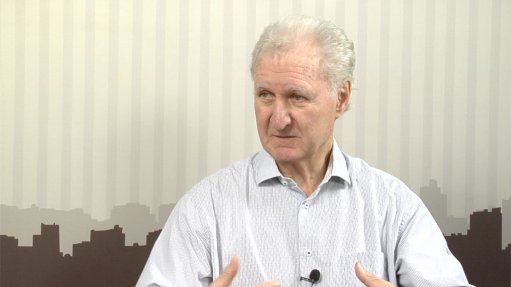
But the company is now targeting about C$15-million less and expecting to return to the market later for the balance of the funding to complete the upgrading of Wouterspan, new Rockwell CEO James Campbell tells Mining Weekly in a video interview.

Rockwell, which is producing diamonds at a rate of 1 200 ct to 1 500 ct a month, has a plan to increase production to 2 500 ct to 5 000 ct a month from organic growth, and is going to the market at a time of sharply rising diamond prices.

The first two phases of the Tirisano mine are due for completion at the end of the third quarter and a study is under way to reassess the feasibility of increasing Tirisano’s output to 180 000 m3 a month.

Once Tirisano is completed, the upgrading of the Wouterspan operation and the Nuwejaars- kraal project will follow.

Since the beginning of the year, the prices of Rockwell diamonds have risen by some 50%.

Internally, however, Rockwell is forecasting a conservative 3.5% real diamond price growth going forward.

The last diamond sales tender prices averaged $1 641/ct.

Typically, 80% of the diamond value from its flagship Saxendrift mine is from stones larger than 10 mm.

Saxendrift diamond prices average more than $2 000/ct, with each stone more than 2.5 ct.

“Our niche is in small numbers of very large, very high quality diamonds,” says Campbell.

Diamonds from Tirisano, which average $700/ct, are targeted at the engagement ring market, while Saxendrift supplies mainly investment diamonds.

Rockwell recently signed an extension of its marketing arrangement with the Steinmetz group for diamonds larger than 2.8 ct.

“This is a very beneficial arrangement,” Campbell comments.

Steinmetz buys diamonds at 90% of the market value and pays the outstanding 10% once they are cut, polished and sold, with Rockwell also sharing in 50% of the uptake from polishing and cutting.

Rockwell beneficiates 80% of its diamonds locally through the Steinmetz cutting factory in Johannesburg.

Campbell is keen to investigate the introduction of X-ray concentration and X-ray recovery technology, which has been used for many years in Russia, to increase operational efficiencies.

If tests are positive, the technology will be implemented across the company’s operations.

Several other diamond companies have already ordered the bulk X-ray machines, which have far greater throughput rates and are able to recover type-two diamonds.

Although the type-two nitrogen-free diamonds represent a small percentage of diamonds globally, they are the high-value diamonds.

Most of the diamonds that Rockwell recovers from the Middle Orange river have been swept down over the years from Lesotho, where Gem Diamond’s Letšeng operation is currently the world’s largest producer of type-two diamonds, but poised to be overtaken by the upcoming Lucara Diamonds’ AK6 project, in Botswana.

The technology that Rockwell is currently using does not recover type-two diamonds unless those diamonds are flawed.

It is envisaged that the bulk X-ray machines will be used as concentrators instead of the traditional pan plants and dense-media separation plants, with single-particle units taking care of the more detailed diamond sorting.

“Not only does that give greater diamond recovery, but it keeps people’s hands off the product,” Campbell tells Mining Weekly.

Campbell, who entered the diamond industry in 1983 as an honours student, was involved in the discovery of the Venetia diamond mine in Limpopo.

In 1985, he began a 20-year period of wide-ranging experience with De Beers before leading Africa Diamonds as MD and West Africa Diamonds as deputy chairperson.

West Africa Diamonds did a reverse take- over of Stellar Diamonds, where Campbell is still a nonexecutive director, and Africa Diamonds facilitated the buyout of De Beers from the AK6 project and its sale to Lucara Diamond Corporation.


To watch a video in which Mining Weekly Online”s Martin Creamer talks to new Rockwell CEO James Campbell about the direction in which he will take the TSX- and JSE-listed company, click here.


Edited by: Martin Zhuwakinyu

To subscribe to Mining Weekly's print magazine email subscriptions@creamermedia.co.za or buy now.

Subscribe Now Login