GOLD 1251.47 $/ozChange: 5.83
PLATINUM 1555.50 $/ozChange: 23.50
R/$ exchange 7.25Change: 0.05
R/€ exchange 9.29Change: 0.05
 
We have detected that the browser you are using is no longer supported. As a result, some content may not display correctly.
We suggest that you upgrade to the latest version of any of the following browsers:
         
close notification
powered by
Advanced Search


Home
 
Sector News
 
Environmental
 
 
ENVIRONMENTAL PROTECTION
Massive acid mine drainage project stimulus for local beneficiation
0 COMMENTS  |  
ADD A COMMENT PRINT
 
 
31st July 2009
TEXT SIZE
Text Smaller Disabled Text Bigger
 

Help is at hand to assist South Africa’s rising mine water dilemma. It has come in the form of Western Utilities Corporation (WUC), a wholly owned subsidiary of Aim-listed Watermark Global, which aims to turn the acid mine drainage (AMD) scourge into a beneficiation opportunity.

The WUC project, aimed at the reclamation of excess mine water from underground workings in the Western, Central Rand and Eastern basins of the Witwatersrand, has the potential to create thousands of new jobs and become a beacon of hope for the unemployed.

Such a future would entail the treatment of decanted water to an acceptable level for industrial and potable purposes. The industrial water would be cheaper than potable water and would be reticulated for beneficiation to industry. WUC MD Jaco Schoeman tells Mining Weekly that the aim is to produce industrial water to be consumed by the mines within the three basins. “Excess water will be converted to potable quality and sold to bulk producers,” he adds.

Political scientist Dr Anthony Turton says that the issue of mine water should not be considered a mining challenge, but rather a resource that can be used as the basis of a new value-added beneficiation economy.

Turton, also the director of Touch-Stone Resources, a company committed to uplifting South Africans’ survival and health, says that this can be achieved by, firstly, replacing the tens of thousands of jobs being lost in mining, because the AMD issue is being framed as a mine closure problem.

Secondly, he explains the economics of water as an input to a beneficiation industry: “We know that water is going to become more expensive and thus deter future economic growth. We, therefore, need to think of two water streams. One stream is potable water sold at a high price and escalating over time. The second stream is industrial-grade water, which is cheaper than potable water and escalates at a lower rate over time. This massive volume of lower-grade industrial process water can be combined with a strategic vision of a beneficiation economy, in which human skills development is a key component.”

However, he points out that the issue is that the paradigm in which the question is framed dictates the final answer. “Hence, the WUC solution is a logical answer to a question framed in the paradigm of mining. It is, thus, suboptimal at a national level, even if it is optimal at a mine level. Under the current thinking, no space has been given to the assessment of an alter- native model to WUC’s. We are locked into a suboptimal solution forever,” he says.

The acid mine water from the WUC project will be treated in a chemical precipitation process to South African National Accreditation Standards (Sanas) class 2 standards and sold to the mines for industrial use, which is about 60-million litres a day. The excess water will be treated to Sanas Class 1 potable standard and sold to Rand Water.

However, the key to the success and sustainability of this solution rests in the project’s ability to produce water of a suitable quality at a cost-effective price for high-volume industrial water and potable water users.
Another sustainable benefit of using rehabilitated water to meet industrial demand is the positive impact it will have on the availability of potable water for the surrounding communities, as pressure on potable resources will be significantly reduced.

“This is a bold and creative response to a serious environmental challenge and we are confident that not only can we provide a sustainable solution to the issue of contaminated water in the Western Basin but that the same solution can also be rolled out elsewhere, in South Africa and around the world, to effectively overcome the damage inadvertently caused by mining activity,” says Schoeman.

But this is a pretty picture of a directive issued by the previous Department of Water Affairs and Forestry to the mining industry to find a long-term sustainable solution for AMD over almost 200 km of the country’s landscape.

It is a possibility with immense potential and hope for a future in which AMD is not a serious environ- mental threat but one that gives rise to a new value-added bene- ficiation economy.

While the WUC project has attracted its fair share of criticism, it does promise enormous potential in solving the country’s AMD challenge and is supported by an MD who is con- fident of the fruitful results of this project.

However, there are many challenges in the pipeline that threaten to hinder the project, which, currently, appears to be the only long-term sustainable solution for AMD in South Africa. And this, in itself, is significant cause for concern.

Solution to the Rising Tides of AMD

WUC reports that the level of ingress water in the Central Rand, East Rand and West Rand Basins is 54-million litres, 82-million litres and 15-million litres respectively.

The water levels in the Western Basin have risen to the surface, and the AMD has entered the dolomite aquifers and is now moving rapidly. There is also the potential for the water to also enter the 3,5-million-year-old Cradle of Humankind.

The Central Rand Basin is filling up with water and within a few years it will decant. In 2011, the environmental-critical level will be reached in the Central Rand Basin, and failure to tackle this will result in decanting in the South East vertical shaft at Boksburg, in January 2012.

The Eastern Basin is currently being maintained at 720 m below the surface but, if not managed, this basin could flow within three years and will decant in Nigel and flow into the Blesbokspruit and then into the Vaal.

The WUC water-treatment plant is in development phase and pilot operations were concluded in October, last year, after an extensive six-month evaluation period at gold-miner Harmony’s No 8 shaft near Randfontein, in the Western Basin.

The water plant is expected to reach its commercialisation phase in December 2010, treating 75-million litres a day of AMD in the Central Rand Basin. The project plan has been developed to provide a regional closure solution to government for AMD. Expansion of the project is expected around 2014 and will treat some 200-million litres a day of AMD.

The mining industry has invested significantly in this project, which needs an additional R1-billion for its first phase. Finance will be raised on a 50% debt and 50% equity basis. The raising of capital for the debt portion will be done through South African banks. The Development Bank of Southern Africa has provided a R10-million nonrecourse loan for the completion of the bankable feasibility study.

To reduce capital expenditure, the mines will also contribute or lease existing assets, such as pumpstations, pipelines servitude and treatment plants to Section 21 companies, namely the Eastern Basin Environmental Corporation, the Central Basin Environmental Corporation and the Western Basin Environmental Corporation. The company is in the process of finalising the heads of agreement.

The AMD water will be collected to produce industrial-quality (IQ) water and potable water. About 60-million litres a day of IQ water and 75-million litres of potable water will be produced.
Schoeman says that the mines located in the surrounding areas will use the IQ water. This, he adds, will be beneficial as there is more potable water available for sale to bulk distributors.

The price of the water will be linked to prices of Rand Water, which is regulated by government.

The technology to be used in this project is the Council for Scientific and Industrial Research’s alkaline barium calcium process.

The potable water produced by the water treatment plant may be distributed to the Klipriviersberg reservoir through a 20-km distribution pipeline. The distribution pipeline, will, where possible, follow existing servitudes.

Significant Challenges

Schoeman says that an integrated regulatory process is being undertaken, and will tackle, besides other issues, the environ-mental-impact assessment, an integrated water-user licence application that is required by the National Environ-mental Management Act (Nema), an air emissions assessment in terms of the the Air Pollution Prevention Act, an assessment of any radiological issues required by the National Nuclear Regulator Act, and heritage assess- ments required by the South African National Resource Heritage Act, as well as investigating other legal issues and entering into contracts, registering as a water services provider in terms of the Water Services Act, and ensuring clients comply with the Municipal Services Act.

These processes are all running in parallel to meet project timelines.

“We are running against a massive timeline with this project, which is driven from an environmental perspective and not for financial gain. If we do not implement this project by 2011, we are going to contaminate our water resources,” says Schoeman.

If the plant is not in full production by the first quarter of 2011, the high-density sludge plant in place at East Rand Proprietary Mines will be used.

However, if the project is to progress as scheduled, processes will still be followed expeditiously in accordance with the law.

But one has to question, given the time that government takes to approve such processes, whether it will be possible to meet the necessary deadlines required for the WUC project.
One such decision required from the Department of Water and Environment Affairs is the approval of an offtake agreement for the supply of this treated water to Rand Water. The concern, in this regard, is when Minister Buyelwa Sonjica will proceed with a public consultation process before signing the offtake agreement.

There is a possibility that such processes might also delay the project and result in the unleashing of one of the country’s worst environmental disasters. And failure to follow through with a public consultation process might expose the Minister to political risk. It may appear that Sonjica may be caught between a rock and a hard place.

After a month of significant effort from Mining Weekly, the Department of Water and Environmental Affairs did not make any attempt to respond to questions regarding the WUC project or to validate or clarify any concerns or misconceptions regarding the signing of the offtake agreement with Rand Water.

However, Schoeman emphasises that WUC is following the public participation process dictated by Nema and encourages all regulators, including the Minister, to follow the correct procedure. “But if the regulators drag their heels, it will result in unnecessary delays,” he adds.

But Turton says that the only benefit of the WUC project that will accrue to the mining industry is the externalisationing of the cost of water production.

“The benefits they are selling are false benefits because the law that states the polluter pays, but WUC is asking Rand Water’s consumers to pay for what the mining industry is legally obliged to pay. This is sleight of hand. WUC is selling the benefit based on the sense of urgency: if you do not do things the WUC way, there will be a disaster. This is flawed logic,” he says.

He adds that it is not a “benefit” when the mining sector is evading its legal respons-ibility for averting a disaster that it created.

“The only benefit, as WUC now stands, is to the mining industry, where they find a source of cash to pay for their externalised costs of production. It is scandalous. It is like allowing an arsonist to say you will benefit by his not burning a building, so you must pay him not to burn that building,” he comments.

But Schoeman says: “We are not saying this is the beginning and the end, and the only solution. This is [an effort] by all the mines in the three basins, and if the Minister decided not to implement this project, then the mines cannot be held liable. This is a solution proposed by the mines from which the mines will not generate an income. If this project does not work, the mining industry is still liable.”

Meanwhile, the plethora of proposals from private industry or government to deal with the challenge is either nonexistent or looming in the shadows.

There is more to contaminated water resources than just toxic water. This water, in itself, could give rise to disease, which is often not discussed in the public domain.

While there is time to debate the issues, positive or negative, which in itself is always necessary and healthy in any democracy, one issue remains certain, the country’s water resources will be contaminated by October 2011, if nothing is done.

Given climate change, coupled with seismicity activity, the timing of the country’s worst environmental disaster could change, but the reality is that probably it will happen. And what is needed right now is a plan of action to prevent it.

Edited by: Martin Zhuwakinyu


Hide Comments  
 
This article contains no Comments


All comments must be approved by our editors, click here to read the editorial guidelines for comments. Please allow some time for our editors to approve your comment after posting.
 * Required Fields

image
image
 *


image
image
 *
 

image
image
 

Verification Image

image
image
 * Please enter the text you see in the above image.


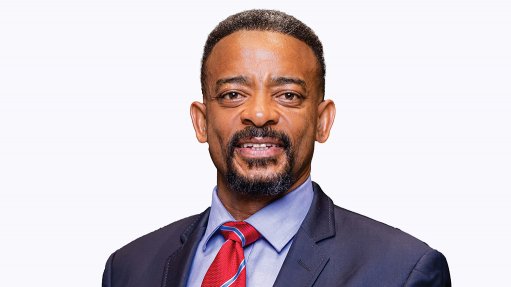
JACO SCHOEMAN The project is undertaking an integrated regulatory process
 
JACO SCHOEMAN The project is undertaking an integrated regulatory process
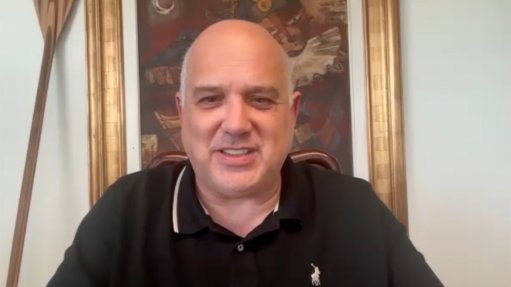
DR ANTHONY TURTON The issue of mine water should not be considered a mining challenge
 
DR ANTHONY TURTON The issue of mine water should not be considered a mining challenge
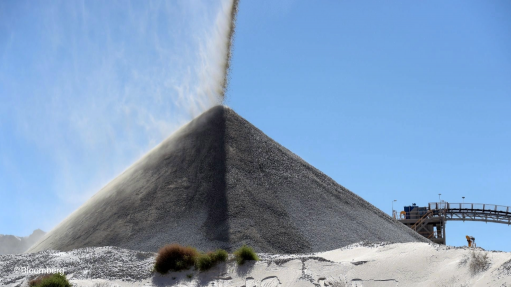
ACID MINE DRAINAGE Globally, sources of metal-laden acid waters are diverse and include tailings ponds, waste rocks, mine tunnels and open pits Source: Dr Carles Ayora / CSIC
 
ACID MINE DRAINAGE Globally, sources of metal-laden acid waters are diverse and include tailings ponds, waste rocks, mine tunnels and open pits Source: Dr Carles Ayora / CSIC
 
Previous Play Next
 
Facts
-Environmental impact assessment to be completed in August 2009 -Bankable feasibility study to be completed by end of August 2009 -Record of decision expected in November 2009 -Construction to start in December 2009 -Construction period of one year -Three month ramp-up period from December 2010 -Full production expected in first quarter of 2011 -During commercialisation phase, the mines responsibility to pump AMD to surface will stop. -When the plant has proven to be entirely profitable after two years in operation, the mines can hand in the project as a closure rehabilitation strategy, stepping down from the environmental liabilities and transferring onus to the rest of the structure. -WUC will sell the water. -The treated water is sold to industrial users in the Rustenburg and Venderbijlpark areas -Reduced offtake in potable water for processing by industry leads to an increase in availability to communities.
-The acidity of the mine-affected water is neutralised by adding limestone. Heavy metals are removed by adding lime, which causes the metals to precipitate as the pH is raised. The metal-containing precipitate is removed in a clarifier. -Sulphate is removed from the water by contracting it with barium carbinate, which results in insoluble barium sulphate and calcium carbonate being formed. -The water is then clarified, filtered and disinfected and tested for final compliance with the applicable potable water standards before distribution. -Barium carbonate, calcium carbonate, calcium oxide (lime) and elemental sulphur will be recovered for reuse or for sale as commercial by-products of the process.