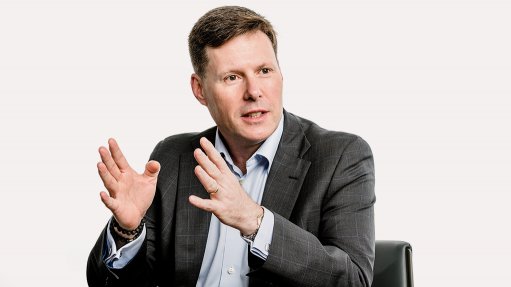
Every Friday morning, SAfm's AMLive's radio anchor Tim Modise speaks to Martin Creamer, publishing editor of Engineering News and Mining Weekly. Reported here is this Friday's At the Coalface transcript:
Modise: Welcome, Martin. Harmony Gold is lobbying for a better solution to be found to Eskom's worrying electricity tariffs.
Creamer: Yes, gold miners are really in despair over the electricity price and they're saying that the country as a whole needs to apply its mind far better to this because surely we can sort out a funding issue, we can bring in other aspects, possibly even a broad-based tax, or we can bring in the World Bank with funds, but we must sit down and work out how we're going to avoid, really, what is an effective over three years, 200% electricity increase, which will have massive knock-on effects because the steel price will go up, the cement price will go up, timber prices will go up, all commodity prices will go up, and there'll be wage demands and we're going to have to go back into a cycle of inflation. So, they're saying now, let's sit down now and work out a better way of avoiding these tariffs, at 45% a year for the next three years, which will be devastating for the South African economy.
Modise: And South Africa's car manufacturing industry is now becoming dangerously uncompetitive.
Creamer: Yes. We've had this car manufacturing industry and we've built on this car manufacturing industry and we know that in 2007, the export of our cars from South Africa earned us more than gold. So this is an industry which has developed to 14% of our export but now, it's in a crisis, just like there is a crisis around the world but we have one here and the fault lines are showing up far more urgently and we see that the Naamsa president is warning that the next 18 months is going to be crucial, otherwise we could see this industry disintegrate.
We know that the local manufacturers here are getting calls by the day from their multinational parents saying: "But why should we manufacture in South Africa? We've got so much spare capacity here, we can do so cheaper?" And now we're beginning to look at our parastatals, just as we looked at Eskom with the energy price, we're now looking at Transnet, and why should South African's have to pay ten times more to move a 40-ft container at a port? Ten times more than you pay in China. Why do you have to pay double than what you pay in South America? We've got to be competitive at soccer and rugby, but we've also got to be competitive with the rest of the world. Why should our productivity be lower and that there are only 20 cars per person, whereas in other countries there are more cars per person.
And then, being hit very, very hard are the parts that should be manufactured here because for our industry to really be viable, we need a bigger local content, it must go above the 35% that it is now, it must move to 70% of local content, but the part manufacturers are really struggling and they're saying that the number of cars now are lower therefore their unit costs are up, but nobody will accept the higher costs from them. So in a crisis at the moment, and needing to come to the party is the government, the new Auto Production Development Programme that has been long delayed.
Modise: Now, strict conditions are being placed on companies that are receiving bailout money from the State-owned Industrial Development Corporation.
Creamer: There are a lot of distressed companies around and we know that the Industrial Development Corporation, which is State-owned, is coming to the party and it says: "Look, we've got some billions here and we're prepared to give them to companies that are genuinely in distress, that have been hurt by this recession, that couldn't raise any funds because of the credit crunch, and if those conditions apply we will look at you. But, the moment we give you funds, you may not give executive bonuses, you may not give dividends, and you may not retrench people."
So it seems that by the end of the day, the Industrial Development Corporation will have handed out about R3-billion, and over the next three years, maybe R6-billion to distressed companies, provided that they come along. We see that the two biggest recipients already, R1,5-billion, to the auto car part makers. We were just saying that the auto industry is struggling, we can see these car-part manufacturers already coming to the IDC, already got R1,5-billion of that money, and then also the minerals beneficiation industry. What we would like to see from the IDC is more transparency.
They should announce who is actually getting this money, rather than do it secretly because this is a State-owned enterprise and we need to know who gets the money. At the moment we've only heard one high profile case of a rejection and I know there have been quite a lot of rejections but we need also to know who's going to get this money. The IDC is going to raise its own funds and I think it is, after 20 years ago that it last raised a bond, it is now going to look to raising R14-billion next year in tranches of about R3-billion to R4-billion a year between 2010 and 2013. So IDC itself has to now raise some money next year.
Modise: That's Martin Creamer, the publishing editor of Engineering News and Mining Weekly. He will be back At the Coalface at the same time, next Friday.


.gif)