GOLD 1553.52 $/ozChange: -12.13
PLATINUM 1415.50 $/ozChange: -8.00
R/$ exchange 8.36Change: 0.04
R/€ exchange 10.47Change: 0.08
 
We have detected that the browser you are using is no longer supported. As a result, some content may not display correctly.
We suggest that you upgrade to the latest version of any of the following browsers:
         
close notification
powered by
Advanced Search


Home
 
Multimedia


podsafm_17042009
GET SELECTED AUDIOCLIP
Embed
This article's audio Download (7.56mb)


On-The-Air (17/04/09)
 
17th April 2009
TEXT SIZE
Text Smaller Disabled Text Bigger
 

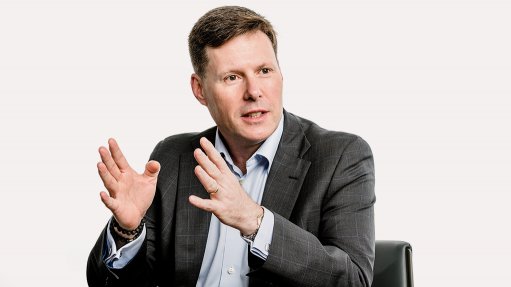
Every Friday morning, SAfm's AMLive's radio anchor Tim Modise speaks to Martin Creamer, publishing editor of Engineering News and Mining Weekly. Reported here is this Friday's At the Coalface transcript:

Modise: Martin, good morning and welcome. New high technology step that will taken with Gauteng's new freeway improvement programme, open-road tolling. Tell me more.

Creamer: Yes, Gauteng is going to be awash with tolling, maybe even tolling tensions. To relieve those tensions will be open-road tolling. That means you don't have stop at the toll gate, but that you get billed for using the toll road while you are on the move, in your car. That involves the e-tags in your car and the pick up of your license plate.

But the challenges are out because these tenders will go out this month. This is a rather bigger task than has been imagined. Firstly, they're dealing with something like three-million customers with more than half of them unbanked. So how do you actually keep in touch with them?

This is the challenge of the bidders who will be coming in this month. They have been prequalified. It will mean that they won't only just install this over the next 18 months, which will mean that we can flow freely without stopping at toll gates. But they'll also have to operate it and the nerve centre will be in Midrand. Most of all they'll have to have measures to avoid evasion from people coming through because there's rather a substantial amount to pay now, 50 c/km. We're used to about 24 c/km when we go down to Durban.

This means going to Pretoria from Johannesburg is going to cost you about R30, which is a new ball game. To make it work and to get that R250-million flowing into the South African national roads agency a month will mean that it will have to be one big, giant IT system that works.

Modise: Now what about steps that are being taken by South Africa to advance Lesotho into a developing country from its current least-developed status. What is happening there?

Creamer: South Africa and Lesotho have got together again and they've got between 16 and 20 by-national projects. The whole idea is to boost the economy of neighbouring Lesotho, which is still a least-developed economy, and turn that into a developing economy, over the next five years or so.

These investment-grade projects are being worked out at the moment. They'll be mainly in tourism, transport, property development and agri-business, but there's also likely to be some sort of idea of including wind energy, which is an important one at the moment, and also hydropower. Some of the tourism is being envisaged around existing water fronts that they have in Lesotho, like the Lesotho Highlands water project, especially the second phase, and the scoping of these projects, which will be investment-grade, will be done by South Africa's Department of Trade and Industry.

One thing that the South African Minister said is that this will not be implemented by South Africa on Lesotho's behalf. They will be involved, wherever they can, in these and South Africa will only really take the lead when they are asked to do so. These 16 to 20 projects involving Lesotho people will be done, to a large extent, by the people of Lesotho themselves.

Modise: And Eskom embarking on a serious capital expenditure programme, R275-million being set aside for that. Is this South Africa's ready-made economic stimulus package?

Creamer: A lot of the countries around the world are hunting for economic stimulus packages, they are having to scramble to assemble them. We have shovel-ready projects, a lot of them in the form of Eskom's projects, which are very valuable at this point in time because they can stimulate our economy and fulfil the energy need at the same time. But, there are quite a few challenges.

The most vexing of these is the funding issue and we notice that even with South Africa's full programme over the next three years of R787-billion worth of infrastructure like transport infrastructure, energy infrastructure, water infrastructure, is staring a funding shortfall in the face already, the shortfall for this year is about R186-billion, in a world where there's financial turmoil.

Fortunately, we've had the G20 meet in London, and they put special emphasis on infrastructure and they've put forward more than $800-billion to try and assist infrastructure development in countries that are emerging, like South Africa. But there will have to be a lot of savvy adopted by the new government as it comes in, in the next five days.

South Africa will have to work quickly to try and make sure that funding is secured for a lot of this infrastructural development, which is our ready-made stimulus package, but cannot go ahead unless you've got the proper funding. And this is not inconsiderable development. If you look at Eskom with R275-billion being spent in three years, these are not inconsiderable projects. If you take the two coal-fired power stations of Medupi and Kusile, and also the pumped-storage project, Ingula, this is only $2-billion short of China's massive Three Gorges dam project, so we're not talking small projects here, but we have to get cooperation.

We can see the tentative nature of Eskom going to the National Energy Regulator with it's formal tariff. This should have been done last year already, it still hasn't been presented because, I think, they want to present it in tandem with a blueprint for funding. This revenue for the infrastructure projects, in particular for Eskom, is either going to come from the consumer, and then we'll have a howl of protest from Cosatu who have already said they'll take to the streets, or it comes from the taxpayer, and we've already had Trevor Manuel giving Eskom R60-billion worth of subordinated loan and also R170-billion worth of guarantees. The funding is going need to be done cleverly and I think the new government coming into power is going to have show some quick feet to get this moving so that there's no interruption.

Modise: That's Martin Creamer, the publishing editor of Engineering News and Mining Weekly. He will be back At the Coalface at the same time, next Friday.


Edited by: Creamer Media Reporter