The king of Africa's richest indigenous tribe, the Royal Bafokeng Nation (RBN) Kgosi Leruo Molotlegi, said he is pleased with the employment opportunities and other economic benefits catalysed by the newly started Styldrift platinum mining project, in Limpopo. However, he voiced concern that despite the efforts and intentions to rehabilitate the land after mining, it will never be quite the same as it was before.
He was speaking at the sod-turning ceremony marking the start of the development of the Styldrift portion of the larger Bafokeng Rasimone Platinum Mine (BRPM), which is a 50:50 joint venture (JV) between Royal Bafokeng Resources, a wholly owned subsidiary of Royal Bafokeng Holdings (RBH), and Rustenburg Platinum Mines, a wholly owned subsidiary of platinum producer Anglo Platinum (Angloplat).
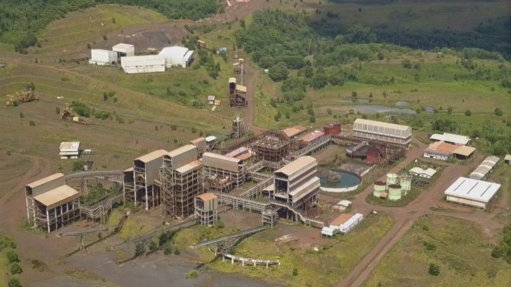
The R10,3-billion platinum mining development follows the approval by both parties to proceed with the expansion of the BRPM, which is situated on the western limb of the Bushveld Complex, bordering the Impala Platinum, Wesizwe and the Western Bushveld JV.
"We believe this will not only boost the production profile of the BRPM mine, but will add much-needed value to the economy of this province," said Angloplat CEO Neville Nicolau at the ceremony.
The mining project is expected to yield about 5,4-million platinum ounces over the mine's 27-year life-of-mine, creating about 4 000 jobs up to 2035.
"We need to earn our social licence to operate," added Nicolau. "Most importantly, we need to make sure that at the end of the life of the mine, we have created a sustainable local economy that thrives outside of mining."
Molotlegi confirmed those sentiments, saying that thought was already being put into the welfare and prosperity of the Royal Bafokeng people postmining. He said it was important to ensure that, once the ore reserves in the area had been depleted and the mined land rehabilitated, it could then still be used for farming and agriculture, from which the locals could still benefit.
Molotlegi noted that this future ideal falls in line with RBH's Vision 2020, which is an initiative to see that the RBN becomes a self-sufficient community by the second decade of the millennium. This ambitious goal will be achieved only if the development of the RBN's communal assets and human capital are realised to their full potential, so that the economic empowerment of individuals within the community is advanced.
He said it was of utmost importance that the RBN grow sustainably through the development of the Styldrift project, stressing the importance of job creation, skills development to increase employability of individuals, environmental maintenance and rehabilitation, and infrastructure development.
"When one gets to Johannesburg, one can see that gold has been used there," said Rustenburg Local Municipality councillor Kebareng Bogapane at the event, encouraging community members and leaders to work toward the City of Platinum outshining the City of Gold. "Rustenburg must become the best and the most beautiful city, including the rural surrounding areas."
He stressed that long-term enrichment could only be effective and take hold if education and skills development take a more central role, and he expressed pleasure at the manner in which the Styldrift project is to facilitate such goals, while commending the Bafokeng people for being generous with the vast mineral wealth that lies under their feet.
Some of the deliberate socioeconomic benefits of the mining project include the implementation of a social and labour plan, approved by the Department of Minerals and Energy, as well as a formalised procurement strategy aimed at empowering small, medium, or microenterprises, which will give preference to historically disadvantaged South African suppliers, sourced predominantly from the local community.
BRPM will be responsible for implementing the socioeconomic plan, in conjunction with the Anglo American socioeconomic assessment toolbox, which will be used and integrated into the project. The project team, community engagement department, environmental department, Anglo Group Properties, the Rustenburg local municipality and the Bonjala district municipality will be actively involved with the communities throughout the duration of the project, with the current community forum, Macharora, being used to ensure active stakeholder engagement.
"The step we have taken today is indicative of the fact that we are a nation determined to take our people out of the poverty trap they find themselves in," North West MEC for public works Jerry Thibidi said at the ceremony. "The RBN, under the leadership of Kgosi Lerou Molotlegi, is actually leading us in that regard."
Implementing Sustainable Employment
During the course of the Styldrift project's implementation, emphasis will be placed on the use of existing social and commercial structures to ensure immediate employment and upliftment opportunities for the local area communities.
The period from now to 2013, will focus on the planning and implementation of selection, recruitment and training strategies, based on best practice principles. These will include learnerships, graduate schemes and talent management processes.
A training-needs analysis matrix has been developed to ensure that trainees in each occupation receive training relevant to the job and its associated responsibilities. To provide adequately skilled staff, use will be made of existing facilities such as academies, the Waterval trackless training centre, and original equipment manufacturer (OEM) training facilities.
Further, formal learnerships for engineering trades such as electricians will be used to ensure that skilled artisans are available in accordance with the production plan. Competency testing and the licensing of mechanised equipment operators will be carried out by accredited instructors trained by the OEMs where licensing procedures to be applied will comply with legislation.
The project's human resource (HR) strategy is based on the employment of enrolled employees, with services such as: mine technical services, safety, health and environment, ventilation, and HR being sourced from the existing mine as a shared service.
Trackless equipment overhauls will be sourced from the OEMs, while explosives-handling and charging will be outsourced from the contracted explosives supplier. This will leave the blasted ore on the ground to be picked up, negating the need for drilling at the platinum mine.
Styldrift was identified, along with a portion of the farm Frischegewaad and Boschkoppies, which are currently being mined by BRPM, as the last major unexploited block of the western bushveld Merensky reef when the RBH/Angloplat JV was formed, in 2002.
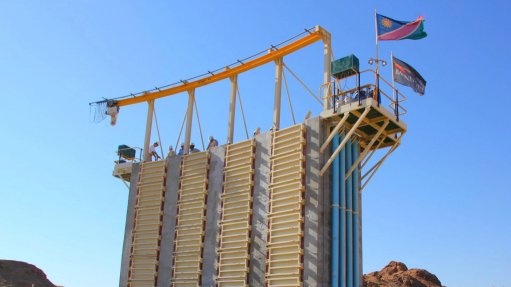
The project, located near BRPM's North Shaft operation, will entail a twin-shaft system, which will be sunk to a depth of 740 m. It will also feature a new 2,5-million tons a year concentrator adjacent to the existing plant, as well as a 5,5-km overland conveying system.
Production levels for platinum group metals is estimated to be about 370 000 t/y at an average grade of about 4,36 g/t. The sinking of the shaft is to begin in 2009, with development and ramp-up in 2013, reaching a steady state production by 2015.
The plant design and construction is scheduled for 2012, with commissioning occurring in 2014.
The R10,3-billion costs, shared equally by both parties, will be repaid over an eight-year period between 2008 and 2016.
By: Darren Parker
5th December 2008
Edited by: Shannon de Ryhove
Topics in this article
| City | Company | Continent | Facility |
| Industry Term | Person | Product | Province Or State |
This article contains no Comments
All comments must be approved by our editors, click here to read the editorial guidelines for comments. Please allow some time
for our editors to approve your comment after posting.