GOLD 1558.22 $/ozChange: 14.57
PLATINUM 1420.50 $/ozChange: 5.50
R/$ exchange 8.36Change: -0.01
R/€ exchange 10.49Change: 0.08
 
We have detected that the browser you are using is no longer supported. As a result, some content may not display correctly.
We suggest that you upgrade to the latest version of any of the following browsers:
         
close notification
powered by
Advanced Search


Home
 
Breaking News
 
 
LEGISLATIVE ENVIRONMENT
Miners should look at protection measures as nationalism tide rises
 
2nd September 2011
TEXT SIZE
Text Smaller Disabled Text Bigger
 

PERTH (miningweekly.com) − Resource nationalism, which is seen as the number-one threat to the mining industry, is not only limited to Africa, with at least 25 countries globally raising the issue in some form, Melbourne-based law firm Gilbert Tobin said on Friday.

Some of the countries said to be looking at options of nationalisition included China, India, Australia, Canada, the US, Brazil, Peru and Chile.

But in Africa alone, at least ten countries have either increased, or announced an intention to increase the take of the State from resource projects, including South Africa, Zambia, Ghana and Tanzania, Gilbert Tobin partner Michael Blakiston said at the final day of the Africa Downunder conference in Perth.

The mining sector was seen an easy target for governments looking to retain or gain wealth, as it was thought to be highly profitable.

“The attraction of the mining industry to a state is that simplistically, the industry appears to be highly profitable due to the high commodity prices which are repeatedly headlined.”

Blakiston warned that while some individual companies posted extraordinary profits, the industry as a whole was experiencing significant cost pressures despite the high commodity prices.

“The State should not be seduced by the performance of these companies, as they do not represent the endeavours of the industry as a whole.”

He said that it was often as a result of miscommunication that governments operated under a false impression regarding the profitability of the resources sector.

Examples of nationalistion were not limited to the expropriation of mining projects, but included black-economic empowerment, resource rent taxes, new mining acts, state participation, amendments to royalty rates and even beneficiation.

“Beneficiation in itself is incredibly important, but not all minerals can be beneficiated within a country. So why pass a law that you must do it, or suffer a penalty?” Blakiston asked.

He told delegates that an increasingly common occurrence has been that penalties or changes to the mining laws were being effected without prior consultation with the resources sector, or the players within that sector.

“We have had examples in Africa where due to the trouble that individual countries have faced, they make statutory changes which in some cases have had extraordinary results. When asked in forums how they came to this decision and what modeling and consultation was done, it hasn’t occurred.”

“That’s not the way to progress industry, or to treat industry,” Blakiston said.

He added that the issue of resource nationalism was being added to an already significant list of demands already being placed in the mining industry, including social responsibility in the form of community developments and training and education responsibilities, environmental protection, technology transfer, and issues of transparency.

However, Blakiston noted that companies were provided with a measure of protection in the form of existing national legislation, the implementation of development or investment agreements and state agreements, as well as bilateral investment treaties.

He said that companies had to investigate adding clauses to their contracts prior to developing resource projects, which would include a hardship clause, political force majeure and expropriation clauses, along with political risk insurance.

Other protection measures included continuous engagement between the mining company and the state, as well as continuous engagement with foreign states and aid donors, as well as the creation of an active chamber of mines.

“Companies need an active chamber of mines, not only to protect a company’s individual identity, but to allow a push-back on a protected basis.”

Blakiston’s comments echoed that of Ernst & Young (E&Y), which ranked resource nationalism as the top business risk for mining and metals companies in its latest mining and metals risk report.

In the E&Y survey, published last month, resource nationalism jumped from the number four spot in the 2010 rankings. The global skills shortage remained in second spot.
 

Edited by: Mariaan Webb

To subscribe to Mining Weekly's print magazine email subscriptions@creamermedia.co.za or buy now.

Subscribe Now Login


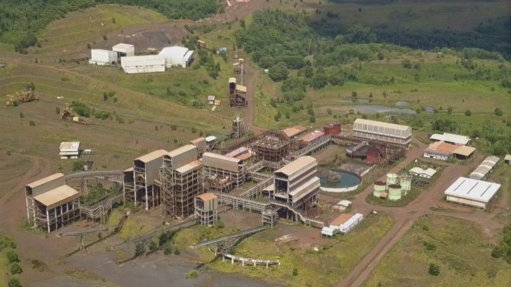
Picture by: Reuters