GOLD 1727.54 $/ozChange: -9.23
PLATINUM 1657.00 $/ozChange: 11.00
R/$ exchange 7.58Change: -0.03
R/€ exchange 10.04Change: -0.13
 
We have detected that the browser you are using is no longer supported. As a result, some content may not display correctly.
We suggest that you upgrade to the latest version of any of the following browsers:
         
close notification
powered by
Advanced Search


Home
 
World News
 
Africa
 
 
PLATINUM
Platinum demand recovering slowly, deficit expected in 2011, says Lonmin CEO Farmer
 
30th October 2009
TEXT SIZE
Text Smaller Disabled Text Bigger
 

Platinum demand levels were gradually improving and a slow firming in the platinum price could be seen, but no quick rebound was expected, Lonmin CEO Ian Farmer said last week.

Farmer told Mining Weekly that the worst was behind the platinum industry and that there was a gradually improving trend in demand for the precious metal.

However, the 2009 calendar year would likely see platinum surpluses of between 100 000 oz and 200 000 oz, before a supply-demand balance in 2010, he forecast.

A deficit could only be expected in 2011/12, at which time the industry would not be well placed to respond to an upswing in demand, given the underinvestment that was an “inevitable consequence” of the global downturn.

Farmer emphasised that while the platinum price was slowly improving, South African producers were currently battling with the strength of the rand, which had eroded the gains Lonmin had made on the improving platinum price.

The appreciation of the local currency was of concern to many, with outgoing Reserve Bank governor Tito Mboweni saying that the central bank was becoming increasingly concerned about imbalances that might result from current trading levels.

Cash flow management and balance sheet management would, subsequently, continue to be of utmost importance for the industry, said Farmer.

The LSE- and JSE-listed platinum producer reported a 6,7% year-on-year drop in plati- num sales to 682 955 oz in the year ended September 30, 2009.

The company had sold 732 125 oz of platinum in the 2008 financial year, after having revised its forecast downwards three times from an initial 900 000 oz.

The 2009 platinum sales were in line with its earlier guidance, when it revised its forecast to 680 000 oz, down from 700 000 oz, following the shutdown of its No 1 furnace.

Lonmin’s No 1 furnace was shut down in mid-June following a matte run-out. Repairs had been done, but the furnace had run at reduced power for most of the fourth quarter, while the platinum-miner’s three Pyromet furnaces were run to try to offset the expected loss in production.

A redesign of the matte tappe hole had since been undertaken and a rebuild of the furnace, which was the company’s largest, was under way.

Farmer said that the furnace would be back on stream by mid-November. “I feel confident that we’re going to be able to run it well going forward,” he commented, saying that he was positive about the team working at the smelter. The furnace had given the platinum-miner trouble before, having been completely rebuilt in 2007 and during the first quarter of 2009.

Farmer noted that smelting remained a risky and unpredictable business, with smelters across the industry failing on a fairly regular basis. However, as this was the company’s main smelter, the disruption to Lonmin’s operational performance was greater.

Sales Forecast
Meanwhile, the company expected to reach platinum sales of 700 000 oz in the 2010 finan- cial year, as production at the Marikana ope- rations was expected to grow, allowing metals- in-concentrate production to rise by about 5%. The total underground production at the Marikana operations had remained flat at 10,2- million tons, with the ramp-up in production from the mechanised and hybrid shafts being offset by the Section 54 safety shutdowns.

The platinum-miner said that safety shutdowns at its operations had led to a loss of 513 000 t of ore mined in the financial year, more than double the 210 000 t lost as a result of safety stoppages the year before.

While these stoppages would not likely be completely halted, Lonmin was adamant that it would have to reduce the impact this had on the company’s operational and financial performance.

Farmer said that the company was implementing a threefold set of actions to try to mitigate the impact of these stoppages. Firstly, it was of paramount importance that the company continued to improve its safety performance at every opportunity, he emphasised. It was also trying to improve its relationship with the Department of Mineral

Resources to ensure that the department understood the steps Lonmin was taking in terms of improving its safety performance. Lastly, the company was aiming to improve its relationship with the unions, as safety and employee behaviour went hand in hand, said Farmer.

Meanwhile, he also noted that, while the mechanised and hybrid shafts at Marikana, particularly its two new shafts, Saffy and Hossy, had performed well during the financial year and increased production substantially, the conventional mining shafts at Marikana had underperformed in the past year.

Production at the mechanised and hybrid shafts had increased by 49%, to 1,7-million tons, during the year. Lonmin stated that Saffy had performed well despite the challenges related to converting the shaft from being fully mechanised to hybrid mining. The shaft had achieved its hoisting target of 80 000 t/m in September.

The Hossy shaft had also achieved production in line with expectations. Mined tonnages from the conventional underground shafts had declined by 600 000 t to 8,5-million tons. One-half of the decline was attributable to safety stoppages, while the remainder of the losses was attributable to the closure of a small uneconomic decline shaft and disruption as a result of the restructuring programme it had undertaken, Lonmin stated.

There was scope for further improvement at these conventional shafts, particularly at the K3 shaft, which had been dogged by develop- ment issues. It would take about another 12 months for these shafts to reach the stage where Lonmin would like them to be, said Farmer.

Meanwhile, the platinum-miner reported that its underground ore resource development at Marikana had reached two-million square metres of immediately available ore reserves.

Headquarters Moved
Lonmin had, meanwhile, also decided to relocate its operational headquarters from London to Johannesburg, in a move to place the executive management team closer to its mining operations. This would also allow it to “engage more effectively” with its South African stakeholders.

“As part of Lonmin’s continuing trans- formation, now is the right time to start the process of consolidating the executive management team in South Africa. This move will bring many benefits as we continue to deliver operational improvements and build on the firm foundations put in place over the last year,” said Farmer.

He would, from January 1, 2010, be based in Johannesburg. CFO Alan Ferguson had decided not to relocate to South Africa and would resign as CFO and as a member of the company’s board of directors on December 31, 2010.

Lonmin’s board of directors would con- tinue to be based in the UK, with a small office to support the board and the pri- mary listing of the company’s shares on the LSE.

“Lonmin greatly values its UK domicile and primary listing in London and will continue to maintain a board with the blend of backgrounds, skills and experience required to provide effective leadership appropriate for a FTSE 100 company. “The board’s key functions of management oversight, strategic direction, decision-making and corporate governance will remain in London,” commented Lonmin chairperson Roger Phillimore.

Anwaar Wagner, Mining and Resources Fund manager at Old Mutual Investment Group South Africa, said that it was a logical move, which would have multiple benefits for the platinum-miner, such as being closer to the operations and a structurally lower cost base in South Africa.

Edited by: Martin Zhuwakinyu
FULL Access to Mining Weekly and Engineering News - Subscribe Now!
Subscribe Now Login


Hide Comments  
 
This article contains no Comments


All comments must be approved by our editors, click here to read the editorial guidelines for comments. Please allow some time for our editors to approve your comment after posting.
 * Required Fields

image
image
 *


image
image
 *
 

image
image
 

Verification Image

image
image
 * Please enter the text you see in the above image.


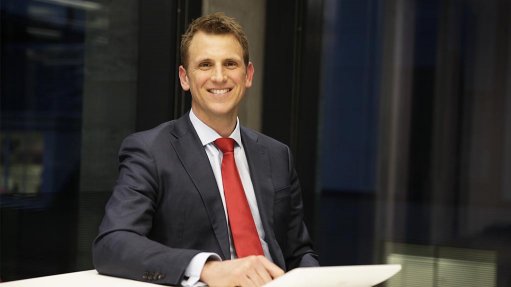
IAN FARMER
Cash flow management and balance sheet management will continue to be of utmost importance
 
IAN FARMER Cash flow management and balance sheet management will continue to be of utmost importance