GOLD 1569.16 $/ozChange: 25.51
PLATINUM 1430.20 $/ozChange: 15.20
R/$ exchange 8.36Change: -0.01
R/€ exchange 10.51Change: 0.05
 
We have detected that the browser you are using is no longer supported. As a result, some content may not display correctly.
We suggest that you upgrade to the latest version of any of the following browsers:
         
close notification
powered by
Advanced Search


Home
 
Magazine
 
Weekly Features
 
 
Industry support admirable, but more support is needed – Wits
 
2nd May 2008
TEXT SIZE
Text Smaller Disabled Text Bigger
 

Although there is an admirable level of support from indus- try in the education of students in mining degrees, more support is needed in order to make a significant move in resolving the current skills crises, reports the Wits School of Mining Engineering.

Chamber of Mines Professor of Mining Engineering and head of the Wits School of Mining Engineering, Professor Huw Phillips, says that without the support from industry, mine education and training, particularly at a tertiary education level, will struggle to produce the required number of graduates. However, Phillips adds that there is room for improvement on the part of industry.

“There is a trend in the industry for companies to offer academic bursaries from the second year of a student’s studies; this is a result of the high number of students failing to complete their first year. As a result, there is little recruitment at school level.

“The other scenario that arises from this situation is when students are willing to study mining engineering, but do not have the financial means to complete their first year,” says Phillips.

He adds that he is in the process of trying to persuade industry participants to start offering bursaries to first-year students, in order to persuade top achieving students from high schools to consider a career in mining.

The second area in which mining companies can assist is through acknowledging educational demands when completing a mining engineering degree. “There is a trend in the industry for students to take four years to complete the first three years of their degree. Many mining companies only offer bursaries up to year four of a student’s studies.” The result is that the student needs to find temporary employment in order to fund the final year of studies. This employment is often in the form of low-paying jobs which result in students taking two years to complete their final year. “Companies who offer bursaries need to realise the length of time it takes for a student to complete a degree and make a commitment for that length of time,” says Phillips.

He adds that the suggestion from the Dean of the Faculty of Engineering and Built Environment, Professor Beatrys Lacquet, is that companies in the industry actually motivate students to complete their studies within the specified timeframe. “Lacquet has suggested that mining companies set aside five years worth of funding for a mining engineering degree. If a student completes his/her degree in four years, then the final year of funding would be presented to the student as a cash incentive,” says Phillips.

Not only would this motivate students to complete their studies before the five-year timeframe, but they would also be motivated to strive to achieve good marks.

A number of years back, the Wits School of Mining Engineering experienced a high intake of first-year students wishing to study a degree in mining engineering. Statistics from the Wits School of Mining Engineering show that there was a decrease in the number of first-year students enrolling at the school between 1999 and 2002.

In 2003, the school had an intake of 104 first-year students; this has remained relatively stable with an intake of 153 first-year students in 2008. Phillips adds that the majority of the students enrolling at the school are black South Africans. “Of the 153 first-year students that have enrolled at the school this year, 146 students are black, and of those 146, 38 are female,” says Phillips.

He adds that although it is encouraging that a high number of students wish to pursue a degree in mining, it is not ideal as the school is opera- ting over capacity. Phillips reports that there are measures being implemented by the school to rectify this situation.

Phillips adds that the interest shown in pursuing mining as a career often comes from a history of mining within many families. Phillips reports that, in the past, many students from the rural communities wanted to become pastors or teachers as there was a high demand for those professions within their communities. But because a number of their family members were workers on the mines, the youth would hear the older community members tell stories about mine managers being such respected members of the com- munity in which they work and about their having the best houses. He adds that this, coupled with the fact that the youth of South Africa have better access to information, motivated students to pursue a career in mining.

Phillips reports that from about 30% to 35% of students drop out during or after their first year of studies. The number of students that continue from the first year into the second year is an issue that the school wishes to improve. Phillips reports that this is owing to a number of factors.

“The foremost factor is the freedom that students experience at university. For 13 years, students have been forced to do homework and hand in assignments. Now, at university, a student chooses whether or not he/she wishes to do this. Many students take the easy route of not doing self-study, which results in students not making the grade. Students also find that there needs to be a high level of self-motivation at university level. “This motivation is hard to come by when not a life of not studying and socialising presents itself,” says Phillips.

About 50% of the students that register with the school in their first year graduate from the school. This figure has been stable since the school’s inception in 1922. Although Phillips is happy with this statistic, he is hoping to improve on it through innovative teaching methods and through the school’s mentorship programme. Phillips reports that the pass rate of students at postgraduate level is in excess of 80%.

Phillips is upbeat about the future of the mining school in light of the current skills crisis. “The school needs to maintain its standard of education while releasing enough people into the industry every year in order to eradicate the skills crisis,” says Phillips. He adds that the retention of skilled labour in the country also needs to be looked at as there is a high level of poaching from international industry in countries like the US and Australia.

To listen to Professor Huw Phillip's views on the role that government can play in education and training in mining, as well as his views on the current role that companies within the industry need to play, click here

Edited by: Esmarie Swanepoel

To subscribe to Mining Weekly's print magazine email subscriptions@creamermedia.co.za or buy now.

Subscribe Now Login


Professor Huw Phillips of the Wits School of Mining discusses the role that government plays in education and training in the mining sector as well as the role that mining companies are currently playing in this regard 07/04/08
GET SELECTED AUDIOCLIP
Embed
This article's audio Download (2.16mb)
 
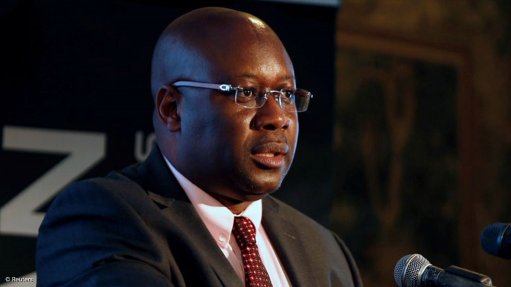
PROFESSOR HUW PHILLIPS The mining idustry has a long history of educating historically disadvantaged South Africans (Source: Chief Photographer Duane Daws)
 

PROFESSOR HUW PHILLIPS The mining idustry has a long history of educating historically disadvantaged South Africans (Source: Chief Photographer Duane Daws)