GOLD 1251.27 $/ozChange: 5.63
PLATINUM 1555.50 $/ozChange: 23.50
R/$ exchange 7.25Change: 0.05
R/€ exchange 9.30Change: 0.04
 
We have detected that the browser you are using is no longer supported. As a result, some content may not display correctly.
We suggest that you upgrade to the latest version of any of the following browsers:
         
close notification
powered by
Advanced Search


Home
 
Most Popular Articles
 
 
PLATINUM
Eskom positioned to power Angloplat growth – CEO
1 COMMENTS  |  
ADD A COMMENT PRINT
 
 
26th July 2010
TEXT SIZE
Text Smaller Disabled Text Bigger
 

JOHANNESBURG (miningweekly.com) – State-owned power utility Eskom was positioned to meet the growth requirements of Anglo Platinum, Angloplat CEO Neville Nicolau said on Monday.

After reporting 532% higher headline earnings of R2,6-billion for the half-year to June 30 and keeping growth capital expenditure (capex) at R4,5-billion, Nicolau said that a study showed that Angloplat's growth-related electricity requirements would be met, even in the event of further delays to the Eskom's own capital build programme.

"Certainly, in terms of our interaction with Eskom, I am pretty confident that we'll be able to manage the ongoing relationship," he said in reply to Cadiz mining analyst Nic Dinham.

In terms of the overall requirements for the next ten years, electricity was not a constraint "directly", but rather an aspect that the company sought to manage "quite carefully".

Internally, Angloplat had accepted that it needed to reduce its consumption of electricity and to improve the efficiency of electricity.

"I can't guarantee that there will never be issues in terms of Eskom, but we will absolutely do everything we can do to reduce the amount of power that we consume and to help Eskom in times of difficulty," Nicolau told Mining Weekly Online.

He said that the company was beginning to reap the rewards of the turnaround in Angloplat that had been set in motion last year.

"We want a truly transformed company, not in the veneer, but in the heart of the company, so it's work in progress.

"We're almost like an athlete that lost a lot of weight last year. This year has been a year of getting fit, and I think that the full benefit of that will only begin coming through next year, as we continue to keep our costs flat," he added.

The fitness involved improving the quality and reliability of its production machine.

Capex would remain a R8-billlion for the year, R4,5-billion of which would be growth capex for projects that come on line in the next four to six years. The capital plan was directly related to its long-term growth profile.

"If we increase this growth profile, we are going to have to spend more money on capital, and if we decrease it, we'll spend less," Nicolau said.

The growth capex was spent across a wide range of projects, on the Twickenham project; at the Amandelbult complex and at various other upper group two (UG2) projects in the Rustenburg area in South Africa, and at Unki in Zimbabwe, which would come on line by year-end.

These were all being developed to guarantee the company's long-term capital growth, and at a cost profile that was positive by doing low-cost projects first.

Infrastructure was being designed to bring lower-cost ounces into the production profile sooner and the capex programme was being used to build in a lower cost base for the long term.

Several of the company's joint-venture projects were close to the surface and presented the opportunity to produce low-cost ounces.

Shallower, closer-to-infrastructure UG2 projects were being looked at in Rustenburg as opposed to the very deep Merensky projects, which were a long way off and expensive.

The stay-in-business capex had been trimmed to R3-billion.

"We have repositioned our company and continue to examine every aspect of our business," he added.

Having refined one million ounces of platinum in the half-year, Angloplat was confident of producing 2,5-million ounces of platinum and retaining costs at the R11 000/oz level.

The drive to increase productivity continued to be part of keeping costs flat and the target of 7 m2/m for everyl operating employee had been obtained and 7,3 m2/m was targeted for 2011.

The conversion of mineral rights to new-order rights was being executed following the receiving of letters of conversion from the Department of Mineral Resources.

Angloplat also reported a 41% lost time injury frequency rate reduction since introducing its 2007 safety enhancement programme.

"While we have not yet reached our target of zero harm to our employees, we continue to believe that fatalities are unacceptable and that zero is possible," Nicolau said.

Factors contributing to the higher earnings were a 67% increase in the US dollar price realised on the basket of metals sold, offset by a stronger average rand/dollar exchange rate and lower sales volumes.

AngloPlat said that it expected the platinum price to average at least $1 500/oz, if economic recovery continued, for the remainder of 2010, buoyed by continued strength from the autocatalyst and industrial segments.

Environmental pressures, energy security and diversification were sustaining global interest in new applications for platinum-group metals.


Edited by: Creamer Media Reporter


Hide Comments  
 
Readers Comments
 
image image
When I first read the headline I thought "good!" 10 seconds later I realised how far we have sunk in our expectrations. It is really sad that we find it newsworthy that our national power utility should be in a position power the growth of one of our largest industries. This should not be news!
image image 
image
Chris Herold on 27th July 2010
 
 
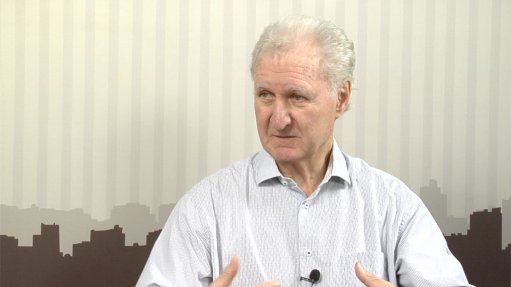
Anglo Platinum CEO Neville Nicolau tells Mining Weekly Online’s Martin Creamer that electricity utility Eskom is positioned to meet the platinum company’s energy needs. Cameraperson: Nicholas Boyd. Video Editor: Darlene Creamer.
This video is licensed under a Creative Commons License