JOHANNESBURG (miningweekly.com) – Debt-free, cash-positive but underrated Northam Platinum could return to being a platinum-industry takeover target, as it was before the global economic meltdown, or it could consider using its nigh-R1-billion in cash to acquire juniors and become an industry consolidator, RBC Capital Markets analyst Leon Esterhuizen commented to Mining Weekly Online on Friday.
Speaking after Northam presented results that reflected an operating profit margin of 25,7% in the year to June, Esterhuizen told Mining Weekly Online that the one-operation platinum-mining company was in a sufficiently strong cash position to consider buying one or two low-cost platinum juniors.
But, as Northam stood, it could perhaps, once again, become a takeover target itself, as it was prior to last year's global economic meltdown, when it was in Impala Platinum's (Implat's) sights.
Esterhuizen found it ironic that the world's deepest platinum mine, the current Northam mine, had managed to remain cash positive after capital expenditure, while bigger rivals, with none of Northam's high-temperature potholed depth, were cash negative.
The market, which is currently rating Implats' shares higher than those of Northam, might induce Implats to pounce once more: "Impala would not have to put a lot of money into Northam to make it work. Northam's already got money, and it's already got Booysendal, and it's one of the best plays in the sector," Esterhuizen said.
Given the development of the higher-value Merensky reef at the current Northam mine, plus the shallow, high-margin Booysendal development project that was unlikely to have any funding difficulties, Esterhuizen believed that Northam shares should be trading at a premium rating, and not at the current discount, relative to the rest of the sector.
The unbundling of Mvelapanda (Mvela) is providing Northam with both continued full black-economic empowerment status as well as the cash component to grow from the sale of Mvela's Gold Fields shares.
Mvela executive manager: commercial James Wellsted commented to Mining Weekly Online that Northam had done well to increase its sales volumes by 22% to 333 000 oz; hold its cost increases down to 14%; and achieve an operating margin of 27,5%.
"Year after year, Northam keeps its costs at fairly reasonable levels. If you look at most of the cost curves that the analysts produce, Northam sits well down the cost curve, so there is going to be lots of other production hitting the floor before Northam's does, and it's a question of whether those other higher-cost platinum-mining companies, keep running as the rand strengthens, or whether they start closing, which would then lift the metal prices once again," Wellsted said.
On the funding of Northam's prized development project, Wellsted pointed out that Booysendal's advantage was that it lent itself to a flexible, modular build-up, and that Northam was able to fund the first R2-billion to R2,5-billion decline from its own internal financial resources.
Not only did Northam have R921-million cash on its balance sheet – less the dividend of 40c a share just being paid out – but it was set to remain cash positive in the new financial year.
Moreover, its main shareholder Mvela, which had excess cash from the sale its Gold Fields shares, could apply that cash to Northam, in a rights issue, enabling Northam to fund a second decline at Booysendal, dependent on the bankable feasibility study and whether the development project had sufficient power and water for another decline.
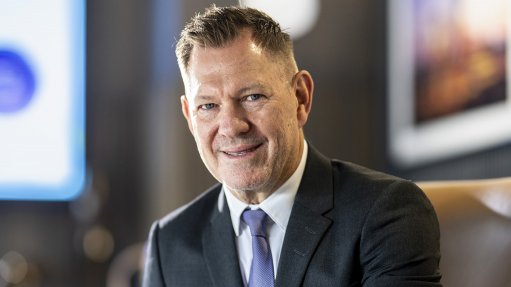
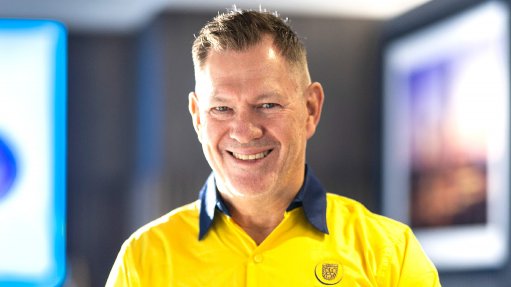
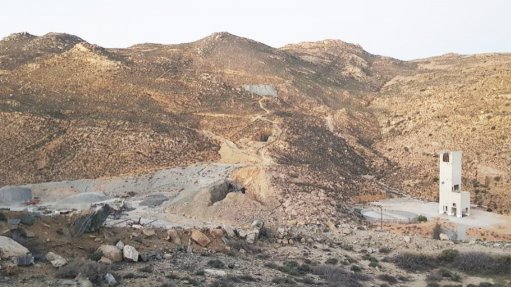
While Northam has always suffered from being single-mine producer exposed to the risks of depth, Northam CEO Glyn Lewis told Mining Weekly Online that Booysendal outcropped on the surface: "The orebody itself is conformable and nothing like the potholed facies that we experience at Northam's Zondereinde mine."
But, even Zondereinde's performance should improve from a Merensky point of view: "Going west, we will remain in the pothole facies for some time to come, but all indications are that, with the decline at the Northam mine, we will be mining normal Merensky reef, which is conformable; has a higher stoping width; and yields higher ounces per square metre," Lewis added.
He conceded that current rand platinum prices were making matters "very tough".
"The exchange rate has lowered metal prices. We've had a 57% US dollar price increase since December in the basket price of metals, yet only a 27% increase in the rand basket price," Lewis lamented, adding that it would experience margin squeeze going forward.
"We were hammered by the 27% strengthening of the rand in the past six months," said Lewis, who anticipated that the rand would weaken towards year-end.
Lewis anticipated that the funding of Booysendal would be through a combination of a rights issue, short-to-medium term financing and available cash, which would be largely rand-dollar exchange rate dependent.
He said that Booysendal would diversify Northam's income streams, increase production and reduce the company's operational risk.
Booysendal had increased Northam's resource base six fold and, more significantly, had added shallow ounces, which would secure Northam's production base for many years to come.
The company would be spending R270-million capital in the financial year to June 2010, 40% for the deepening project at the existing Northam mine.
Capital expenditure would be R60-million less than the R330-million spent in the 2009 financial year, which included R74-million for the smelter rebuild.
To subscribe to Mining Weekly's print magazine email subscriptions@creamermedia.co.za or buy now.