GOLD 1561.63 $/ozChange: -20.42
PLATINUM 1425.00 $/ozChange: -34.50
R/$ exchange 8.38Change: -0.16
R/€ exchange 10.54Change: -0.01
 
We have detected that the browser you are using is no longer supported. As a result, some content may not display correctly.
We suggest that you upgrade to the latest version of any of the following browsers:
         
close notification
powered by
Advanced Search


Home
 
Magazine
 
Weekly Features
 
 
Minopex Corporate Profile
‘De-hassling’ the minerals operation on 15 sites
 
21st May 2010
TEXT SIZE
Text Smaller Disabled Text Bigger
 

The 1 500-empoyee Minopex, which last year turned over R1,2-billion, is a company that specialises in the contract operation and maintenance of minerals processing plants.

“We de-hassle the entire minerals operation,” Minopex MD Paul Thomson tells Mining Weekly.

Minopex started out in 1996 as a direct response to a company that it continues to work with today.

Currently, an operator and maintainer on 13 sites in South Africa and two in Lesotho, the company expects to increase that tally by another four sites during 2010.

While mining companies can opt to engage contract miners to dig rock out of the ground for them instead of doing it themselves, those companies can also opt to engage a company like Minopex to process that rock further and then to receive the upgraded product ahead of the marketing process.

Minopex has three pricing models. One is to charge a fixed rate for every ton of material that it processes – a rand-per-ton charge; the second is to charge on a fixed amount together with a mark-up on the spares and consumables that are procured on behalf of the client; and the third is to link a fixed amount to a variable rand-per-ton portion in order to cover the procurement function.

In turn, it operates and maintains the plants to International Standards Organisation (ISO) 9000 and the Occupational Health and Safety Systems 18001 standards.

Thomson says that the advantage for mining companies of giving direct operational control to a third party like Minopex is that miners are then able to concentrate on their core business of getting the most out of their resources without the distraction of extraneous responsibilities associated with the operation of the plant, like scheduled maintenance, procurement, human resource management and industrial relations. Their product is also returned to them in upgraded form.

Everything bought on the client’s behalf is first approved and signed off by the client’s representative and becomes the property of the client the moment it arrives.

Some prospective clients express concern that the second pricing model of a fixed charge coupled to a mark-up on the spares and consumables leaves the way open for outsourced specialists like Minopex to buy unnecessarily in order to improve its margin.

But a benchmarking process that compares the performances of outsourced operators highlights any aberrations.

The rand-per-ton pricing model can evoke fears that the outsourced operator will under-maintain in order to save money for itself. But the counter to that is that poor maintenance results in downtime that prevents the outsourced operator from attaining optimum throughput and thus optimum return.

The contractual model also stipulates that the plant will be returned to the client in the condition in which it was received, fair wear and tear excluded.

A benefit for clients is that Minopex is a large procurer and obtains preferential rates from many of the large suppliers, and that the benefit of these preferential rates are passed on to clients.

This benefits especially the smaller mining companies, as miners of single deposits do not have the same level of procurement leverage that Minopex has when it buys on behalf of its clients.

“There is a definite procurement advantage,” Thomson assures. Because of Minopex’s large operational skills base, it is also able to accele- rate the ramp-up of entry-level junior miners.

Many junior miners entering the mining market do not have the requisite processing skills.

They have a resource and a mining plan, but they do not really know how they are going to process what is mined.

These junior miners can recruit personnel who are able to do the job or they can engage Minopex to process for them to mutual benefit.

What Minopex Does

While Minopex has a close relationship with DRA, with which it shares a common set of shareholders, it operates plants built by a full spectrum of project houses, currently including plants built by GRD Minproc, Jim Harrison and Bateman.

“We do the full spectrum. It doesn’t matter whose plant it is, we’ll go in and operate and maintain it,” Thomson tells Mining Weekly.

Minopex’s offering begins at the plant commissioning stage: “We get in early and ramp up our staff along with the construction of the plant so that they can learn about the plant as they go along. We’ve found that radically shortens the commissioning period,” he adds.

The quickest Minopex has been able to ramp up to nameplate capacity after wet commissioning is a mere two weeks, but that was because it had worked closely with project house DRA on design risk analysis and throughout the construction phase.

Minopex offers maintenance input from the design phase and poses questions early, when operational designs show signs of being maintenance unfriendly.

The ramp-up and commissioning are an integral part of its offering and, after it has gone through the performance tests of the plant and the plant is actually handed over, Minopex then clicks out of the commissioning phase and into the operations and maintenance phase.

The operations and maintenance phase entails the placement of personnel, procurement of the consumables and spares, management of the stores, plant maintenance and the optimisation of plant uptime.

All the plants that Minopex operates are linked over wide area network to the company’s main Woodmead office, and maintenance planning is integrated.

Minopex is experiencing increasing demand for its services, with many more companies requesting pricing than in the past.

Thomson believes this to be the result of the size to which the company has grown and the technical backup it can offer together with DRA.

Contract Duration
Capital investment has to be recouped and, obviously, the shorter the duration, the higher the cost to client, so it makes sense to extend it as long as possible. At one stage, Minopex targeted contract durations of five years, but is currently more flexible.

“We don’t really have contracts of minimum duration. Contracts are now tailored to be fit for purpose and fit for the client, but it has to be understood that there are particular cost implications associated with the shorter contract compared with the contract of longer duration,” Thomson says.

Minopex currently operates and maintains coal, platinum and diamond plants; contract management and administration; purchasing, stores control and asset management; training and skills development; subcontractor manage- ment; plant process control and analysis; scheduled and preventive maintenance; metallurgical quality management, control and analysis; health and safety; environ- mental management; and waste, discard and tailings dump management.

Minopex, 25% of which is owned by black economic-empowerment company Shanduka Resources, believes that new mines that engage its services can reduce capital costs on equipment and engineering facilities, and that operating mines that do so can reduce operating costs.

Edited by: Shannon de Ryhove

To subscribe to Mining Weekly's print magazine email subscriptions@creamermedia.co.za or buy now.

Subscribe Now Login


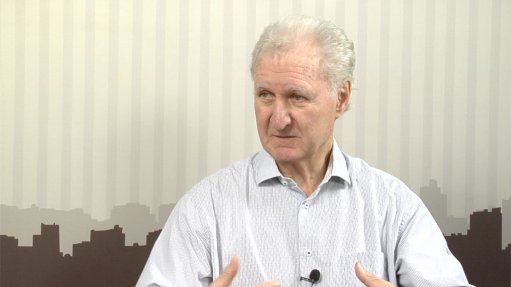
Minopex MD Paul Thomson discussing the company. Cameraperson: Nicholas Boyd. Editing: Darlene Creamer.
This video is licensed under a Creative Commons License
GET SELECTED VIDEO
Embed
Selected Video Download (2.15mb)


Pullout Quote
Minopex is a large procurer and obtains preferential rates from many of the large suppliers, and that the benefit of these preferential rates are passed on to clients
The advantage that miners are able to concentrate on their core business without the distraction extraneous responsibilities and product is returned to them in upgraded form