There is angst in South Africa’s inland coal market, where traditional coal exporters have become active.
Some coal majors turned their attention to the local South African market when rand export prices tanked.
“We got ourselves cut off at the knees,” says the JSE’s AltX coal junior Wescoal, which has since protected itself against such vulnerability by becoming a coal-miner in addition to being a coal trader.
“Our percentage margins were actually trashed,” Wescoal CEO Andre Bojé tells Mining Weekly.
Export prices halved, which made it more lucrative for primary producers to sell inland than abroad.
At $140/t in October last year, pricing flattened to between $60/t and $63/t during the months of March to September, and have since upticked to $72/t.
But significant improvement is not foreseen: “We don’t see the next export price rising higher than $75/t in the next 12 months. If you couple that to the exchange rate, it’s not good for the exporters at the moment.
“As an example, we were paying R630/t for coal and the majors came in and began selling at R500/t.
“They just went in and cut prices across the board. It was a silly move, but that’s what happened, and we won’t see a material improvement in coal-trading conditions until the end of 2010,” Bojé predicts.
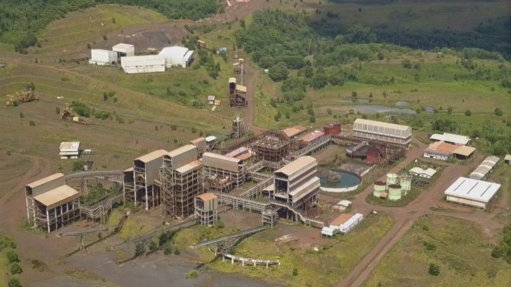
With its new Khanyisa coal mine, Wescoal is, for the first time, able to sell its coal into the cement and metallurgical industries, which deal only with mine owners.
Some of those industries are reportedly disgruntled because coal-miners lifted South Africa’s inland pricing to the level of export pricing in the boom times of 2007 and 2008.
From a tradition of increasing prices once a year, they were lifting the local prices monthly.
The inland price of coal is said to have risen 100% in 13 months.
“Primary producers were holding the South African consumer hostage,” Bojé tells Mining Weekly.
“Now the boot is on the other foot and consu- mers are saying, ‘Hang on, we want to deal with the suppliers who didn’t do that to us’,” he says.
Long-Term Outlook
Current hardship is seen as a temporary blip. The long-term view on coal remains extremely bullish.
“We all have tears in our eyes about what’s happening now, but the low cost of energy from coal assures its future,” Bojé says.
The scenario being painted at top-level seminars round the world is that China will be burning 2,2-billion tons of coal a year and India will be consuming 450-million tons a year.
India, the pundits say, is poised to import 45- million tons a year and China will once more revert to imports.
But all that happens from 2011 onwards – with a big 2010 gap.
Meanwhile, South Africa’s inland pricing is down 34%, and local coal consumers are said to be refusing to pay prices above export prices.
Some marginal mines are said to be running at a loss.
Coal-miners with long-term fixed contracts have been unable to turn inland and have had to grin and bear the pressures of the strong rand on their profit margins, but those that specifically ride the global spot price market have slashed prices.
They quickly looked inland, “and they attacked everything that moved”, Bojé tells Mining Weekly, diverting their coal into the high end of South Africa’s inland market and causing a general domestic oversupply.
More Competition
On top of that, as a consequence of the boom, there are many more local participants in the coal business.
“Every man and his dog decided that coal was a good commodity, and the competition just rocketed to 35 from 4. They’re getting their fingers burnt and retribution is on the way,” says Bojé.
Wescoal’s own earnings a share halved in the six months to September 30, after showing massive growth of 80% to 100% in previous years.
Its coal-trading division, Chandler, has tradi- tionally been the source of 80% of its revenue since the company’s inception in 1996, but Wescoal has now begun sidestepping reliance on one revenue stream.
Besides mining, Wescoal has a coal recovery division that reclaims waste discard and slurry, upsizes it and on-sells it into the lower end of the market.
The company has just entered that low end of the market, on which it will focus.
The first upsizing is through briquetting, with the use of a nonstarch, hydrocarbon binding agent, and the second through agglomeration, in which fines made into pebbles are used in electricity generation.
The upsizing is done at the Blesboklaagte operation, which will also receive an initial 40 000 t/m from Khanyisa, near Kendal, in Mpumalanga province.
Blesboklaagte’s jig plant is uplifting performance and Khanyisa’s rail siding is providing an added boost.
First Blast
Mining Weekly formed part of a large contingent of journalists and analysts that witnessed the first blast at Khanyisa.
The “mess” that Khanyisa was left in has resulted in delays in mining contractor Kubra Mining realising a monthly run-of-mine production of 100 000 t.
Wescoal bought the mine from Nucoal Mining for R36,5-million in June. The mine has a remaining measured coal reserve of 4,5-million tons and further indicated resources of 0,5-million tons.
Wescoal has paid Nucoal R25-million in cash and a further amount of between R8,8-million and R11,5-million is payable in August.
If Wescoal decides to mine coal on additional portions of the mine area, it will pay Nucoal up to R8/t of coal mined from the particular portion, up to R6-million.
Margins are higher from mining than from trading and mining is expected to take over from trading as Wescoal’s largest generator of revenue.
It plans to sell coal to Eskom and also to export, having found a partner with a monthly export allocation of 80 000 t from Durban.
While profit margins in supplying Eskom are small, avoiding cost increases at production level would send the benefit directly to the bottom line.
Larger Volumes
Wescoal is repositioning its margin-squeezed trading division to trade larger volumes.
Financial director Piet van Rensburg reports that six-monthly turnover to end-September declined 27,3% from last year’s R298-million to R217-million. The decline is being countered by increasing the number of customers.
The company’s gross margin fell to 8,7% in the six months, from 11,3% in the previous period, and is expected to remain under pressure for another 12 months “at least”.
Profit fell to R7-million from R13-million, but net asset value was well above the 74c share price at 114,76c a share.
Wescoal’s trading segment contributed 88% to overall revenue, amounting to R191-million; and the washing and mining segments the remaining 12%, amounting to R26-million.
The company supplies coal to the sugar, beer, starch, tobacco, food and a wide range of small manufacturing industries.
In South Africa, producers traditionally hold the stock and not the end-users, and producers’ stock levels have shown signs of being down in the past couple of weeks.
To subscribe to Mining Weekly's print magazine email subscriptions@creamermedia.co.za or buy now.


.gif)