GOLD 1566.75 $/ozChange: -25.06
PLATINUM 1443.00 $/ozChange: -16.50
R/$ exchange 8.35Change: -0.02
R/€ exchange 10.57Change: 0.06
 
We have detected that the browser you are using is no longer supported. As a result, some content may not display correctly.
We suggest that you upgrade to the latest version of any of the following browsers:
         
close notification
powered by
Advanced Search


Home
 
Magazine
 
News This Week
 
 
Hydraulic Fracturing
Shell, enviro watchdog set to clash over plans to undertake hydraulic fracturing in the Karoo
 
8th April 2011
TEXT SIZE
Text Smaller Disabled Text Bigger
 

Environmental watchdog Treasure the Karoo Action Group (TKAG) and Shell South Africa are set to clash over the oil company’s application to the Department of Mineral Resources to embark on a hydraulic fracturing (fracking) programme in the Karoo region of the Northern Cape, Eastern Cape and Western Cape to gain access to onshore gas reserves that can be used as an energy source.

At the heart of the imminent clash is the fracking process, which involves the drilling of deep wells down which a highly pressurised fracturing fluid is pumped. This is then injected into the shale gas formation, unlocking the gas and allowing it to make its way to the surface, where it is then captured. Shell reports that the fluid injected is commonly water and sand.

TKAG national coordinator and spokesperson Jonathan Deal says the major opposition point of the group is the “unsustainable nature of the resource”.

“Fracking should not be an option while there are viable, sustainable and environment-friendly alternatives to mining and burning shale gas for power. It makes no sense to destroy the economic activity and potential of the Karoo, including tourism revenue, in pursuit of a resource that will last between 5 years and 15 years,” says Deal.

He adds that the alternatives do not involve the mining of shale gas, but instead the development of renewable-energy sources, such as wind and solar energy.

Shell new venture exploration manager Janneke Abels tells Mining Weekly that Shell is aware of the growing opposition to its proposed operations in the Karoo.

“Shell has heard and respects the stakeholders’ concerns, and has offered a series of commitments that it feels will increase trust, allow for more effective dialogue and information sharing and address the most contentious issues. If awarded the exploration licence, before any invasive operations, like drilling, could occur, Shell will have to complete detailed, site-specific environmental-impact assessments (EIAs) that will deal with issues identified in the environmental management plan (EMP) process,” says Abels.

Deal reports that approval of Shell’s application will set a dangerous precedent.

Shell’s application, which they claim is for 24 wells in three precincts of 30 000 km2 each, would imply that other prospecting companies, which include Falcon Oil & Gas, Bundu Gas and Sasol, could expect a favourable decision on similar applications.

“The enormity of the areas involved, 230 000 km2, excluding Sasol’s application, and the invasive and destructive nature of hydraulic fracturing would lay waste to the Karoo, initially above ground and then underground too. “Consider the amount of trucks required to drill and frack one well pad. A well pad, typically 0,01 km2 in size, can have more than eight wells, which means that between 9 000 and 11 000 truck loads will move across the Karoo roads to service one well pad,” says Deal.

In response to allegations of the possibility of underground water contamination, Abels reports that Shell does take measures to prevent this.

“The key to ensuring no water contamination occurs is well integrity. Shell has very robust well design standards. The company’s wells are lined with multiple strings of casing and are cemented from the surface to below aquifer water levels. Through microseismic technology and other tools, the company knows that the fractures do not grow from the reservoir depth to groundwater depth. “Shell South Africa will share its well design and aquifer protection plans, and will adopt best practices from around the world. Best practices include the use of standards and guidelines around multiple barriers and cement- ing as well as monitoring,” says Abels.

He reports that there is no other way to release the natural gas from the shale formations than hydraulic fracturing.

“This is a well-established and key industry technology, which is safely conducted throughout the world in thousands of oil and gas wells every year. Without it, much of the world’s oil and gas resources could not be produced. Shell is confident in its ability to responsibly develop shale gas resources, and has a record in North America to prove this,” says Abels.

She adds that the company’s advanced drilling techniques already limit the number of wells it needs to drill, lowering its impact on the environment. Shell also takes steps to restore the land to match its surroundings once a drilling location is complete.

“An example of this is Pinedale, in the US state of Wyoming, which is a similar natural gas project to that envisaged in the Karoo. Shell worked with the Bureau of Land Management on successful restoration of the natural vegetation,” says Abel.

Deal points out that, although Shell is confident that its operations in North America are without blemish, one cannot look past the fact that the potential for significant groundwater contamination is very real. He also fears that the same is in store for the Karoo.

“In the US, nearly nine out of ten onshore wells have been hydraulically fractured and there have been no proven cases of contamination of groundwater sources through hydraulic fracturing. “This has been confirmed by the director of the Environmental Protection Agency (EPA) Lisa Jackson, who said that the EPA doesn’t have any evidence of chemical contamination of water from fracking chemicals,” says Abels.

Another significant concern of the TKAG is that the fracking operations will cause significant job losses within the region.

“Shell does not see how anyone would lose their job because of Shell South Africa’s natural gas exploration plans. On the con- trary, the company will aim to maximise the use of local resources whenever technically or economically feasible,”

says Abels.

Edited by: Martin Zhuwakinyu

To subscribe to Mining Weekly's print magazine email subscriptions@creamermedia.co.za or buy now.

Subscribe Now Login


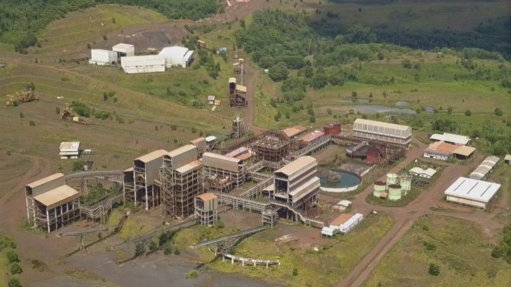
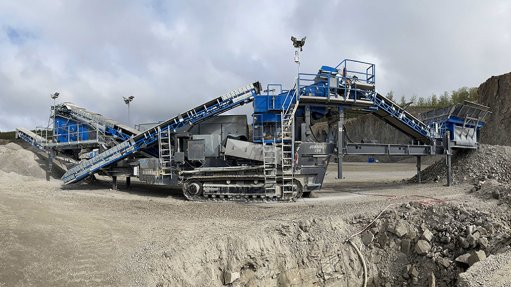
US EXAMPLE  The shale gas operation envisaged in the Karoo will be similar to the Pinedale operation, in Wyoming, US
 

US EXAMPLE The shale gas operation envisaged in the Karoo will be similar to the Pinedale operation, in Wyoming, US


Facts
According to reports from the US, about one hundred people attended a public meeting in Pinedale in March to hear what state and industry officials had to say about recent spiking ozone levels in Sublette County. State environmental regulators acknowledge that emissions from the massive natural gas fields in the area carry a large part of the responsibility for the ozone problem.