GOLD 1727.64 $/ozChange: 4.27
PLATINUM 1626.00 $/ozChange: 5.48
R/$ exchange 7.56Change: -0.01
R/€ exchange 9.93Change: -0.02
 
We have detected that the browser you are using is no longer supported. As a result, some content may not display correctly.
We suggest that you upgrade to the latest version of any of the following browsers:
         
close notification
powered by
Advanced Search


Home
 
Sector News
 
Legislative Environment
 
 
Diversified Miners
Chamber eyes 30% growth for 2010
 
3rd September 2010
TEXT SIZE
Text Smaller Disabled Text Bigger
 

The Zimbabwe Chamber of Mines reports that the country’s mining industry could grow by as much as 30% in 2010 should power availability improve within the country and if more working capital is made available to mining companies.

Zimbabwe Chamber of Mines President Victor Gapare says that the Zimbabwe Electricity Supply Authority, the national power utility, has improved generation at Hwange power station, where four and sometimes five out of six generators are now working. In the long term, new power plants have to be constructed as this is the only solution to the power problem in Zimbabwe and, indeed, in the Southern African region. Zimbabwe President Robert Mugabe committed to a number of new power projects when he attended the Chamber of Mines annual general meeting held in Victoria falls in May this year.

At the meeting, Mugabe pointed out that several power projects requiring new investors were pending. This would include Hwange power stations 7 and 8, as well as new power stations at Kariba and Batoka. In addition, government would institute the necessary energy sector reforms required for attracting new investment in that sector.

This comes off the back of a long period of economic crisis in Zimbabwe, charac- terised by hyperinflation, which saw inflation reach levels of well over 10 000% at the end of 2008 and resulted in the abolition of the Zimbabwe dollar as the medium of exchange in Zimbabwe.

During that period, the mining industry was hardest hit. Gapare reports that, by the end of 2008, the mining industry was virtually under care and maintenance, with the exception of two or three mines that continued operating.

The macroeconomic environment, hyper- inflation and the nonpayment for gold deliveries by the Reserve Bank of Zimbabwe, which, until recently, was the sole buyer of all gold produced in Zimbabwe, conspired to undermine viability for the rest of the mining industry. Mines were unable to continue production under those circum- stances, which resulted in a number of projects being mothballed.

“With the inception of the new measures founded under the 2009 Short-Term Economic Recovery Programme (Sterp), particularly the liberalisation of marketing arrange- ments for gold and the scrapping of surrender requirements, mines began preparations for the ramp-up of operations with several mines reopening in the second half of 2009. The new measures allowed mines to generate wealth and redeploy resources for further production. As a result, output has steadily recovered, with gold production increasing from 3,5 t, in 2008, to 4,9 t, in 2009, with a 2010 forecast of 7,2 t,” says Gapare.

He adds that output recovery has also been witnessed in other key minerals, such as chrome, coal and diamonds. Platinum and other associated group metals were not severely affected by the economic downturn and these continue on a steady growth path although one has to say that, if the economic and political crisis had not happened, platinum-group metals (PGMs) production would have been even higher.

“Mining houses continue to face challenges within the industry. As with other sectors of the economy, the main challenges continue to be liquidity and power challenges. Mines are working to secure working capital and capitalisation funding. As much as $5- billion is required for capitalisation of the mining sector over the next three to five years,” says Gapare.

The Road Ahead
Gapare says that 2011 will be characterised by the start of substantial expansion projects in mining, most notably by the Zimplats $500-million expansion of its Mimosa project, the $300-million expansion of the Murowa Diamonds project and the commissioning of the Unki Platinum project.

“Most of the gold mines are in the process of recapitalising or looking for capital, so investors should see an improvement in gold production. The Bindura Nickel Corporation group is actively looking at reopening its nickel operations, while the ZimAlloys group has already raised new capital for its operations. So, hopefully, in 2011, the mining industry should see the resumption of ferrochrome production at Zimalloys while the Zimbabwe Mining & Smelting Company is expected to have reached near full capacity before the end of 2010,” says Gapare.

Bearing this in mind, there is potential for further growth beyond the targeted 30% in 2011, and beyond, as well as employ- ment creation in the economy. Gapare reports that expansion in the sector will also realise substantial downstream bene- fits for local suppliers as mining houses are positioning themselves to increase local procurement.
“As much as $160-million was spent by mines on local procurement in 2009, and this is projected to increase threefold in 2010 and significantly more in 2011 and beyond,” says Gapare.

Mining Boom or Farce?
With all of these indications evident for the world to see, the question on investors’ lips is whether this sets the scene for a mining boom, or whether these indications are diverting attention away from more significant problems within the industry.

“The mining industry is on the verge of a mining boom, particularly if government retains the current mining fiscal regime and improves the investment climate, which is competitive and can attract the risk capital for exploration that is key for mining development,” says Gapare.

Current international mineral prices are broadly favourable for Zimbabwe mineral exports, such as gold, chrome, nickel and PGMs. Gapare notes that, up to now, Zimbabwe has not benefited from the mineral price boom because of the constraining economic conditions.

“As long as weaknesses in the global economy persist, amplified by the Greek finan- cial meltdown and uncertainties with the US recovery as well as debt problems in the UK, Portugal and Spain, international mineral prices are likely to remain strong in the near term, which should underpin mining sector recovery in Zimbabwe,” says Gapare.

Breaking the Silence
During its crisis, the Zimbabwe mining industry was contribu- ting little towards the overall mining landscape within the Southern African Development Community (SADC). However, Gapare reports that the country is well positioned to break its silence.

“Zimbabwe will play a central role in the evolution of mining in Africa and the SADC region. The country has an abundance of mineral wealth and has excel- lent infrastructure, despite the decade-long decline in economic activity. “Zimbabwe still has a good human resources base, though the brain drain was much pronounced over the past decade,” says Gapare.

He adds that, as SADC sets in motion a process towards closer integration, Zimbabwe will contribute to mining integration in the region. Until the economic crisis, which has affected every facet of Zimbabwe’s socioeconomic life, the country was the pace setter for mining reforms in the region and many regional countries adopted its mineral management systems from exploration to mine development.

Big Brother Helping Hand?
Besides the questions regarding a possible mining boom, investors have also been looking towards South Africa’s role in helping the recovery of Zimbabwe’s mining industry.
Gapare reports that South Africa is the largest economy in SADC and, therefore, has a significant role to play in Zim- babwe’s recovery.

“Currently, the South African economy is 130 times larger than Zimbabwe’s, while the South African mining sector, at $40-billion, is more than eight times larger than the economy of Zimbabwe. South Africa, therefore, can be a key source of capital funding for Zimbabwe’s projects,” says Gapare.

He points out that South Africa also plays a key role in determining the future direction of the regional currency, which is most certainly going to be anchored to the rand. The single currency will have major implications for Zimbabwe’s economy and the mining sector in particular.


Currently, Zimbabwe is ope- rating off a multiple currency economy with the rand and pula prevalent in the south of the country and the US dollar prevalent in the north of the country. Given that most of the minerals are traded in US dollars, the effect has been to completely eliminate currency risk when negotiating a project where currency conversions need to take place.

“Government has indicated that the current multicurrency regime will remain in place until the economic situation has stabilised, with acceptable import cover levels, and, at the moment, Zimbabwe is far from that position. In any case with regional integration in mind, its likely that a regional currency might be in place in the next few years and there might not be a need to reinstate the Zimbabwe dollar,” concludes Gapare.

Edited by: Shannon de Ryhove
FULL Access to Mining Weekly and Engineering News - Subscribe Now!
Subscribe Now Login


Hide Comments  
 
This article contains no Comments


All comments must be approved by our editors, click here to read the editorial guidelines for comments. Please allow some time for our editors to approve your comment after posting.
 * Required Fields

image
image
 *


image
image
 *
 

image
image
 

Verification Image

image
image
 * Please enter the text you see in the above image.


VICTOR GAPARE The mining industry is on the verge of a mining boom, particularly if the Government retains the current mining fiscal regime (Source: Duane Daws)
 
VICTOR GAPARE The mining industry is on the verge of a mining boom, particularly if the Government retains the current mining fiscal regime (Source: Duane Daws)
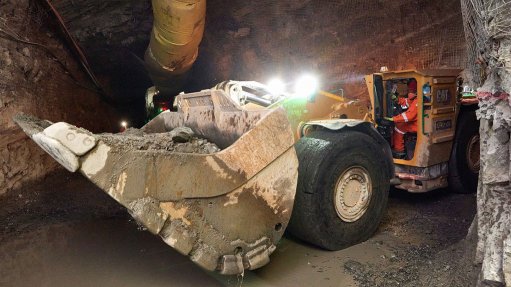
ON THE RISE Gold output in Zimbabwe has steadily recovered with gold production increasing from 3,5 t, in 2008, to 4,9 t, in 2009, with a 2010 forecast of 7,2 t (Source: Loni Prinsloo)
 
ON THE RISE Gold output in Zimbabwe has steadily recovered with gold production increasing from 3,5 t, in 2008, to 4,9 t, in 2009, with a 2010 forecast of 7,2 t (Source: Loni Prinsloo)
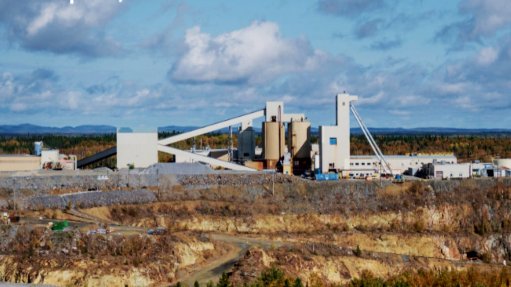
CARE AND MAINTENANCE Many of Zimbabwe’s most important projects were put under care and maintenance for much of 2008 (Source: Duane Daws)
 
CARE AND MAINTENANCE Many of Zimbabwe’s most important projects were put under care and maintenance for much of 2008 (Source: Duane Daws)
 
Previous Play Next