GOLD 1251.17 $/ozChange: 5.53
PLATINUM 1555.00 $/ozChange: 23.00
R/$ exchange 7.25Change: 0.05
R/€ exchange 9.29Change: 0.05
 
We have detected that the browser you are using is no longer supported. As a result, some content may not display correctly.
We suggest that you upgrade to the latest version of any of the following browsers:
         
close notification
powered by
Advanced Search


Home
 
Breaking News
 
 
ELECTRICITY HIKES
Big electricity hikes will be ‘materially damaging’ to SA mines
0 COMMENTS  |  
ADD A COMMENT PRINT
 
 
22nd January 2010
TEXT SIZE
Text Smaller Disabled Text Bigger
 

JOHANNESBURG (miningweekly.com) – In the absence of the finalisation of the country’s Integrated Resource Plan (IRP), power utility Eskom’s proposed tariff increases could have material implications for the structure of South Africa’s electricity supply industry (ESI), as well as for the industrialisation of the economy in the next few decades, the Chamber of Mines (CoM) told the National Energy Regulator of South Africa (Nersa) on Friday.

In a presentation on the last day of Nersa’s public hearings into Eskom’s proposed second multi-year price determination (MYPD2), CoM techno economics assistant adviser Dick Kruger emphasised that incorrect decisions made about pricing for Eskom in the short term, could entrench the utility’s monopoly position and limit the country’s electricity supply and market structure choices in the medium and longer term.

Not only would the proposed price increases be “materially damaging” to the mining and mineral processing sectors, but it would also have significant consequences for the economy and for the realisation of government objectives and aspirations, the chamber highlighted.

“The likely impact on the economy of a 147% increase in the electricity price over a three-year period is material and this will undermine the economic growth, beneficiation, employment and poverty reduction objectives of government,” said Kruger.

A 35% a year increase over a three-year period would be “extremely challenging” to absorb, given that South Africa was only starting to emerge from its first recession in 17 years, as well as given the anaemic global economic growth prospects, he added.

Eskom had to implement a price structure that balanced the financial resources required to sustain and grow the ESI, but without undermining growth and investment, the CoM recommended to Nersa.

The chamber suggested that government undertake a regulatory impact assessment of the costs and benefits of the price increase on investment, growth, exports, employment and transformation.
“It is only through this course of action that the true options and costs can be shown and appropriate decisions then made,” it stated.

The chamber suggested that such an assessment should take into account issues related to changes to asset valuation and the weighted average cost of capital (WACC), the long-run marginal costs versus blended average costs and operating costs.

“This will expose the tradeoffs that exist in policy and pricing decisions,” the chamber noted.

The valuation of Eskom’s assets and the return on capital calculations, which would make up 39% of the total electricity price increase by 2014/15, were the two biggest issues in the MYPD2 application that had to be dealt with, the CoM said.

It recommended that Nersa look carefully at the “significant windfall gain” made by Eskom when revaluing its assets in terms of the Modern Equivalent Asset (MEA) value methodology, as this methodology was usually only used by private power companies in “fully liberalised” electricity markets.

The chamber pointed out that comparable utilities such as in Japan and France, which were State-owned and vertically integrated public utilities, used an inflation adjusted historic cost methodology rather than a MEA methodology.

Further, the chamber suggested that Nersa “fully unpacks” the WACC calculation made by Eskom, as the 10,3% level applied by the utility would rather be relevant for a higher risk privately owned company.

“This real pretax WACC should be equivalent to the risk-free rate plus a small premium as Eskom is considered to be a low-risk, long-term business owned and supported by the State. This means that the WACC calculation should be as much as three percentage points lower than that proposed by Eskom, said the Chamber.

It highlighted that this issue was important as every 1% rise in the WACC represented a five percentage points increase in the electricity price.

Eskom’s price increases could be limited to 25% a year over the three years through a combination of a revaluation of assets and a reconfigured cost of capital, the CoM asserted.

Further, it said that a R7-billion equity injection by the State, in early 2010 would reduce the propose price increase in the first year of the MYPD2 application to 25%, rather than 35%.

If similar equity injections were to be made in year two and three, the increases for these two years could also be limited to 25% a year.

“This is a serious issue that has to be considered by government to mitigate against the significant negative impact of a 35% [a year over three years] price increase,” Kruger emphasised.

Edited by: Mariaan Webb


Hide Comments  
 
This article contains no Comments


All comments must be approved by our editors, click here to read the editorial guidelines for comments. Please allow some time for our editors to approve your comment after posting.
 * Required Fields

image
image
 *


image
image
 *
 

image
image
 

Verification Image

image
image
 * Please enter the text you see in the above image.


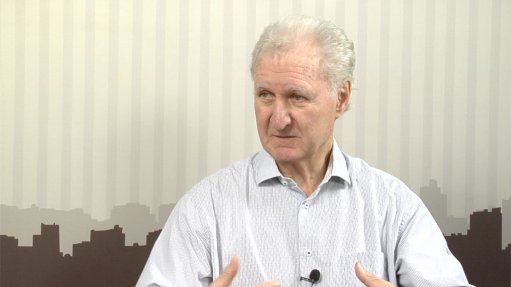
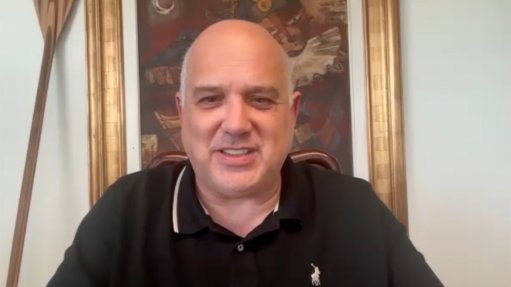
Chamber of Mines techno-economic adviser Dick Kruger on the cost implications of the proposed Eskom power-price hike and whether the utility’s primary-energy costs will really surge as is suggested in the application. Camerawork: Nicholas Boyd. Editing: Darlene Creamer.
This video is licensed under a Creative Commons License