GOLD 1540.03 $/ozChange: -18.42
PLATINUM 1435.00 $/ozChange: -11.50
R/$ exchange 8.32Change: -0.12
R/€ exchange 10.59Change: -0.07
 
We have detected that the browser you are using is no longer supported. As a result, some content may not display correctly.
We suggest that you upgrade to the latest version of any of the following browsers:
         
close notification
powered by
Advanced Search


Home
 
Sector News
 
PGM
 
 
PLATINUM
Amplats pursues shallow reef, delays deep capital-intensive projects
 
25th July 2011
TEXT SIZE
Text Smaller Disabled Text Bigger
 

JOHANNESBURG (miningweekly.com) – The world’s biggest platinum miner has decided to pursue shallow low-grade reef and delay the exploitation of its higher-grade but more capital-intensive deep-shaft options in Rustenburg, in sharp contrast to the current approach of its main rival, Impala Platinum (Implats) in the same area.

Anglo American Platinum (Amplats) will keep annual production at an unchanged 2.6-million ounces in 2011 and reiterates its expectation of an average platinum price of “at least” $1 800/oz for the year.

Although Amplats has for many years had a strategy of prioritising the higher-grade Merensky reef, in the last three years it has been lowering its upper-group two (UG2) reef mining costs and improving UG2 processing efficiencies.

This has given the company the confidence to seize the opportunity of mining large volumes of near-surface but lower-grade UG2 and will help it to entrench a low-cost culture for longer, until there is greater incentive to spend capital on deep-shaft projects that require extensive periods of gestation and large dollops of cash.

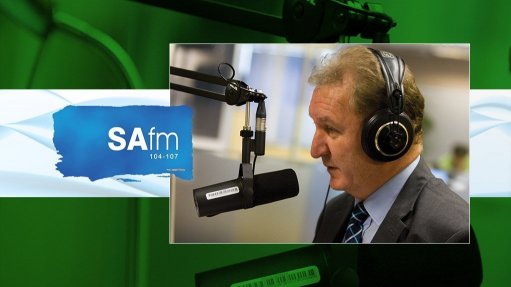
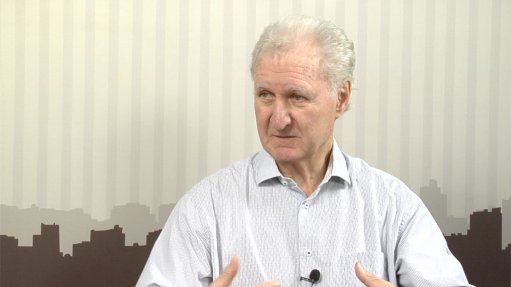
“Our orebody gives us a real opportunity to improve our capital position,” Amplats CEO Neville Nicolau tells Mining Weekly Online in a video interview.

He says the company is now in a position to offset the negative impact of mining lower-grade UG2.

The sinking of tier-three and tier-four refrigeration-requiring shafts to depth – as Implats is currently doing – can be left to a later date and current attention can be focused on the "huge near-surface UG2 reserves and resources”.

UG2 makes up 80% of Amplats’ remaining Rustenburg platinum reserves.

Amplats has decided to leave its extensive and undeveloped properties on the Eastern Limb of the Bushveld Complex to the medium term and its deep-shaft Western Limb Merensky life-extension projects to the long term.

“Those ounces will be competitive in the future,” Nicolau explains to Mining Weekly Online.

In the meantime, the shallow ounces put the company in "a very good position" for the present, he adds.

Amplats has revised its 2011 capital expenditure target down to R7.3-billion from a previous R8-billion. Of the R7.3-billion, R3.8-billion is growth capital, R3-billion is stay-in-business capital and R500-million is waste-stripping capital.

150-YEAR MOGALAKWENA

Amplats already has low-cost long-life magic in its Mogalakwena openpit mine in the Platreef in Limpopo, where the nickel co-product alone virtually covers the entire cost of platinum mining.

Depending on how quickly it decides to deplete Mogalakwena, the operation could conceivably still be on the go in 150 years’ time.

Amplats intends optimising Mogalakwena’s low-cost near-surface ounces at negligible capital and negligible risk.

Unki in neighbouring politically troubled Zimbabwe, which has a 70-year life of mine, is also a potential source of low-cost near-surface ounces.

Amplats cut its debt by 47% to R4.3-billion in the six months to June 30 and placed itself in a position to be able to spend capital through difficult economic times.

Management sees the current status of Amplats’ balance sheet as providing sufficient shock absorption to allow the company to maintain its momentum of capital spend without having to ask shareholders for money.

“By achieving this, we will put ourselves in a continually improving position in the market,” Nicolau says.

Looking at the Southern African platinum-mining industry as a whole, the basket price of metals in local currency is seen as being too low for reasonable return to be gained from large long-term projects that are capital intensive.

Currently, Nicolau views the industry as being “disincentivised” from expanding their capital programmes and is keener to entrench the “fix” phase that Amplats has been in for the past three years rather than engage in a capital-intensive growth phase right now.

Amplats expects to deliver a strong operational performance in the second half of 2011.

LATEST RESULTS

In the six months to June 30, operating free cash flow increased 159% to R4.7-billion and R2.9-billion more free cash flow was generated, while headline earnings a share increased 20% to R12.36 a share.

Factors contributing to the higher earnings were 15% increase in the dollar realised price on the basket of metals sold and a 13% increase in platinum sales volumes, partly offset by a 9% strengthening in the average rand/dollar exchange rate.

The strong financial performance is sttibuted to a robust recovery in the basket price of the platinum group metals since the first half of last year plus an increase in platinum sales volumes, “amid operational challenges”.

“It reflects positively on our operational flexibility,” says Nicolau.

The positive market outlook has persuaded the board to declare an interim dividend of R1.3 billion or R5 a share.

EIGHT DEATHS

Tragically, however, eight employees lost their lives in the period 33 safety stoppages in the first half of 2011, nearly double the 17 in the first half of 2010.

“The company is continuing to work with government and labour towards zero harm,” Nicolau says.

Refined platinum production increased by 17% to 1.17-million ounces in the first half of 2011 compared to the same period in 2010.

The company believes that the platinum market will remain in balance in 2011, with the continued recovery in the autocatalyst and industrial segments and the sustained strength of the jewellery segment, particularly in China, expected to be met by increases in production.

“We continue to believe that there is strong demand and investor interest to support the market,” Nicolau adds.

REPOSITIONING JOURNEY

Three years ago, the company embarked on a journey to reposition the company, with plans including actions to improve safety, reliability and production predictability, as well as cost reduction.

Amplat’s lost time injury frequency rate declined by 32% to 1.33 in the first half of 2011 compared to 1.96 in the first half of 2008.

The eight fatalities, Nicolau points out, represent a 68% decrease from the 25 of 2007.

The production volume target, which some regard as moderate, has been met in the last three years and despite mining significantly more upper group two (UG2) reef, the smelter accidents of the past have been avoided, allowing the company to tick off its predictability and reliability boxes.

Its cost management strategy centres on improving productivity, increasing efficiency and managing procurement inflation.

Its restructuring plan continues with the separation of the Union mine into two separate mines to improve management and focus on costs and productivity.

Production volume increases and remedial actions to improve safety and labour productivity are expected to lower unit cost in the second half of the year to around R12 000 an equivalent refined platinum ounce.

The company has thus revised its unit cost target for 2011 to between R12,400 and R12,600 per equivalent refined platinum ounce.

The company expects labour productivity to improve from 5.9m2 achieved in the first half of 2011 to its original target of 7.3m2 during the second half of the year, bringing the average for full year 2011 to 6.6m2.

Its safety improvement plan is expected to ensure that it continues to demonstrate safety improvements.

With its mining, smelting and refining operations largely South Africa-based, Amplats is also developing Unki platinum mine in Zimbabwe and exploring in Brazil.

It has exploration partners in Canada, Russia and China and a number of joint ventures with several historically disadvantaged South African consortia as part of its commitment to the transformation of the mining industry.
 

Edited by: Creamer Media Reporter

To subscribe to Mining Weekly's print magazine email subscriptions@creamermedia.co.za or buy now.

Subscribe Now Login


Mining Weekly Online’s Martin Creamer talks to Amplats CEO Neville Nicolau about the lower capital intensity benefit of Amplats opting to mine shallow UG2 reefs ahead of deep Merensky Reefs. Cameraperson: Nicholas Boyd. Video Editor: Darlene Creamer.
This video is licensed under a Creative Commons License
GET SELECTED VIDEO
Embed
Selected Video Download (13.38mb)