GOLD 1539.22 $/ozChange: -19.23
PLATINUM 1433.00 $/ozChange: -13.50
R/$ exchange 8.32Change: -0.12
R/€ exchange 10.58Change: -0.06
 
We have detected that the browser you are using is no longer supported. As a result, some content may not display correctly.
We suggest that you upgrade to the latest version of any of the following browsers:
         
close notification
powered by
Advanced Search


Home
 
Sector News
 
Legislative Environment
 
 
HEALTH & SAFETY
Mine safety regulation set to tighten in 2010
 
5th February 2010
TEXT SIZE
Text Smaller Disabled Text Bigger
 

Official statistics related to the deaths of mineworkers in South Africa have not been released, but sources indicate that the death toll has breached the 140 mark, an average of 11 deaths a month in 2009. While there has been significant improvement in mine safety in the past decade, the consensus is that one death is one too many.

But the tide appears to be turning for the mining sector’s tarnished safety image, which is described as one of the world’s most unsafe working cultures.

Under the leadership of Minister Susan Shabangu, the Department of Mineral Resources (DMR) aims to rectify this image and is determined that 2010 will be the year that government tightens regulation to enhance its vision of a fatality-free industry and to wash away the image of an industry benefiting from blood money.

She previously said that government would be introducing much tougher obligations on industry and its stakeholders to cut the unacceptably high death rate, and on investors so that they value being part of a far greater focus on workplace occupational health and safety.

DMR chief inspector of mines Thabo Gazi tells Mining Weekly that a review process of the mine health and safety regulations in under way. The review is part of an ongoing process of improving mine health and safety standards.

“It is important that regulation sets minimum standard requirements. Clearer requirements remove ambiguity and assist all mine operators, employees and the regulator, in their efforts to implement the law,” he adds.

Tightening up regulations also includes amendments to the Mine Health and Safety Act, which holds individuals and companies liable for the injury or death of workers. Gazi tells Mining Weekly that the amendments will be finalised early this year.

“There is nothing outlandish or outrageous about these amendments as some have claimed. If you do not perform your duties in terms of health and safety, you will be held accountable. This is not unique to South Africa, hence, we do not understand the assertion that the amendment will scare investors – rather, it seeks to improve the system of accountability for health and safety at mines,” he asserts.

National Union of Mineworkers general secretary Frans Baleni also says this amendment is not going to scare away potential investors, given that such laws are enforced in other parts of the world. “In the case of negligence, measures which do not necessarily exclude a prison term are appropriate. It is not necessarily the CEO who will be arrested and prose-cuted, but it cuts across all employees who are found to have contributed to the death or the injury of a mine- worker,” he adds.

“We believe that prevention is better than cure and we have worked very closely with government and labour to ensure that there is a fine balance between preventive and punitive measures in the amendment to the legislation,” Chamber of Mines (CoM) president Sipho Nkosi tells Mining Weekly.

The DMR is working with a number of institutions to strengthen its health and safety monitoring and evaluation initiatives. The DMR is working on increasing the output of inspectors. It is also working through the Mine Health and Safety Council (MHSC), the Council for Scientific and Industrial Research and other research councils on a programme of research to deal with some of the pressing challenges on safety and health. There is an ongoing programme of research on falls of ground, seismicity, noise reduction and workplace exposures, including exposure dust and silica.

Further, the DMR and the University of the Witwatersrand are developing modules for the training of inspectors. There is also a group of students, who have, for the past two years, been receiving training at the Gold Fields Academy aimed at providing exposure to the actual work environment.

Baleni also points to the urgent need to improve the country’s technology, particularly for gold mines, where current technology records seismic activity, as opposed to early detection to allow enough time to remove workers from a work station.

Fatality-Free Industry: Myth or Possibility?
Statistics on the DMR website indicate that from 1990 to 1999 there were about 4 991 fatalities in the mining industry. For the period 2000 to 2008, there were about 2 173 fatalities, which indicates an improvement of about 50%.

“Mining stakeholders in the MHSC have articulated a vision of zero harm and this vision has assisted us to set clear goals for the next few years. We are beginning to see the results in a number of areas. Over the last decade, we managed to reduce mine fatalities by over 50%. There are still many challenges, as levels of deaths and injuries in the industry are still undesirably high, and we will continue to work hard to build on the good work of the last few years,” says Gazi.

Baleni attributes the improvement in mine safety in the last decade to the tightening of regulations, but says that this is still not enough. He believes that a vision of a fatality- free industry is a dream that can become reality. “At this stage, it looks like a mirage, but [it can be realised] if we can change behaviour and have a clear commitment, not only at the most senior levels, but at all levels. There are other countries out there that have been [fatality free] for many years,” he adds.

Nkosi says that the target remains zero fatalities and injuries and that the CoM continues to work very closely with government and the unions to achieve this target. “Our vision of zero harm and fatalities has helped us set clear targets that require strong leadership in addressing occupational health and safety issues, as well as capacity and research. If we continue to pursue this, in line with our vision, it will turn into a reality,” asserts Gazi.

One of the Worst Safety Cultures Globally?
South Africa is considered to have one of the most unsafe working cultures in mining globally. Gazi says that one needs to care fully interrogate these assertions. "There are mines that are not doing well, but it will not be accurate to say that the South African mining industry is the worst in the world. At the same time, there are pockets of excellence in our country, where miners are running operations at zero harm. So, painting the entire industry with the same brush is problematic."

As a benchmark of the country's generalattitude to safety, Baleni points to behaviour on the roads, for example, where an absolute disrespect for the law results in many accidents. "That translated in itself, and [considering] certain practices in the workplace, in mines and other industries, mean that something must be altered in terms of our behaviour and processes."

But Nkosi points out that now is the time to deal with our safety challenges and achieve the aims set within the culture transformation framework.

Edited by: Martin Zhuwakinyu

To subscribe to Mining Weekly's print magazine email subscriptions@creamermedia.co.za or buy now.

Subscribe Now Login


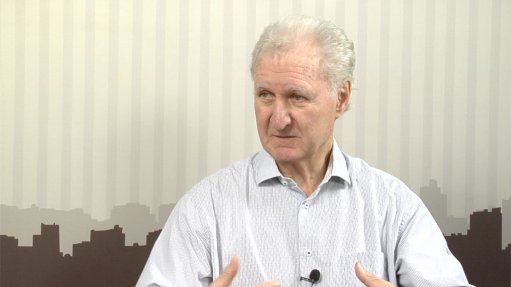
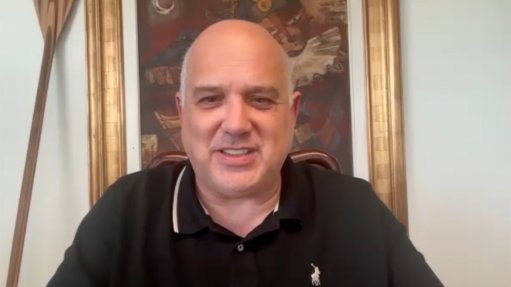
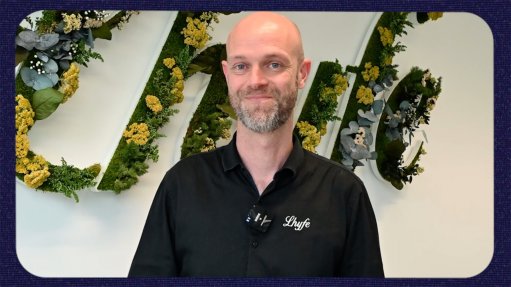
National Union of Minewarkers general secretary Frans Baleni discussing the safety of mineworkers. 05.02.2010. Cameraperson: Nicholas Boyd. Editing: Darlene Creamer.
This video is licensed under a Creative Commons License
GET SELECTED VIDEO
Embed
Selected Video Download (10.17mb)
 
CYNTHIA CARROL Anglo American CEO Safety remains our number one priority. Everyone who works at Anglo American has the right to go home safe and our role is to make that a consistent reality. Our ambition is to eliminate fatal injuries in the workplace and mine injury-free – our ‘zero harm’ goals. We have made great strides, reducing the number of fatalities by almost 60% in three years, but one fatality remains one too many. We remain committed to working with government, unions and industry to find common solutions to achieve our safety goals at Anglo American and across the South African mining industry.
 

CYNTHIA CARROL Anglo American CEO Safety remains our number one priority. Everyone who works at Anglo American has the right to go home safe and our role is to make that a consistent reality. Our ambition is to eliminate fatal injuries in the workplace and mine injury-free – our ‘zero harm’ goals. We have made great strides, reducing the number of fatalities by almost 60% in three years, but one fatality remains one too many. We remain committed to working with government, unions and industry to find common solutions to achieve our safety goals at Anglo American and across the South African mining industry.
 
GRAHAM BRIGGS HARMONY CEO Safety remains a key focus at all of Harmony’s operations. We are dedicated to ensuring that safety improvements are sustainable and to ensure that, through the continued implementation of effective behaviour-based safety programmes at all our operations, the safety culture and mindset of safety is maintained throughout the company.
 
Picture by: Duane Daws
GRAHAM BRIGGS HARMONY CEO Safety remains a key focus at all of Harmony’s operations. We are dedicated to ensuring that safety improvements are sustainable and to ensure that, through the continued implementation of effective behaviour-based safety programmes at all our operations, the safety culture and mindset of safety is maintained throughout the company.
 
SIPHO NKOSI EXXARO RESOURCES CEO Safety is not a flavour of the month issue. Safety needs to become a way of life for our people, at home and at work. The lives of our employees are invaluable and every person throughout the industry needs to behave in ways that honour, protect and preserve the lives of theory colleagues. We need behaviours to save lives. At Exarro our motto is ‘safety always, all the way’.
 
Picture by: Duane Daws
SIPHO NKOSI EXXARO RESOURCES CEO Safety is not a flavour of the month issue. Safety needs to become a way of life for our people, at home and at work. The lives of our employees are invaluable and every person throughout the industry needs to behave in ways that honour, protect and preserve the lives of theory colleagues. We need behaviours to save lives. At Exarro our motto is ‘safety always, all the way’.
 
DAVID BROWN IMPLATS CEO Safety in South Africa has to involve changing the mindsets of our people in a country where risk taking is embedded, as evidenced by the high levels of death and injury on our roads. Standards and rules should be enforced firmly and fairly to ensure safer work places. Safety is the one area where all stakeholders want the same outcome, but a collective response is needed to realise success.
 
Picture by: Duane Daws
DAVID BROWN IMPLATS CEO Safety in South Africa has to involve changing the mindsets of our people in a country where risk taking is embedded, as evidenced by the high levels of death and injury on our roads. Standards and rules should be enforced firmly and fairly to ensure safer work places. Safety is the one area where all stakeholders want the same outcome, but a collective response is needed to realise success.
 
DAVID NOKO De Beers Consolidated Mines MD We cannot, as miners, accept death in our workplaces, on our roads, in our lives – safe working practice is a belief system. The exploitation of resources cannot be more important than preserving life and limb. No mineworker should ever feel less valuable than any production target. Let us, as an industry, dump fatalistic attitudes in the dustbin of history, where they belong
 

DAVID NOKO De Beers Consolidated Mines MD We cannot, as miners, accept death in our workplaces, on our roads, in our lives – safe working practice is a belief system. The exploitation of resources cannot be more important than preserving life and limb. No mineworker should ever feel less valuable than any production target. Let us, as an industry, dump fatalistic attitudes in the dustbin of history, where they belong
 
FRANS BALENI 
If we consider certain practices in the workplace, in mines and other industries, something must be altered in terms of our behaviour and processes
 
Picture by: Duane Daws
FRANS BALENI If we consider certain practices in the workplace, in mines and other industries, something must be altered in terms of our behaviour and processes
 
TOUGHER OBLIGATIONS
Government will be introducing much tougher obligations on industry and its stakeholders to cut the unacceptably high death rate of mine workers, and on investors so that they value being part of a far greater focus on workplace occupational health and safety
 
Picture by: Duane Daws
TOUGHER OBLIGATIONS Government will be introducing much tougher obligations on industry and its stakeholders to cut the unacceptably high death rate of mine workers, and on investors so that they value being part of a far greater focus on workplace occupational health and safety
 
THABO GAZI
There is nothing outlandish or outrageous about the Mine Health & Safety Act amendments as some have claimed
 
Picture by: Duane Daws
THABO GAZI There is nothing outlandish or outrageous about the Mine Health & Safety Act amendments as some have claimed
 
 
Previous Play Next
 
Facts
•The CoM is setting up a learning hub to help companies learn from the pockets of excellence in industry. This is the biggest programme launched by the CoM in recent years. The learning hub will: oPromote leading practices and, in the process, help smaller operators and develop skills that are critical to the industry. oFocus strongly on the people issues related to a particular practice, emphasising worker participation and leadership. The CoM is also working with labour and government on three major initiatives: •The development of a culture transformation framework to transform from command-and-control, to a more participative and caring culture, and from blaming to learning. •The training of 40 000 health and safety representatives (individuals representing workers on health and safety issues) starting with those who have the lowest education levels and who are working in the highest risk areas. •Establishing a Centre of Excellence that will research and develop fit-for-purpose equipment and state-of-the-art mining methods.