GOLD 1539.22 $/ozChange: -19.23
PLATINUM 1433.00 $/ozChange: -13.50
R/$ exchange 8.32Change: -0.12
R/€ exchange 10.58Change: -0.06
 
We have detected that the browser you are using is no longer supported. As a result, some content may not display correctly.
We suggest that you upgrade to the latest version of any of the following browsers:
         
close notification
powered by
Advanced Search


Home
 
Multimedia


safmpod_14102011
GET SELECTED AUDIOCLIP
Embed
This article's audio Download (8.73mb)


14/10/2011 (On-The-Air)
 
14th October 2011
TEXT SIZE
Text Smaller Disabled Text Bigger
 

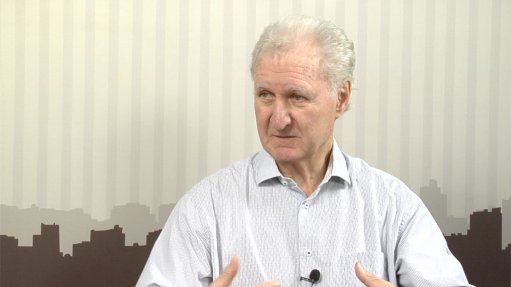
Every Friday morning, SAfm’s AMLive radio anchor Xolani Gwala speaks to Martin Creamer, publishing editor of Engineering News and Mining Weekly. Reported here is this Friday’s At the Coalface transcript:

Gwala: South Africa has R18-trillion worth of metals and minerals with which to rebuild its economy over the next 100 years.

Creamer: What other country has this 100-year horizon and R18-trillion worth of metals and minerals in the ground on which to build? If we throw ourselves back 100 years ago, where we are sitting here in the studio there was nothing. This was a gold discovery and look at what they’ve built here around Johannesburg.

This is sustainability, this is the linkage. We see the industries that have come up, we see the banks that have come up, we see the insurance companies and universities. We are even in a better position now to refocus our economy around these metals and minerals, because we not only have gold, but we still have more gold in the ground then we’ve mined.

We also have platinum, chrome, manganese, iron-ore and not to talk of the energy coal, because this excludes the energy coal, but we’ve also got the coking coal. So, what we need to do is to make our mining industry the most efficient in the world, in other words get rid of all the impediments that have held us back.

We have been falling behind the rest of the world, we have been shrinking in mining because of the administrative hassles, the legislative framework and because of the impediments that have been put in the way in the mining industry. We had a conference in Johannesburg this week, organised by AngloGold Ashanti and Motjoli Resources, ‘Mining for Change’.

They are saying we are sitting on an R18-trillion treasure chest, lets reshape our economy along those lines and we have got the diversification opportunity. Once we get our mining running smoothly and we have got the energy provided with the rail linkages that is what must come to make this mining very efficient.

Look at all the other linkages that can come out, because the mines need a lot of equipment with which to dig. Of course, you can have that industry developing. If you give some of these manufacturers that are already out there, like Wadeville in Germiston, which was a huge mining workshop. Now it has been shrinking.

Give them an opportunity and say “this is your 100-year horizon, this is what you need to invest and we will come out with local equipment which we know can be competitive”. We see Bell Equipment and the other equipment suppliers to the mining industry that don’t have any subsidies and if they are given longer horizons and certainty they can develop a lot.

Also, mining itself can change, the way we can do it is that you can rehabilitate at the same time. Therefore, you have got joint production activity: more jobs if you link the actual rehabilitation of the mine and you do while you’re mining. That is not the end of the story. We have still got Africa, Southern Africa, Central Africa, I mean just the financing of Central Africa’s copper, and its got to happen because the Chileans are depleting, we have got all the high-grade ore.

That could turn our Stock Exchange into a new thriving market activity because we could raise the capital for those activities. Limitless potential.

Gwala: Bad news for South Africa is that the country’s one and only zinc refinery is destined for job-destroying closure.

Creamer: This is the other side of the coin where you see we have got a running zinc refinery that is actually feeding into the market, not only as refined zinc but also sulphuric acid and South Africa had problems. We miscalculated our energy situation, we ran into a very bad electricity supply crunch.

Then what happens is that we immediately close down our one and only zinc refinery. Can’t we as South Africans just think and intervene for a short while. We know have made a mistake with electricity, why must these enterprises that are job creating, wealth creating like this Zincor refinery out of Springs, why must it now close with 796 jobs.

Can’t we just give it a little bit of time and in some way smooth over this high electricity price situation. Zinc is a difficult business. We see Anglo American pulling out of zinc and Exxaro, which is a black-owned company, our own Zincor closing this down and having to deal with 796 people who have got to be placed in their organisation or retrained.

All the other industries around it are suffering. It is a reflection, a symbol of the erosion of the industrial footprint here in South Africa as a result of hiccups along the way where the biggest one will be the high electricity price, because these refineries need a lot of electricity. We note that the Indians are taking over zinc in Southern Africa, because they are prepared to work for lower profit margins.

This is another thing that South Africans don’t like doing, they like good profits and good margins. Perhaps a symbol of the problems of South Africa, is this closure by Christmas of Zincor, our one and only zinc refinery. A lot of loss of jobs, a lot of heartache and of course we are going to have to import that zinc so it is a burden on our foreign exchange.

Gwala: We need creative solutions to these problems.

Creamer: Definitely, and we need to realise that we’ve made a few mistakes and they shouldn’t penalise us over the long term.

Gwala: Aerotropolis – that is the label the Ekurhuleni municipality is giving to its promising new ‘airport city’ ambition.

Creamer: In the 18th century you had seaports that shaped business location and urban development. Then in the 19th century the railways really shaped the business location and the urban development. In the 20th century our highways helped to shape the business location and urban development. Now in the 21st century the thinkers are saying that it is going to be airports that shape our location and development in the future.

One of the top people, John Kasarda, of the US has persuaded the Mayor of Ekurhuleni Mondli Gungubele that he has a fantastic asset here in the form of the OR Tambo Airport. This is a treasure chest and it has got a lot of highway linkages already, it has the railway linkage in Germiston.

It has got a lot of things going for it and he is saying why don’t you know instead of just allowing spontaneous development, plan this. Turn it into an Aerotropolis. Like they have been thinking in Amsterdam and other big world airports, Korea, China and India, they are talking Aerotropolis where you turn this into a very big future business location, which is suited for time sensitive type of industries and also light industry.

There is a lot of other hotel, convention centre and tourism opportunities. He is saying put this all together now and rethink your OR Tambo Airport where there is such a great opportunity and lets turn this into an airport city.

Gwala: Thanks very much. Martin Creamer is publishing editor of Engineering News and Mining Weekly, he’ll be back with us at the same time next week.


Edited by: Creamer Media Reporter