



+27 (0)11 0461900
Private Bag X139 Halfway House 1685
Our next generation of engineers building living labs of innovation



By: Ifeanyi Odoh - Country President, Schneider Electric East Africa
When people talk about the future of engineering in Africa, the conversation often centres on potential, the promise of a young population, growing digitalisation, and the continent's need for modern infrastructure.
But in many ways, the future is already here, built by a new generation of engineers who are stepping into real-world projects earlier than ever before.
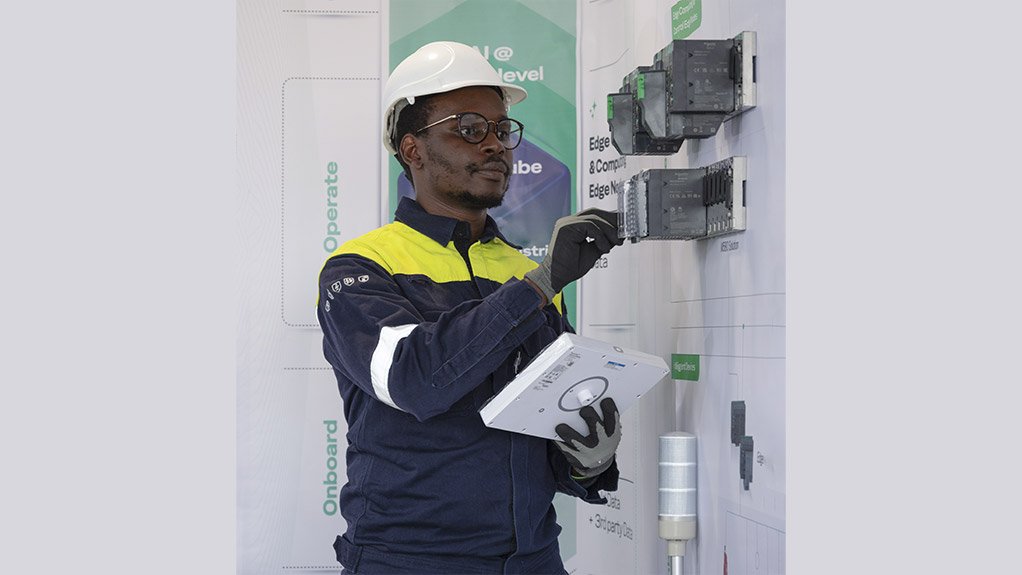
At the new Schneider Electric East Africa head office in Nairobi, Kenya, the future is undoubtedly visible in every system operating behind the scenes and I am proud to say that what makes this project so noteworthy is not only the technology deployed throughout the building, but the people who designed, integrated, and commissioned it.
Much of the electrical infrastructure, automation, lighting control, and building management functionality was implemented by young engineers who are only a few years out of university. These are professionals we trusted with responsibility, exposed to advanced technologies, and supported to solve real operational challenges in a live environment.
The result is both a testament to the success of our Graduate and Early Careers programmes, and a powerful example of how practical engineering experience can accelerate capability, confidence, and innovation. It is a wonderful outcome indeed.
A living lab for innovation
Our Nairobi office was designed to function as a "living lab", an environment where customers, partners, and employees can experience connected technologies operating in real time.
One of the engineers who helped bring this vision to life was Jonathan Gichana. In Jonathan's words, our ambition was to create "a smart environment where visitors could not only see Schneider Electric's solutions but interact directly with them."
I believe that statement perfectly captures what we set out to achieve.
Today, our office runs on a unified building management platform, a true "single pane of glass" that integrates electrical systems, UPS, HVAC, fire safety, environmental monitoring, and lighting.
Jonathan and the wider team played a key role in delivering this vision. The centralised approach improves efficiency, reliability, and sustainability across the facility. Sensors track air quality, including CO₂, VOCs and carbon monoxide levels, as well as temperature and humidity, while occupancy monitoring helps optimise comfort and energy use. Automated controls adjust lighting and HVAC systems in real time to suit changing conditions.
One innovation that particularly stands out for me is the integration between the HVAC systems and window sensors. If a window is opened while air conditioning is running, cooling in that area is automatically disabled to prevent unnecessary energy consumption. It is a simple but powerful example of how intelligent technologies can drive sustainability in practical ways.
Learning by building
For many graduate engineers today, the transition from theory to implementation can take years. On this project, that learning happened in real time.
Alban Wainaina, who worked closely with Jonathan on the building management deployment, is a great example of the talent emerging through our graduate programmes. Fresh from university, he found himself working directly with advanced automation systems, integrating technologies for the first time, and solving practical engineering challenges on site.
Reflecting on the experience, Alban describes it as "both challenging and highly educational." That combination is often where the most valuable growth takes place.
Like many young engineers involved in the project, Alban spent countless hours configuring systems, troubleshooting integrations, and analysing operational data. What makes this particularly significant is that this was not a simulated learning environment. The systems being deployed would ultimately support the daily operations of a live commercial facility.
Experiences like these help bridge the gap between understanding digital transformation conceptually and delivering it in practice. They also build the confidence and problem-solving skills that will be critical for the engineers shaping Africa's future infrastructure.
Engineering skills for a digital Africa
Africa's infrastructure future will depend not only on investment in technology, but also on the people who can design, manage, and optimise increasingly connected systems.
Across industries, buildings are becoming smarter, energy systems more digitised, and operations more data-driven. This requires a new generation of engineers with skills that combine traditional electrical expertise with software, automation, analytics, and sustainability.
I have seen this first-hand through colleagues such as Elizabeth Omae, who joined Schneider Electric directly after university and played an important role in the deployment of our lighting control systems. Through training, mentorship, and hands-on project involvement, she developed expertise in lighting controls, KNX protocol configuration, commissioning, and energy management.
Her work included configuring automated lighting systems with presence sensors, allowing spaces to adapt to occupancy levels and user needs. Lights dim or switch off in unoccupied areas, improving energy efficiency while maintaining a comfortable experience for building occupants.
Elizabeth's experience also highlights an important lesson about talent development. As she puts it, the project demonstrated "the value of continuous learning and organisational support" and I could not agree more.
Innovation is driven not only by technology, but also by creating an environment where talented people can learn, grow, and apply their skills with confidence.
The design and implementation of our new Nairobi office provided the perfect platform for our young engineers to do exactly that.
As I reflect on what we have achieved, I am struck not only by the technology installed throughout the building, but by the talented people behind it. Jonathan, Alban, Elizabeth, and many others represent the future of engineering on our continent.
We are immensely proud of the work they have delivered and excited about the contribution they will continue to make in the years ahead. If Africa is to build the resilient, efficient, and sustainable infrastructure needed for the future, investing in young engineering talent will be every bit as important as investing in technology itself.