GOLD 1562.89 $/ozChange: -2.76
PLATINUM 1427.00 $/ozChange: 3.50
R/$ exchange 8.34Change: 0.06
R/€ exchange 10.49Change: 0.06
 
We have detected that the browser you are using is no longer supported. As a result, some content may not display correctly.
We suggest that you upgrade to the latest version of any of the following browsers:
         
close notification
powered by
Advanced Search


Home
 
Most Popular Articles
 
 
ANALYSIS
'Uncertainty' the big killer for mining investment
 
3rd March 2011
TEXT SIZE
Text Smaller Disabled Text Bigger
 

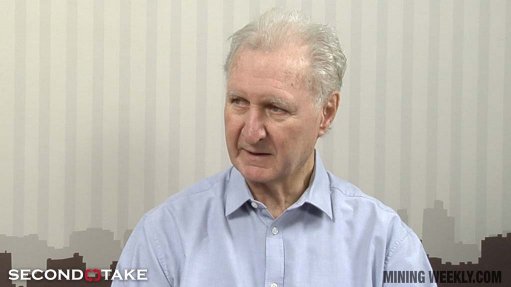
TORONTO (miningweekly.com) – The worst things a government looking to attract investment in its mining sector can do is to have murky regulations or backtrack on existing rules, Fraser Institute vice-president for international research Fred McMahon said on Thursday.

Speaking after the launch of the group's closely followed annual survey of mining companies, McMahon said the keys to a good investment climate are clarity, certainty and consistency on the part of regulators and governments.

Although enjoying historically high prices for many commodities, miners are having to deal with increasingly tight environmental laws, while local governments, eyeing the increased revenue and profit figures, are showing a tendency towards raising taxes and royalties.

Whether or not the regulatory and fiscal environment makes mine-building attractive, it is vital that the rules are clearly spelled out, and that they remain consistent, McMahon told Mining Weekly Online.

“You should know that if you meet the regulations you will go ahead (with a project),” he said.

“Miners have for a long time had to deal with uncertainty under the ground, now they have to deal with human uncertainty above the ground.

“And government, without weakening regulations and without becoming more or less mining friendly, can help boost prosperity and growth in their regions simply by clarifying and making certain regulations.”

The Fraser Institute survey studies the attractiveness of provinces, states and countries around the world for mining investment. This year's report tracked 79 jurisdictions and was based on the opinions of mining executives representing 494 companies.

Canada's Alberta province was ranked number-one, followed by Nevada, Saskatchewan and Quebec.

Nevada and Australia both took a hit in a mid-year 2010 survey, which was compiled after then-Prime Minister Kevin Rudd proposed a 40% resources super profits tax in Australia, and Nevada was considering a "punitive" tax against mining

Both proposals were since scrapped, and both jurisdictions have now bounced back in the survey ratings, McMahon noted in his presentation.

However, Quebec, which was ranked number-one in the previous survey, has dropped to fourth place, following moves to amend the provincial Mining Act, followed by proposed tax increases.

“Everyone that I talked to in the mining industry in Quebec didn't really object to the actual tax increases, which were fairly minor; what they objected to was how it was unveiled without any consultation or advance notice,” McMahon said.

“The whole thing is about uncertainty.”

The bottom ten scores in the latest Fraser Institute survey went to Indonesia, Zimbabwe, Wisconsin, Madagascar, India, Guatemala, Bolivia, Democratic Republic of Congo, Venezuela and Honduras.

Although Colombia is still ranked relatively low, at number 40, McMahon said that does not neccessarily reflect the reality. There are long-held perceptions about the safety and investment environment in Colombia that may take time to shift in people's minds, he said.

SKILLED LABOUR

One of the criteria by which jurisdictions are judged in the survey is the availability of skilled labour.

Finding skilled people was an “immense” concern for mining companies in the period before the economic downturn, McMahon commented.

The issue became less pressing when projects were put on hold and workers were laid off in the period starting in late 2008.

“I'm not hearing a lot of complaints about it now, but I think we are beginning that part of the curve where it will get more and more difficult to get the labour, the skilled labour people need,” he said on Thursday.
 

Edited by: Liezel Hill

To subscribe to Mining Weekly's print magazine email subscriptions@creamermedia.co.za or buy now.

Subscribe Now Login


The Fraser Institute vice-president for international policy research Fred McMahon comments on the number-one issue that can affect how miners view the investment attractiveness of a jurisdiction
This video is licensed under a Creative Commons License
GET SELECTED VIDEO
Embed
Selected Video Download (3.02mb)