GOLD 1561.30 $/ozChange: -4.35
PLATINUM 1423.00 $/ozChange: -0.50
R/$ exchange 8.36Change: 0.04
R/€ exchange 10.47Change: 0.08
 
We have detected that the browser you are using is no longer supported. As a result, some content may not display correctly.
We suggest that you upgrade to the latest version of any of the following browsers:
         
close notification
powered by
Advanced Search


Home
 
Magazine
 
News This Week
 
 
SPECIAL ECONOMIC ZONE
South Africa mooted as platinum industry’s ‘Silicon Valley’
 
27th January 2012
TEXT SIZE
Text Smaller Disabled Text Bigger
 

South Africa’s unique opportunity in platinum-related development is beckoning. There is growing conviction that South Africa could and should become the first mover in creating a kind of ‘Platinum Valley’ that emulates the great Silicon Valley success of the US.

Both big business and government are singing from the same hymn sheet of diversifying potential demand for platinum within the huge global energy arena.

Platinum, clean energy and jobs can go hand in hand with the development of hydrogen fuel cells – zero-emission devices that are able to shrink the world’s carbon footprint.

Platinum-group metals (PGMs) have for many years been doing a great job of turning vehicle exhaust fumes into water and carbon dioxide for absorption by natural plants.

Now PGM-catalysed fuel cells are stepping up to the plate to power buses, boats, trains, planes, scooters, forklifts, vending machines, vacuum cleaners, cellphones and laptops.

They light up hospitals, credit card centres, police stations and banks; convert gas into electricity at wastewater treatment plants and landfill sites; and provide power in far-flung off-grid rural areas.

The possibilities are endless and, by the way, they produce water as a byproduct, compared with other energy sources, which consume water, usually rather voraciously.

Little wonder then that South Africa’s Depart-ment of Trade and Industry (DTI) is giving serious consideration to the creation of a Special Economic Zone (SEZ) for platinum development.

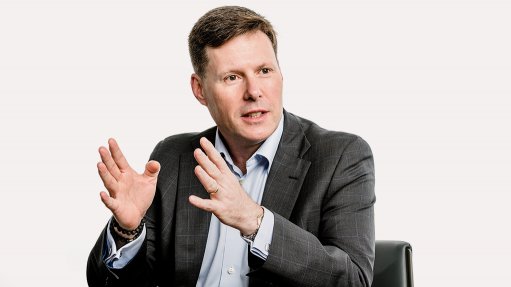
DTI director-general Lionel October tells Mining Weekly that a DTI team is working with the participants to determine the economic viability of establishing a central platinum hub with satellites to allow for locational flexibility.

“Some of the provinces and our local companies have been working on moving into the commercialisation of fuel-cell technology, so, definitely, this could be one area that we designate an SEZ,” says October (also see video opportunity below).

The South African government is hoping its new SEZs Bill and policy will create the framework for the development of new industrial nodes outside the traditional industrial heartlands.

Platinum has been identified as one of South Africa’s strategic minerals as the overwhelming bulk of the world’s deposits are in South Africa and neighbouring Zimbabwe.

“There have been major developments in terms of diversifying the sources of demand for platinum, especially in the general area of energy and fuel cells,” October tells Mining Weekly.

Anglo American CEO Cynthia Carroll told the United Nations climate change convention’s seventeenth Conference of the Parties (COP 17) in a forceful speech in Durban that the window of opportunity was “wide open” for South Africa to create “hundreds of thousands of new jobs” and simultaneously obtain a source of clean “zero-emission electricity” by developing fuel cells in this country.

Anglo American, through the JSE-listed Anglo American Platinum (Amplats), is the world’s largest producer of platinum, which is used as a catalyst in fuel cells.

“With platinum at its heart, a fuel-cell industry would support South Africa’s drive for jobs,” Carroll added.

Last year, Amplats unveiled a pioneering clean-energy fuel-cell power plant that reforms coal-bed methane gas into hydrogen to produce both electricity and heat, at 83% efficiency, and moves are also afoot to put a fuel-cell-powered mine locomotive through its paces soon.

Fuel cells are currently poised to play a role in both vehicle and stationary applications worldwide.

While their use provides a platinum extraction opportunity for the mining industry, the big opportunity is for South Africa to get in on the local manufacturing, installation and maintenance fronts, given that the capture of niche fuel-cell markets in the huge global energy space drives good platinum demand.

October makes the point that South Africa’s SEZs must be designed to offer high-quality infrastructure, and that the incentives that go with them must be seen as “top-ups” rather than their central theme.

He wants investors to see long horizons in the zones and he is setting great store by adequate and reliable infrastructure being put in place.

He sees beneficiation as being firmly on the national agenda, which is why the DTI is hard at work studying innovative ways of attracting a bigger part of the platinum industry to South Africa.

Simultaneously, manufacturers the world over want to base their production closer to their sources of raw material supply in order to lower their carbon footprints.

“If we get the first mover, we’ll get the agglomeration,” October comments to Mining Weekly.

Leading automotive companies have been investing in fuel cells to a point where these engines of the future have emerged from the research and development phase into the commercialisation and industrialisation phases.

“We’re at a nexus point – if we do the right thing now, we can take fuel cells to a slightly higher level,” adds October.

Some public transport abroad is already fuel-cell driven, as are a growing number of forklift trucks.

South Africa’s Department of Mineral Resources (DMR) has identified platinum as a candidate for value-chain development, backing up disparate research work for decades by the likes of platinum promoter Johnson Matthey.

The DMR says that alternative forms of energy, such as platinum-group metals (PGMs) fuel cells, present an opportunity for South Africa to become a prominent player in global manufacturing and distribution of fuel-cell components.

A platinum-using catalytic converter company, which currently does the bulk of its manufacture in Japan, says that a 10% price preference as part of the beneficiation strategy will be sufficient to attract it to set up a manu-facturing facility in South Africa.

In August last year, Amplats, through the first investment of its Platinum Group Metals Development Fund (PGMD Fund), and US-based Altergy Systems announced that it would be partnering South Africa’s Department of the Science and Technology (DST) to establish a new company, Clean Energy Incorporated, to market and distri-bute fuel cells in South Africa, followed by the local manufacture of fuel cells for the sub- Saharan African market by 2013.

Both the DST, through the Technology Innovation Agency, and the PGMD Fund, pledged to invest in the transaction and, along with Altergy, each receives equity in Clean Energy, which would obtain its PGMs for manu- facturing fuel cells at market-related prices.

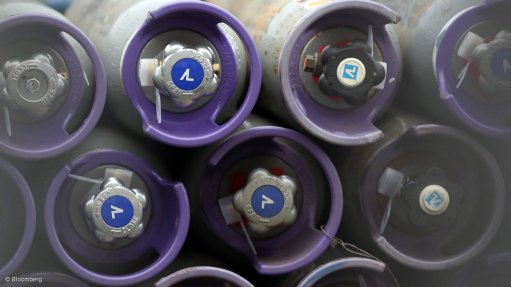
Fuel cells use mainly hydrogen, but also ammonia or liquid petroleum gas, to generate electricity, with water being the byproduct.

Amplats CEO Neville Nicolau makes the point that market development is required to ensure the use of platinum for the life of the company’s mines.

Fuel cells can be used in a wide range of applications. Besides their use to drive vehicles, the scope to use stationary fuel cells for power generation is wide, particularly in far-flung off-grid locations.

The telecommunications sector will be one of Clean Energy’s first target markets, with fuel cells able to generate power, or backup power, for cellphone towers.

Small fuel cells power cellphones and could also power miners’ caplamps, or they can consist of bigger systems to power buildings.

Amplats demonstrated a 150 kW zero-emission fuel cell close to the COP 17 conference venue to highlight platinum’s green credentials and its role in lowering carbon emission.

Altergy chairperson Terry Carlone has made the point that fuel cells can be produced in large volumes and at low cost, using a high degree of automation.

Science and Technology Minister Naledi Pandor has stated that the local manufacture of fuel cells is in line with government’s National Hydrogen and Fuel Cells Research, Development and Innovation Strategy, the ultimate goal of which is to supply 25% of world catalyst demand by 2020.

Major automakers are working to commercialise fuel-cell cars.

Fuel Cells 2000 reports that more than 2 500 fuel-cell systems have been installed world-wide, most achieving 40% fuel-to-electricity efficiency using hydrocarbon fuels.

Since fuel cells operate silently, they also reduce noise pollution.

When sited near the point of use, the waste heat of the fuel cell can be captured for the cogeneration of electricity, which can reduce facility energy service costs by 20% to 40% and increase efficiency to above the 80% level.

Fuel cells, which are 99.999% reliable, can twin with solar power and wind power systems. As they use hydrogen, the devices make use of the most plentiful gas in the universe, but its use is not without risk and has to be handled properly

Amplats to Test Fuel-Cell-Driven Mine Loco

Platinum miner Anglo American Platinum (Amplats) expects to put a fuel-cell-powered mine locomotive through its paces in the first half of this year.

The locomotive will initially be tested on surface at Amplats’ Dishaba mine, in Limpopo province.

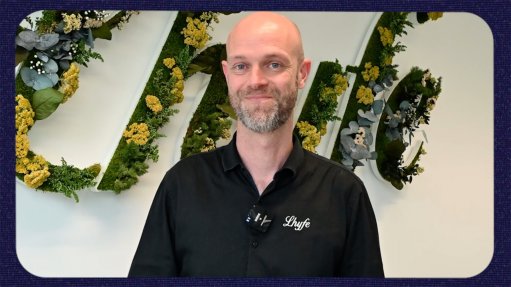
“Hopefully, by March or April, we’ll have a loco on surface that will be fuel-cell-based,” Amplats market development and research head Anthea Bath tells Mining Weekly (see also video opportunity).

The point of the demonstration will be to show that locomotives powered by fuel cells can provide not only superior efficiency and productivity, but also important zero-emission underground transport.
Fuel-celled forklift trucks have already gone commercial in the US, replacing battery- powered units.

JSE-listed Amplats is the world’s largest producer of platinum, which is used as a catalyst in fuel cells.

The modular nature of fuel cells facilitates incremental expansion on relatively small footprints.

A R100-million fund has made its first allocation to a US company manufacturing and marketing fuel-cell systems in South Africa and sub-Saharan Africa.

“The business case makes sense,” Bath tells Mining Weekly.

Edited by: Martin Zhuwakinyu

To subscribe to Mining Weekly's print magazine email subscriptions@creamermedia.co.za or buy now.

Subscribe Now Login


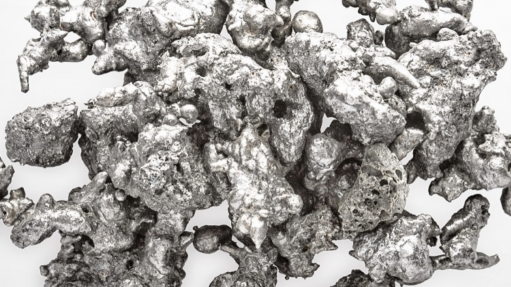
THE PRECIOUS METAL Bar of silvery-white platinum, for which the long-term outlook is sound
 
Picture by: Reuters
THE PRECIOUS METAL Bar of silvery-white platinum, for which the long-term outlook is sound
 
LIONEL OCTOBER SEZ could help to obtain best advantage from unique platinum endowment d
 
Picture by: Darlene Creamer
LIONEL OCTOBER SEZ could help to obtain best advantage from unique platinum endowment d
 
ANTHEA BATH Important testing of fuel-cell-powered loco on way at Amplats’ Dishaba mine
 
Picture by: Duane Daws
ANTHEA BATH Important testing of fuel-cell-powered loco on way at Amplats’ Dishaba mine
 
CYNTHIA CARROLL Window of opportunity wide open for entry into business of fuel cells
 
Picture by: Duane Daws
CYNTHIA CARROLL Window of opportunity wide open for entry into business of fuel cells
 
 
Previous Play Next