GOLD 1554.17 $/ozChange: -11.48
PLATINUM 1416.00 $/ozChange: -7.50
R/$ exchange 8.37Change: 0.03
R/€ exchange 10.49Change: 0.06
 
We have detected that the browser you are using is no longer supported. As a result, some content may not display correctly.
We suggest that you upgrade to the latest version of any of the following browsers:
         
close notification
powered by
Advanced Search


Home
 
Sector News
 
PGM
 
 
PLATINUM
Platinum may peak at $1 900/oz in next 6 months – Johnson Matthey
 
16th November 2010
TEXT SIZE
Text Smaller Disabled Text Bigger
 

JOHANNESBURG (miningweekly.com) – The platinum price may peak at $1 900/oz in the next six months, says Johnson Matthey principal analyst Alison Cowley, whose top-of-the range forecast for palladium is $850/oz.

Cowley was speaking to Mining Weekly Online at the release in Johannesburg of 'Johnson Matthey's Platinum 2010 Interim Review', which expects platinum to trade at an average of $1 750/oz in the next six months.

"But, if conditions are right, it can rise as high as $1 900/oz, and we're looking at a floor of $1 550/oz, because with current investors sentiment, it's difficult to see the price descending much below that level, particularly with the strong gold price," Cowley tells Mining Weekly Online in a video interview.

Johnson Matthey sees palladium trading at an average price of $750/oz over the next six months.

"But, that could well prove to be conservative. We think it's possible that the price could get up to about $850/oz as a peak, over the next six months," Cowley adds.

She sees good reason to be positive about autocatalyst demand.

"One of the things that you have to bear in mind is that platinum and palladium are effectively substitutes for each other in the autocatalytic market. So it's conceivable... that we might see some movement of platinum back into gasoline autocatalysts, but that would take years to happen," she adds.

She also foresees more platinum sales into the medical market, where it is used in the biomedical industry, as well as in anticancer drugs.

"It's used in things like pacemaker electrodes, on the tips of guide wires and in stents," Johnson Matthey market research GM Peter Duncan tells Mining Weekly Online in the video interview accompanying this report.

Medical device company Boston Scientific is currently marketing a platinum alloy stent, and "we're already seeing some companies  setting up biomedical production in China," Duncan adds.

DEMAND REBOUNDS

Cowley describes the rebound in demand for platinum as being "very, very strong", with gross autocatalytic demand increases of more than 20% in all the major consuming regions.

"Vehicle output has exceeded the most positive of expectations in China, and in Europe, we've seen a very strong recovery of the diesel market share and with that, a big increase in the demand for platinum," she tells Mining Weekly Online.

Vehicle production in the major petrol markets as well as the increasing stringency of emissions legislation, is boosting palladium, which is used principally in petrol or gasoline autocatalysis.

While platinum jewellery demand generally provides price elasticity for platinum and palladium, the only price elasticity in the industrial market is in autocatalyst applications where they can substitute one another.

"If the price of palladium were to rise so high that it was challenging platinum, there is certainly potential for platinum to move back into gasoline autocatalysts. That could happen at any time, because platinum was originally a gasoline catalyst.

"In diesel, palladium is substituted for platinum to an average of about 25% already. That's slightly more challenging. It's a different technical environment with much lower temperatures and different reactions and palladium is not quite as good a catalyst in that environment as platinum is. It will encroach, but it will take a lot longer for it to get further into diesel catalysis," says Duncan.

Johnson Matthey expects shipments of platinum from South Africa to decline by 200 000 oz this year, owing to problems of strikes, smelters and shaft shuts, but the outlook for next year is improved.

From Russia's Norilsk mine, the production of platinum group metals is up.

Although in North America both Vale's Sudbury operations and North American Palladium's operations have restarted, their metal is unlikely to come to market until next year.

"One really bright spot on the supply side is Zimbabwe, where production is expected to rise," says Cowley.

Zimbabwe expansion is set to increase the country's output to 280 000 oz.

The platinum market is forecast to be in surplus by 290 000 oz in 2010. Gross platinum demand is forecast to rise by 11% to 7,56-million ounces in 2010.

Recycling of platinum in the autocatalyst, jewellery and electrical sectors is expected to increase by 31% to 1,84-million ounces.

Supplies of platinum from current mining operations are set to remain almost flat at 6,01-million ounces.

As a result, net platinum demand is expected to increase by 6 % to 5,72-million ounces, putting the market in a small annual surplus of 290 000 oz of platinum.

FUEL CELLS

Duncan says that, in the last couple of years, platinum-bearing fuel cells have entered a phase of commercialisation in mobile phone chargers and increasingly into the stationary back-up power generation markets.

"Even at the moment, the fuel cell is quite a driver of platinum demand, and it's very much an important demand sector for the future," he tells Mining Weekly Online.

Some 20 000 oz of platinum are being used in fuel cells currently.

One of the difficulties is that there are many participants who make small parts of fuel cells.

What is seen to be necessary is for the industry to come together and to establish the necessary hydrogen infrastructure to make things happen.

Hydrogen combines with oxygen in fuel cells to generate electricity, with benign water being the by-product.

"Fuel cells is really the only truly clean energy option, and the challenge for hydrogen infrastructure is less than it is for an electric-vehicle recharging network," Duncan says.


SOUTH AFRICAN PRODUCTION

Johnson Matthey Catalysts MD in South Africa, Alejandro Rivera, tells Mining Weekly Online that the company's factory in Germiston produces light-duty flow-through products for diesel and petrol applications, diesel particulate filters for diesel cars, and catalysts for heavy-duty applications.

Rivera says that the South African operation consumes an average of 700 kg of platinum a month and 800 kg of palladium a month.

Six million pieces are produced a year in South Africa for export mainly to Europe.

FLAT 2010 SUPPLY

Johnson Matthey's Platinum 2010 review expects supplies of platinum to remain flat in 2010, with South African production forecast to fall by 1 % to 4,59-million ounces.

Supplies from North America are expected to fall by 19 % to 210 000 oz mainly because of strikes.

Supplies in Russia are expected to rise to 810 000 oz owing to improved productivity and processing of surface materials.

Autocatalyst platinum demand is poised to rise as diesel vehicle market recovers.

Global demand for platinum in autocatalysts is expected to strengthen by 37 % to 2,99-million ounces as vehicle production recovers from a dismal 2009.

Gross demand for platinum in European autocatalysts is expected to increase by 46% to 1,42-million ounces in an improved economic and credit environment.

The ending of various national car scrappage incentives in Europe and a return to fleet vehicle buying is expected to favour purchases of diesel vehicles, and therefore platinum demand for exhaust after-treatment.

Recovery of platinum from spent autocatalysts is expected to rise by 32% to 1,1-million ounces, stimulated by higher platinum prices and the returns from car scrappage schemes.

Improved economic conditions in 2010 are expected to stimulate purchases of platinum across a range of industrial sectors, lifting gross industrial demand to 1,72-million ounces.

Platinum demand in the glass industry is expected to recover strongly to 365 000 oz as consumer purchases of liquid crystal display (LCD) television sets and monitors drive the building of new manufacturing lines for LCD glass in Asia.

Demand for platinum in the electronics sector is also forecast to rise, increasing to 225 000 oz. Higher rates of factory utilisation, boosted by increased demand for consumer products, are anticipated to lift demand for process catalyst, bringing chemical demand for platinum to 450 000 oz.

Gross global demand for platinum in the jewellery sector is forecast to drop by 14 % in 2010 to 2,42-million ounces as retailers and consumers reduce purchasing in response to higher prices in 2010.

Demand for platinum jewellery in China is expected to fall by 21 %to 1,65-million ounces in 2010 as some consumers defer purchases.

Higher platinum prices are anticipated to lift recycling levels by 30 % to 735 000 oz.

Despite the popularity of platinum exchange traded funds (ETFs), physical investment demand for platinum is forecast to fall by 34 % to 435 000 oz in 2010.

Higher prices are expected to reduce demand for platinum coins and bars, and encourage redemption of ETF positions.

With a recovering global economy driving autocatalyst and industrial demand, and some growth in platinum production, Johnson Matthey expects the platinum market to be close to balance in 2011.

However, uncertainties remain over the impact of sovereign debt, tighter credit and national austerity measures on economic growth.

The recent performance of platinum suggests that its price is being steered by speculative futures positions, ETF holdings and external influences such as the dollar and the gold price, rather than supply-demand fundamentals.

The palladium market is forecast to be in a very small annual surplus of 45 000 oz in 2010.

Gross demand for palladium is set to rise by 15 % to 8,94-million ounces in 2010 on the back of strong automotive and industrial demand.

Recovery of palladium from scrapped autocatalysts, jewellery and electronics will increase by 29 % to 1,85-million ounces.

Net demand is therefore forecast to increase by 12 % to 7,10-million ounces.

Supplies of palladium are set to be almost flat at 7,14-million ounces, an increase of just 40 000 oz compared with last year.

Sales of metal from Russian state stocks are estimated to contribute around one million ounces to supplies this year.

North American supplies are expected to drop by 26 % to 560 000 oz, mostly offsetting the growth in supplies in other regions.

Demand for palladium in autocatalysts is forecast to increase by 27 % to 5,15-million ounces in 2010.

Recovery of light duty vehicle production in all regions, and particularly rapid growth in production of gasoline vehicles in China, is expected to drive this increase in demand.

Recovery of palladium from spent autocatalysts is forecast to increase by 37 % to 1,32-million ounces as a higher palladium price and car scrappage schemes stimulate recycling.

Gross demand for palladium in industrial applications is expected to rise by 8 % to 2,49-million ounces, returning close to its 2008 level.

Increased consumer purchasing of electrical items is set to boost demand for palladium in multi-layer ceramic capacitors, ubiquitous in consumer electronics.

Recycling of palladium from scrapped electrical devices is forecast to increase by 11 % driven mainly by legislation on electronic waste.

Chemical demand for palladium is expected to benefit from the wider recovery in the manufacturing sector in 2010.

Palladium investment demand is expected to remain strong, while jewellery demand is expected to fall.

The review says that identifiable physical investment demand for palladium, particularly in ETFs, is expected to rise to 670,000 oz in 2010.

Redemptions in the more mature funds are anticipated to limit the increase in new demand.

Demand for palladium jewellery is forecast to fall by 19 % in 2010 to 630 000 oz, with most of the decline due to weaker trade interest in China.

If no shipments of Russian state stocks of palladium take place in 2011, the palladium market will be in substantial deficit.

With these tight supply-demand fundamantals, investors continue to see palladium as relatively undervalued.

Continuing speculative investment interest could move the price substantially, and Johnson Matthey forecasts that the price of palladium will trade as high as $850/oz in the period, and not below $550/oz.


Edited by: Creamer Media Reporter

To subscribe to Mining Weekly's print magazine email subscriptions@creamermedia.co.za or buy now.

Subscribe Now Login


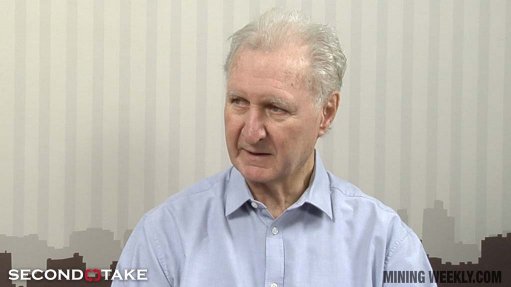
Johnson Matthey principal analyst Alison Cowley tells Mining Weekly Online that platinum price may hit $1 900/oz in next six months; Johnson Matthey GM Market Research bullish on medical demand, fuel cells; Johnson Matthey MD Catalysts Alejandro Rivera says six-million catalyst pieces a year made in South Africa for export.
This video is licensed under a Creative Commons License
GET SELECTED VIDEO
Embed
Selected Video Download (20.84mb)
 
JOHNSON MATTHEY SOUTH AFRICA MD ALEJANDRO RIVERA
 
Picture by: Duane Daws
JOHNSON MATTHEY SOUTH AFRICA MD ALEJANDRO RIVERA
 
JOHNSON MATTHEY PRINCIPAL ANALYST ALISON COWLEY
 
Picture by: Duane Daws
JOHNSON MATTHEY PRINCIPAL ANALYST ALISON COWLEY
 
 
Previous Play Next