GOLD 1553.52 $/ozChange: -12.13
PLATINUM 1415.50 $/ozChange: -8.00
R/$ exchange 8.36Change: 0.04
R/€ exchange 10.47Change: 0.08
 
We have detected that the browser you are using is no longer supported. As a result, some content may not display correctly.
We suggest that you upgrade to the latest version of any of the following browsers:
         
close notification
powered by
Advanced Search


Home
 
Multimedia


podsafm_29052009
GET SELECTED AUDIOCLIP
Embed
This article's audio Download (6.69mb)


On-The-Air (29/05/09)
 
29th May 2009
TEXT SIZE
Text Smaller Disabled Text Bigger
 

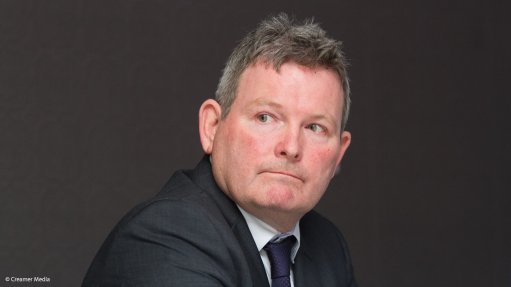
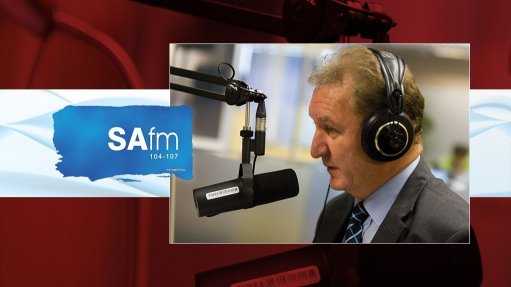
Every Friday morning, SAfm's AMLive's radio anchor Tim Modise speaks to Martin Creamer, publishing editor of Engineering News and Mining Weekly. Reported here is this Friday's At the Coalface transcript:

Modise: Martin, good morning and welcome. South Africa's new Trade and Industry Minister says he's anxious to bring South Africa's worrying de-industrialisation process to a halt. What does he mean by that?

Creamer: The new Trade and Industry Minister Rob Davies is putting his career on the line in saying that he definitely wants to stop our de-industrialisation process. If we look at the statistics, for the last three months in particular and before that, we've always had a shrinking industrial footprint but we've seen in March the production from our factories dropped by 11,7%, the month before that 15%, the month before that 12,9% so this is a cascading decline in industrial output. He's saying that we've got to bring that to a screeching halt.

He said that, if anything, if people are going to measure his performance, they should measure it against how he stops de-industrialisation in South Africa. I think that he has not got that many instruments at his disposal, unfortunately. One always looks to the Industrial Development Corporation, which normally have funds to do things, and even their balance sheet is quite strained at the moment, so that might need to be reinforced. You look to protective tariffs, obviously the world doesn't want this protection but there may be pockets of tariffs that may have to be introduced. He'll do that very cautiously, I'm sure, and also you have Eskom spending so much money, R787-billion, and it's not only Eskom, over the next five years on public infrastructure. That is an area that can be grasped, but the programme that was set in place there has not really achieved the ambitions earlier on and Rob Davies wants to make sure that there is more local content, cutting the imports down to 30% rather than 40%.

Modise: Now, buy Africa is the advice of two top Asian analysts who are forecasting the strong new economic twinning of Africa with Asia. There should be more thinking behind that. Why so, why this advice?

Creamer: There was the period where the world's economists said there was a decoupling, that most of the economies would still keep going even if America suffered a serious decline. We know now, with the latest meltdown, that that is not true. You know when America does go down, so does everybody else. But what is happening now, behind the scenes, is a new coupling.

In this post-meltdown era we see that the Chinese ambitions to have great urbanisation and an Indian ambition to have great urbanisation in their countries is still on, and that there is a new coupling between Asia and Africa, in particular in the real economy activities. We noticed that there were big delegations of Chinese in Africa in recent weeks, one in the Democratic Republic of Congo, the other one in Mozambique.

Their ambitions to have this great urbanisation, which they feel that they deserve which the Western world has had. America has had its industrialisation, Europe has had its rebuilding, Japan has built itself, there is still an ambition of China and India to create an urbanisation success and to do that they need commodities, and the commodities, by and large, will have to come from Africa, and this is where that great link is, and this is why there are delegations of Asians coming here and looking for opportunities in Africa to mine. That is where South Africa and Africans should also make sure that they partner these Asians to be part of the mining process, particularly South African's who have great expertise in the field of mining.

Modise: And the launch of South Africa's Sumbandila satellite has been delayed yet again but this time to August. What are the reasons for that?

Creamer: Yes, the Russians are going to launch our satellite. The South Africans, through SunSat, linked to Stellenbosch University, have built our satellite in South Africa and it's a question now of Sumbandila getting into space.

To do this, we had an offer from the Russians to launch us into space. The unfortunate part about that is that there have been a lot of delays with that. We were supposed to, in fact, have done it in 2007 when they were going to use a navel submarine, then they said they would use RosCosmos, in Khazakstan, and now there's been a further delay because we are only going on as secondary payload. Our satellite will be secondary payload, it's not the primary payload, and there's been a delay with the weather satellite that the Russian's want to put into space, and therefore we have to also be delayed.

Now the new date is August the 20th, probably around that time in August, and we have to, of course, still get our satellite to Russia and we need an export permit for that. That has to be granted by the South African Space Council and then there are 40 days of preparation, so we're hoping the South African Space Council will have shipped the satellite to Russia by mid-year.

Modise: That's Martin Creamer, the publishing editor of Engineering News and Mining Weekly. He will be back At the Coalface at the same time, next Friday.


Edited by: Creamer Media Reporter