GOLD 1556.46 $/ozChange: -9.19
PLATINUM 1420.00 $/ozChange: -3.50
R/$ exchange 8.35Change: 0.05
R/€ exchange 10.47Change: 0.08
 
We have detected that the browser you are using is no longer supported. As a result, some content may not display correctly.
We suggest that you upgrade to the latest version of any of the following browsers:
         
close notification
powered by
Advanced Search


Home
 
Multimedia


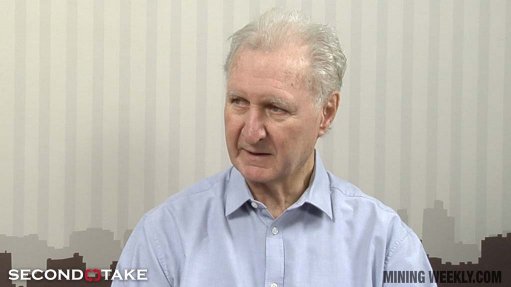
Aveng CEO Roger Jardine speaks to Engineering News editor Terence Creamer on the outlook for the business in South Africa and abroad. Camera Work and Editing: Darlene Creamer. (5/9/2011)
This video is licensed under a Creative Commons License
GET SELECTED VIDEO
Embed
Selected Video Download (2.28mb)


No sign of SA’s pledged infrastructure, as Aveng gets R19bn Australasian orders boost
 
5th September 2011
TEXT SIZE
Text Smaller Disabled Text Bigger
 

Construction and infrastructure group Aveng indicated on Monday that there were still few, if any, signs of the R1-trillion infrastructure expenditure that had been promised by the South African government over the past few years.

In fact, CEO Roger Jardine reported that there had been a 30% decline in public sector spending since 2008, while the contribution of the public sector to its two-year order book (which had climbed 19% to R37-billion by June 30, 2011) had slumped to 42%.

Only 18% of the group’s Southern African backlog could be attributed to public sector works, with the balance arising from the private sector, primarily from within the natural resources milieu – Aveng’s mining backlog alone comprised 41% of the total.

South Africa’s contribution to Aveng’s two-year order book had also slumped to 33%, while the backlog arising from the Australasia and Pacific territories accounted for 45%. Its wholly owned McConnell Dowell unit, in Australia, had contributed nearly R19-billion to the R37-billion overall order book.

Jardine said the group’s backlog was a reflection of South Africa’s “soft” public infrastructure spend, which had also distorted the balance between the public and private sectors within the group’s order book – traditionally it sought to have at least half of its backlog arising from public sector projects.

Aveng, which reported a 37% fall in headline earnings to R1.2-billion for its full year to June 30, 2011, also warned that the infrastructure market in South Africa would probably remain “challenging” for the coming two years.

But Jardine told Mining Weekly Online he remained convinced that the public sector workflow would eventually return, particularly given a broad-based acknowledgement within government that the dearth of transport, power and water infrastructure would undermine the country’s future growth and competitiveness.

“It’s a question of when, not if,” the former Department of Science and Technology director-general insisted. “But, for the time being, we will fish where the fish are.”

At its midyear lekgotla, the South African government explicitly acknowledged the underperformance of public infrastructure expenditure against initial targets. Minister in The Presidency Responsible for Monitoring and Evaluation Collins Chabane even announced the creation of an Infrastructure Commission, which would be headed by President Jacob Zuma.

However, it was not yet clear when the commission would be assembled and there also appeared to be material confusion within government as to its role. Some Ministers insist that its focus would be on accelerating the selection and delivery of mega-scale projects, while others have spoken of it as a tool to accelerate municipal service delivery.

In the meantime, all South African construction companies, including Aveng, were focusing on private sector prospects, particularly in mining, as well as opportunities arising in other jurisdictions.

Jardine also emphasised Aveng’s group-wide business improvement initiatives, which, together with the completion of some underperforming projects and a “solid” order book, should position the group well, despite the poor trading outlook.

Revenue for the period was reported as R34.3-billion, which was in line with the previous year. However, operating profit decreased by 29% to R1.5-billion resulting in an operating profit margin of 4.3% for the year, compared with 6.2% in 2010. The result was also negatively affected by provisions for a Competition Commission settlement in respect of two complaints involving subsidiary Steeledale, which amounted to R129-million.

Nevertheless, the group maintained its dividend at 145c a share, which represented about 47% of headline earnings a share for the period, and was, thus, well above the JSE-listed group’s approved policy of distributing 25%.

Aveng ended the year with R5.4-billion in cash, which was well down from the R7.6-billion that it had retained at the beginning of the year, and Jardine said that the company would be conservative in the way it managed its cash.

Therefore, larger mergers and acquisitions were unlikely, but he did not discount further bolt-on-type acquisitions, particularly in the power, rail, water and steel business segments.


Edited by: Creamer Media Reporter