The University of Pretoria’s Department of Mining Engineering reports it is currently in the final stage of converting all its undergraduate paper-based mining subjects to instructionally designed modules.
This conversion is part of the department’s move to include nontechnical, or soft skills, as part of its new approach to education in mining engineering.
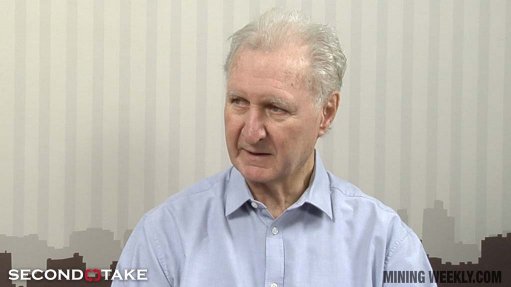
The converted modules will comprise electronic, interactive course notes including videos, animations, photos, mouse- overs and cross-links to improve students’ abilities to acquire and apply their knowledge of the mining industry, says Department of Mining Engineering head Ronny Webber-Youngman.
Currently, about 60% of the 11 mining engineering subjects have been converted and, by January 2012, all subjects will be taught with the instructional-design courseware.
The inclusion of nontechnical skills, which are currently being incorporated as part of the curriculum for the mining subjects, will assist students in better understanding the complexities of mining and can improve their chances of success in the industry.
“The department is moving towards the nontechnical skills approach to deal with the diversity of students. Language barriers are a serious challenge for the university as many of the classes comprise students that speak about 15 different languages amongst them,” says Webber-Youngman.
The Department of Mining Engineering changed to an English-medium department in 2000. This enabled transformation at the university, with significant growth in the enrolments of students who, besides speaking English as a second language, speak a number of different languages, including Sesotho, isiZulu and Setswana. In 2011, the department had an intake of 70% black students compared with 7% in 2001.
Another challenge is the inability of students to visualise mining activities and mining-related terminology, such as fall-of-ground, stope and scraper winch, he says.
With instructionally designed courses, lecturers can emphasise the application of information and the design of a mine, and students have all the theoretical information available upfront.
Meanwhile, another feature of the nontechnical skills approach is Shadowmatch, which profiles the critical success- enhancing factors for top performers in the mining industry to assist students in developing those areas in which they lack the desired level of competence.
“In mining engineering, certain char- acteristics make you successful. “These mainly comprise resilience, time management, problem solving, discipline and quick thinking,” says Webber-Youngman.
The department aims to assist stu- dents in the development of these characteristics to increase their chances of success in the mining industry.
All final-year students also undergo several psychometric evaluations, at no cost to students, facilitated by educational counsellor Erna Gerryts, who was appointed by the department last year to undertake and manage tests part-time.
The Hermann Brain Dominance Instrument test assesses logical and analytical skills – common to most engineers – against emotional and perceptual intelligence, which seems to be lacking in the industry, he says.
Also, multidisciplinary and cross- cultural experience is key to engineering success. The department undertakes a personality assessment to analyse the dominant, steady, influential and compliant personalities among students. Groups comprising each of these personality types are rotated to ensure a balance of different students working together throughout the year.
“This year, the department also introduced an emotional intelligence course for all the 2011 final-year students to make them aware of their own level of emotional intelligence,” he says.
The emotional intelligence contribution, as part of the mining modules, will teach students to recognise, understand and manage their emotional reactions as well as understand and deal with the emotional reactions of others.
The Department of Mining Engineering is planning to undertake certain psychometric evaluations of all students, from first year to final year, as well as introducing the emotional intelligence assessments for all mining engineering students next year. However, this depends on funding.
The nontechnical skills approach to mining engineering education has received positive reaction from students and has resulted in a significant increase in class attendance (up to 100% in some cases) and student engagement.
The new educational approach has also earned the Department of Mining Engineering the Laureate 2010 award, which honours educational innovation at the university.
To subscribe to Mining Weekly's print magazine email subscriptions@creamermedia.co.za or buy now.