GOLD 1561.40 $/ozChange: 17.75
PLATINUM 1420.50 $/ozChange: 5.50
R/$ exchange 8.37Change: -0.02
R/€ exchange 10.49Change: 0.07
 
We have detected that the browser you are using is no longer supported. As a result, some content may not display correctly.
We suggest that you upgrade to the latest version of any of the following browsers:
         
close notification
powered by
Advanced Search


Home
 
World News
 
Africa
 
 
MINING IN AFRICA
Mining crisis holds potential for redress
 
16th January 2009
TEXT SIZE
Text Smaller Disabled Text Bigger
 

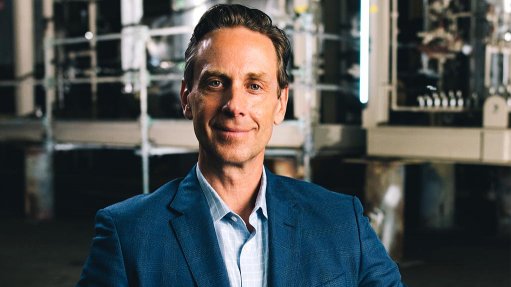
Project shutdowns, delays and cutbacks affecting the mining industry could have a positive spin-off, but only if stringent measures, such as financial valuation strategies, are wholly embraced in the future, says independent mining and minerals management advisory firm Venmyn MD Andy Clay.

Clay suggests that in difficult times, it is best to strategise the potentially valuable assets well in advance of any attempts to secure the funding. Valuation of assets is strategically important for new mining projects.

Venmyn provides independent technoeconomic evaluative services for the mining industry. This means the company combines a capacity for detailed technical analysis of assets with economic valuation for any project. It has provided governments, mining houses, exploration companies and investment banks with this kind of strategic advice for 21 years.

The aim of mineral and mining exploration is to understand the mineral asset in terms of its size, quality, quantity and content. Thereafter, it is important to identify the value of the asset. Companies must adhere to the South African mineral valuation code with regard to such valuations.

Venmyn mineral industry advisor Neil Mc Kenna says: "Investors are prudent enough to realise that there is weight behind an independent valuation or assessment of mineral projects. These valuations are very important under current circumstances because there is an impetus from investors to find out what is realistically achievable from mineral projects."

Venmyn reports that the mining industry is in need of a morale-boost, but that there is light at the end of the tunnel. Firstly, there are practical geological and computerised methods for assessing the potential and viability of projects. This is where technoeconomic valuation is key.

Secondly, the medium and long-term demand is still strong for many commodities despite the current downturn. Mc Kenna says, "I still think demand is there. The turn could come as early as the second quarter of 2009. China and Asia still account for 30% of the world's gross domestic product, with China being the key driver for commodities. There is consistent economic growth. Even though China and India are expected to grow at slightly slower rates, their growth during 2009 is still expected to exceed 7%."

Clay points out that there are many emerging and developing economies that need raw materials, thus maintaining steady demand for commodities.

Mc Kenna and Clay believe that the economic slowdown is fortuitous in many respects. Clay says, "It will weed out the weak projects. What is more, owing to the need to deplete stockpiles, surpluses will become deficits and the economy will recover again." Mc Kenna states, "This is all very normal. So we've got to believe that things will turn, and turn quickly."

Diamond Demand

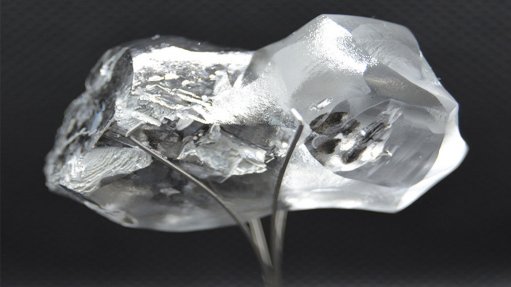
It has been reported that many diamond companies are halting exploration owing to current circumstances. However, Mc Kenna sees that long-term diamond demand will be sustained, as there may not be sufficient supply to satisfy demand in the future. He says, "this is a problem especially in terms of diamonds because the turn-around time from discovery to production can take as long as ten years. Thus, grassroots exploration for diamond deposits, particularly with new kimberlites, has to continue."

Mc Kenna and Clay are sensitive to the fact that obtaining finance for continuous exploration and project development is difficult at present.

Nevertheless, advice about the feasibility of potential and ongoing exploration is crucial. Clay says: "We look at advising clients on the quality of their projects - they shouldn't just be viewed on the cost of production alone. At the end of the day, if you only look at straight cost production, you won't take into account the issues of the discovery cost, depreciation and other costs not necessarily included in straight production costs. The question remains, at what price will your project continue to generate a profit?"

Geology

Clay is emphatic that the bottom-line of mining and mineral exploration is geology. For instance, if one is to look at the various projects that are under pressure, it is usually the deposits that are expensive to mine.

For instance, nickel mining is under strain. Clay explains that nickel supply was being supported by new production from laterite deposits and was extremely lucrative. Nickel prices were at their highest in history. However, nickel requires special processing and is expensive to produce. Companies will often only account for the cost of production and overlook the bigger picture, including project acquisition costs and total capital expenditure. Successful projects, therefore, should be tested against the quality of their deposits.

There are also reports of uranium projects shutting down. Clay believes that this is owing to the poor quality of deposits. Some uranium mining is still potentially lucrative because uranium is a by-product from gold mining. However, with changed times and prices, the cost of uranium production is too high for many companies to sustain.

Mc Kenna explains, "The uses for uranium are vast, but finding the right deposit is the challenge. Many of the deposits are remote and in difficult parts of the world, often where there is no water."

There are uranium deposits to be found, for instance, in northern Chad. However, prospects for uranium mining in northern Chad are poor, considering the hostile landscape with little infrastructure and natural resources.

Added to the financial uncertainty is low investor confidence. For instance, even where there is infrastructure, some projects have failed, especially in uranium exploration. "There is a general lack of confidence in the industry," says Mc Kenna.

Nevertheless, potential uranium producers are looking innovatively at dumps and existing tailings recovery to ensure the cost of uranium production is kept low. Because uranium is used for nuclear power, uranium mining remains a lucrative business. Mc Kenna says that there is still a need for uranium production from readily identified mineral resources in low risk environments.

Weathering the Crisis

Apart from the challenges, Mc Kenna remains positive about the future prospects for mining exploration in Africa. He explains that companies should evaluate the quality of their assets in their present portfolios. He stresses that companies should be stringent about quality.

However, by letting go of failing projects there are certain socioeconomic repercussions, such as job losses. But, Clay believes that there are long-term benefits to focusing on quality because greater opportunities can arise from this.

Clay also advises companies to focus on shorter and simpler technical reporting, with clearer visual representation. These reports are technical valuation statements designed to value assets, creating clarity and thus investor confidence. Mc Kenna asks, "how are you going to clearly make use of the asset in the short, medium and long term?" This is really the fundamental question the mining industry is going to have to ask in times where investor confidence is low and world market cycles are volatile. For the future, it is wise to adopt stringent evaluative strategies.


Edited by: Shannon de Ryhove

To subscribe to Mining Weekly's print magazine email subscriptions@creamermedia.co.za or buy now.

Subscribe Now Login


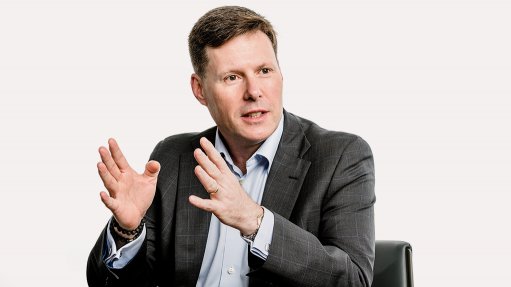
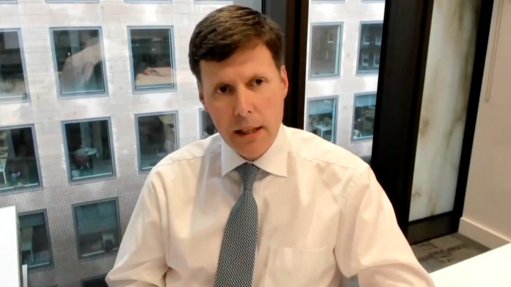
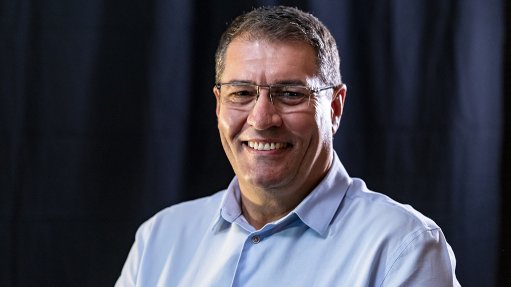
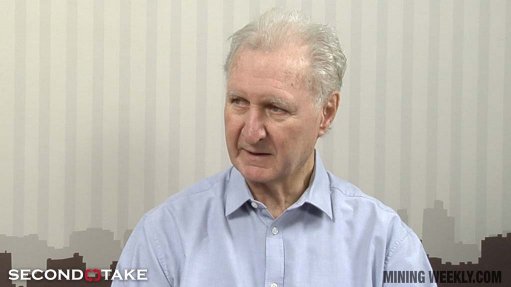
Venmyn MD Andy Clay (1st) and Venmyn mineral advisor Neil McKenna (2nd) discuss the key to making a profit in the mining industry in the current economic climate, as well as why mining companies should continue with exploration activities.
GET SELECTED AUDIOCLIP
Embed
This article's audio Download (2.77mb)